

Wars & Global Conflicts
Israel Expands Military Infrastructure and Operations in Southern Lebanon

Satellite imagery and reports indicate that Israeli forces are constructing a 90-kilometer network of roads and military outposts in southern Lebanon. While Israel maintains these measures are necessary for security, the activity has drawn concern from Lebanese officials regarding the potential for a prolonged military presence. Ongoing military operations, including airstrikes and incursions, continue in the region despite previous diplomatic efforts. The situation remains tense as negotiations regarding the status of the theater persist.
The primary actors involved are the Israel Defense Forces (IDF), the Lebanese Armed Forces (LAF), and the militant group Hezbollah. The United States acts as the primary mediator, facilitating negotiations between the Israeli and Lebanese governments. UNIFIL (United Nations Interim Force in Lebanon) continues to monitor the border region, though its mandate is subject to ongoing review and potential expiration at the end of 2026.
Israel is currently constructing a 90-kilometer network of military roads and outposts across southern Lebanon. This infrastructure development is occurring within a designated security zone that Israel has occupied following recent escalations. Simultaneously, there are ongoing, albeit stalled, US-mediated negotiations aimed at achieving a gradual Israeli withdrawal in exchange for the Lebanese Armed Forces taking control of the area and disarming Hezbollah. The situation is complicated by Israel's insistence that the ceasefire it reached with Iran does not extend to its operations in Lebanon.
The activities are concentrated in southern Lebanon, specifically along the border with Israel. Reports indicate that the IDF has issued evacuation orders for towns such as Mansouri, which have been incorporated into the Israeli-controlled security zone. The infrastructure development spans a significant portion of the border region, creating a physical barrier that alters the landscape and accessibility of the area.
The current escalation follows a series of conflicts that intensified in March 2026. Recent developments, including the construction of the road network and the issuance of new evacuation orders, have been reported as of November 6-7, 2026. The UNIFIL mandate is set to expire on December 31, 2026, creating a critical deadline for diplomatic progress.
Israel maintains that its military operations and infrastructure construction are necessary defensive measures to prevent Hezbollah from re-establishing its military presence in southern Lebanon, which it claims was the cause of the October 2023 attacks. Conversely, the Lebanese government and international observers express concern that these actions represent a long-term occupation strategy that undermines Lebanese sovereignty and violates international norms. The Lebanese government, while wary of Hezbollah, is under immense pressure to prevent the country from becoming a theater for regional conflicts.
The process is governed by a mix of military occupation and diplomatic negotiation. Israel utilizes its military superiority to enforce the security zone, while the US employs its diplomatic leverage to broker a trilateral framework. The mechanism for resolution relies on the Lebanese Armed Forces' ability to demonstrate control over the territory, a task that remains difficult given the political and military influence of Hezbollah. The situation is further complicated by the lack of a breakthrough in the trilateral talks, leaving the region in a state of precarious limbo.
European Commission Launches Second Annual Migration Management Cycle

On November 6, 2026, the European Commission initiated the second Annual Migration Management Cycle to assess the implementation of the EU's migration and asylum framework. The accompanying report notes that while the Eurodac system and border screening procedures are operational, further efforts are required to address gaps in responsibility rules and asylum applicant transfers. The Commission continues to provide technical support to member states to ensure the full functionality of the Pact's components.
The key actors involved in the second Annual Migration Management Cycle include the European Commission, which serves as the primary oversight body, and the EU Member States, which are responsible for implementing the new migration and asylum framework. Specific agencies, such as the European Union Agency for Asylum (EUAA) and Frontex, provide technical and operational support. The High-Level Solidarity Forum acts as the mechanism for addressing disputes and monitoring progress, while the Council of the European Union remains the ultimate political authority for resolving persistent shortcomings.
The European Commission has launched the second Annual Migration Management Cycle, a structured process designed to monitor and evaluate the implementation of the EU's new migration and asylum pact. The cycle assesses the operational status of the Eurodac system, the effectiveness of border screening procedures, and the progress of the new responsibility rules. The report confirms that while foundational elements are in place, there are critical gaps in the transfer of asylum applicants and the equitable distribution of responsibility among member states.
The management cycle applies to all EU Member States, with specific focus on those facing the most significant migratory pressures, including Bulgaria, Czechia, Estonia, Croatia, Austria, and Poland. These countries have experienced cumulative pressures over the last five years, necessitating targeted support and monitoring from the Commission.
The cycle was officially launched on November 6, 2026, following the publication of the Asylum and Migration Report on November 5, 2026. This cycle builds upon the initial framework established in previous years and will continue to monitor developments throughout the coming year, with potential escalations to the Council if gaps remain unaddressed.
The primary motivation for the cycle is to ensure the full operationalization of the EU's new migration pact, which aims to create a more predictable and orderly system for managing irregular migration. The Commission seeks to address the persistent challenges of responsibility-sharing and the effective transfer of asylum seekers, which have historically been points of contention among member states. By providing a structured monitoring process, the Commission hopes to foster greater solidarity and compliance across the bloc.
The process operates through a combination of technical monitoring, operational support from EU agencies, and political dialogue via the High-Level Solidarity Forum. The Commission collects data on border screenings, asylum processing times, and transfer rates to identify bottlenecks. If member states fail to meet their obligations, the Commission uses the forum to raise concerns and, if necessary, refers the issues to the Council for political resolution. This mechanism is designed to be iterative, allowing for continuous adjustments based on the evolving migratory situation.
Global Markets Experience Volatility Following U.S. Midterm Election Results

Global stock markets experienced increased volatility and declines following the U.S. midterm elections, where Democratic control of Congress led to investor concerns regarding potential increased regulation of the artificial intelligence industry. Major indices, including Japan's Nikkei 225, recorded significant losses as market participants reassessed tech-sector exposure. While some reports indicate a broader selloff, global equity funds have continued to see net inflows. Financial analysts and institutions have noted that these market movements reflect uncertainty regarding future policy and corporate earnings.
The primary actors involved include global institutional investors, major central banks (including the Federal Reserve and the European Central Bank), and national finance ministries such as the Republic of Korea's Ministry of Finance and Economy. Technology corporations, particularly those heavily invested in AI infrastructure, are the central focus of the market reassessment.
Global stock markets have experienced a significant downturn and increased volatility. This is largely attributed to a reassessment of the 'AI trade' following U.S. midterm election results that signaled a potential shift in political sentiment against the artificial intelligence industry. Investors are moving capital into defensive sectors, leading to a decline in tech-heavy indices.
The impact is global, with significant market declines reported in Tokyo (Nikkei 225), Shanghai, and Hong Kong. European and U.S. markets have also faced downward pressure, prompting emergency meetings in financial hubs like Seoul to discuss policy responses and monitor capital flows.
The volatility intensified following the U.S. midterm elections on November 3, 2026. By November 6, 2026, finance ministries and central banks were actively convening to review the situation and discuss potential policy interventions.
The primary driver is a shift in investor confidence regarding the sustainability of AI-related capital expenditure. Investors are questioning whether the costs of meeting AI demand are eroding cash flow faster than they build revenue. The U.S. midterm election results have acted as a catalyst, with market participants interpreting the political climate as potentially less favorable to the AI industry's rapid expansion.
Market mechanisms are responding through a rotation of capital from high-growth technology stocks into defensive sectors like utilities, consumer staples, and healthcare. Central banks and finance ministries are utilizing their monitoring authority to track real-time capital flows and are preparing potential policy responses to ensure financial stability. The process involves continuous assessment of economic indicators, such as manufacturing PMIs and inflation data, to gauge the broader health of the global economy.
Bulgaria Elects Iliana Iotova as President Following Presidential Runoff

Bulgaria's Central Election Commission confirmed that incumbent President Iliana Iotova won the November 1 presidential runoff election. Iotova secured approximately 57.6% of the vote, defeating challenger Andrey Gyurov. She is the first woman to be directly elected to the presidency in Bulgaria. Official results were finalized following the processing of all polling station protocols.
The key actors in this election include the president-elect Iliana Iotova, who previously served as vice president and acting president, and her opponent Andrey Gyurov. The Central Election Commission (CEC) managed the administrative aspects of the election, while the Bulgarian government and various political parties influenced the campaign discourse. International observers and regional analysts have also been closely monitoring the process.
Bulgaria held a two-round presidential election to select a new head of state. The process concluded with a runoff on November 1, 2026, where Iotova secured a decisive victory. The election was marked by debates over the country's foreign policy, particularly regarding the war in Ukraine and relations with Russia, as well as concerns over domestic political stability and the integrity of the voting process.
The election took place across Bulgaria, with voting occurring in domestic polling stations and at diplomatic missions abroad. The geopolitical context of the election is heavily influenced by the Black Sea region, where recent security incidents have heightened tensions.
The first round of the election was held on October 25, 2026, followed by the runoff on November 1, 2026. The official certification of the results is scheduled for November 11, 2026.
The election was necessitated by the resignation of former President Rumen Radev, who stepped down to pursue a role in parliamentary politics. The campaign was driven by deep divisions regarding Bulgaria's alignment with the European Union and NATO versus potential renewed dialogue with Moscow. Voters were also motivated by a desire for stability following years of fragmented governments and political uncertainty.
The election was conducted through a two-round system, with machine voting utilized in polling stations with more than 300 voters. The CEC oversaw the process, including the distribution of machines and the tabulation of results. Legal challenges were filed by the opposition regarding the conduct of the election, which are currently being processed through the judicial system.
Linguistics & Language Science
Could the Conversational Human Authenticity Test (CHAT) make reliable LLM-human distinction a reality by 2027

Summary
Researchers have developed the Conversational Human Authenticity Test (CHAT), a systematic validation framework designed to assess the realism of Large Language Model (LLM) generated language. Published in PNAS on October 12, 2026, the study demonstrates that current LLMs remain systematically distinguishable from human communication due to structural differences between human-likeness and semantic fidelity. The framework provides a standardized method for calibrating models to real-world data and evaluating their performance as proxies for human participants in social science research.
Structural Limitations in Human-Likeness
The research published in PNAS (PNAS, 'AI-generated language remains systematically distinguishable from human communication', 2026) identifies a fundamental structural dilemma in current Large Language Models (LLMs): the features that make text sound human—such as stylistic variability and emotional nuance—are not the same features that ensure semantic fidelity. The authors demonstrate that while models can mimic the surface-level structure of human communication, they fail to capture the underlying meaning in a way that is indistinguishable from human participants. This finding is supported by the development of the Conversational Human Authenticity Test (CHAT), a validation framework that systematically evaluates whether LLMs can serve as faithful proxies for human behavior in social science applications (PNAS, 2026). The study highlights that current models face persistent limitations in diverse applications, including survey research and well-being prediction, where the distinction between machine and human output is critical for data integrity.
Path to Reliable AI Validation
The practical path forward involves integrating the CHAT framework into the development and evaluation cycles of AI systems. By providing a standardized benchmark, CHAT allows researchers to calibrate models to real-world data, effectively identifying which combinations of model type and training strategy minimize the gap between machine and human communication (PNAS, 2026). Future research must focus on addressing the identified structural dilemma by developing training objectives that align human-likeness with semantic fidelity. This requires a shift from purely stylistic imitation to a more nuanced understanding of linguistic structure, as explored in recent computational linguistics research (ACL Anthology, 'Linguistics-Aware Non-Distortionary LLM Watermarking', 2026). The next milestone for this research is the creation of large-scale, open-source datasets that allow for the continuous benchmarking of new models against the CHAT framework, ensuring that as AI capabilities evolve, our ability to distinguish them from human communication remains robust and scientifically grounded.
What It Will Take to Advance This
Researchers must conduct large-scale longitudinal studies to determine if CHAT-validated models maintain their performance across different languages and cultural contexts, as current evidence is primarily focused on English-language benchmarks. The primary technical barrier is the structural dilemma where human-likeness and semantic fidelity are competing objectives; developers need to invent new loss functions that explicitly penalize semantic drift while maintaining stylistic variability. Dedicated funding from agencies like the NSF is required to build and maintain open-source, diverse datasets that can be used to calibrate models against the CHAT framework at a scale of at least 10,000 unique conversational samples. Regulatory bodies must establish a formal certification process for AI agents that pass the CHAT benchmark, requiring developers to provide transparent documentation of their model's performance metrics. Infrastructure must be built to allow for real-time CHAT-based monitoring of AI agents in production environments, ensuring that models do not degrade in authenticity as they are updated or fine-tuned.
Future Possibilities
The maturation of CHAT-based validation will enable the safe deployment of AI-driven digital therapeutics for mental health. By ensuring that conversational agents maintain high semantic fidelity, clinicians can trust that AI interactions are consistent with human-like therapeutic standards. This reduces the risk of AI-induced patient confusion or misinformation. Future research should focus on longitudinal studies comparing CHAT-validated AI agents with human therapists in clinical settings.
- •Near term (0-2 years)
- •Moderate confidence
Reference: PNAS, 'AI-generated language remains systematically distinguishable from human communication', 2026.
CHAT-based detection will become a critical tool for identifying AI-generated disinformation campaigns that attempt to mimic human social media behavior. By deploying these validation frameworks at scale, security agencies can distinguish between organic human discourse and coordinated machine-generated influence operations. This capability is essential for maintaining the integrity of public discourse. Future research should investigate the resilience of CHAT against adversarial attempts to bypass detection.
- •Mid term (2-5 years)
- •Moderate confidence
Reference: PNAS, 'AI-generated language remains systematically distinguishable from human communication', 2026.
The adoption of CHAT as a standard for AI authenticity will increase trust in AI-generated customer service and automated business communications. Companies that certify their AI agents using CHAT will gain a competitive advantage by demonstrating transparency and reliability to consumers. This shift will likely lead to a market for 'human-verified' AI services. Future research should explore the economic impact of AI authenticity certification on consumer behavior.
- •Mid term (2-5 years)
- •High confidence
Reference: PNAS, 'AI-generated language remains systematically distinguishable from human communication', 2026.
While less direct, the use of CHAT to optimize LLM training could lead to more efficient models that require less computational power to achieve high semantic fidelity. By reducing the need for massive, uncalibrated training runs, this approach could lower the energy footprint of AI development. Future research should quantify the energy savings associated with CHAT-optimized training protocols.
- •Long term (5+ years)
- •Low confidence
Reference: PNAS, 'AI-generated language remains systematically distinguishable from human communication', 2026.
CHAT-based tools will eventually be integrated into personal digital assistants, allowing users to verify the authenticity of information provided by AI. This will empower individuals to distinguish between human-authored content and AI-generated summaries, enhancing digital literacy. Future research should focus on user-friendly interfaces for CHAT-based verification tools.
- •Long term (5+ years)
- •Moderate confidence
Reference: PNAS, 'AI-generated language remains systematically distinguishable from human communication', 2026.
The National Science Foundation (NSF) should prioritize funding for the integration of CHAT into standard AI evaluation pipelines for federally funded social science research. By allocating specific grants under the FY-2027 budget for 'AI-Human Proxy Validation,' the NSF can ensure that researchers using LLMs for behavioral modeling meet rigorous authenticity benchmarks. This funding would support the creation of open-source datasets that allow for continuous model calibration against the CHAT framework.
- •The PNAS study identifies a critical gap in current tools for assessing LLM realism in social science applications.
- •Standardized validation frameworks are necessary to prevent the degradation of scientific data quality in AI-assisted research.
Reference: PNAS, 'AI-generated language remains systematically distinguishable from human communication', 2026
Healthcare institutions and mental health researchers should adopt CHAT to validate the use of LLMs in patient-facing digital therapeutics. By requiring that AI-driven conversational agents pass a baseline CHAT score before clinical deployment, providers can ensure that the emotional nuance and contextual understanding of the AI are sufficient for patient interaction. This process would mirror the validation steps used for traditional clinical diagnostic tools.
- •LLMs are increasingly used for well-being prediction and mental health support.
- •The PNAS study highlights that current models struggle with the emotional nuance required for human-like interaction.
Reference: PNAS, 'AI-generated language remains systematically distinguishable from human communication', 2026
AI developers should integrate CHAT-based feedback loops into the training phase of Large Language Models to improve semantic fidelity. By using the framework to identify specific linguistic features where models fail to mimic human communication, developers can adjust training objectives to prioritize semantic alignment over mere stylistic imitation. This iterative process would allow for the production of more reliable AI agents at scale.
- •The study suggests a structural dilemma where human-likeness and semantic fidelity are competing objectives.
- •CHAT provides a concrete benchmark for developers to calibrate models during the training process.
Reference: PNAS, 'AI-generated language remains systematically distinguishable from human communication', 2026
Regulatory bodies such as the NIST AI Safety Institute should adopt CHAT as a standard benchmark for evaluating the authenticity of AI-generated content in public-facing applications. By establishing a 'CHAT-Certified' standard, regulators can provide a clear metric for transparency in AI communication, helping to mitigate risks associated with AI-driven misinformation. This standard would require developers to report their model's performance on the CHAT benchmark in public disclosures.
- •There is an urgent need for robust tools to assess the realism of LLM-generated language.
- •The PNAS study offers a systematic validation framework that can be adapted for regulatory purposes.
Reference: PNAS, 'AI-generated language remains systematically distinguishable from human communication', 2026
Universities and research institutions should incorporate CHAT-based training into their computational linguistics and data science curricula. By teaching students how to evaluate the authenticity of AI-generated text, institutions can prepare the next generation of researchers to critically assess the limitations of LLMs in their work. This training would include hands-on experience with the CHAT framework to identify model-specific biases and performance gaps.
- •The PNAS study highlights the need for researchers to understand the limitations of LLMs as proxies for human behavior.
- •Educational initiatives are essential to bridge the gap between AI capability and scientific application.
Reference: PNAS, 'AI-generated language remains systematically distinguishable from human communication', 2026
World Elections & Leadership Changes
Moldova Prepares for Gagauzia Regional Elections Amid Unified Electoral Code Implementation

The Republic of Moldova is finalizing preparations for the November 15, 2026, elections for the Governor of Gagauzia and the region's People's Assembly. These regional contests are the first to be conducted under the newly unified national Electoral Code, following significant legislative amendments adopted in August 2026. The Central Electoral Commission has accredited international observers and authorized public opinion polling to ensure transparency and integrity throughout the process. This transition to a centralized legal framework aims to harmonize regional electoral practices with national standards.
The key actors involved in the upcoming Gagauzia regional elections include the Central Electoral Commission (CEC) of the Republic of Moldova, led by President Angelica Caraman, which holds the primary authority for organizing and overseeing the electoral process. The People's Assembly of Gagauzia is the legislative body being elected, alongside the position of the Governor (Bashkan). International observers, accredited by the CEC, are tasked with monitoring the integrity of the process, while local journalists are being trained through the Council of Europe to improve reporting standards under the new legal framework.
The event is the regional election for the Governor and the People's Assembly of the Autonomous Territorial Unit of Gagauzia, scheduled for November 15, 2026. This election is significant because it is the first to be held under the unified Electoral Code of the Republic of Moldova, following amendments passed on August 26, 2026. Previously, Gagauzia operated under its own regional electoral code, which has now been superseded. The process includes the registration of candidates, the updating of voter lists, and the implementation of new, standardized rules for campaign conduct and ballot tabulation.
The elections are taking place within the Autonomous Territorial Unit of Gagauzia, a region in southern Moldova. The administrative and electoral activities are coordinated from the capital, Chisinau, where the CEC is based, and Comrat, the administrative center of Gagauzia, where local electoral management bodies operate.
The electoral period for the Gagauzia elections officially commenced on September 3, 2026. The electoral campaign began on October 16, 2026. The polling date is set for November 15, 2026. Public opinion polling is authorized between November 5 and November 11, 2026, with results to be presented by November 12, 2026.
The primary motivation for the shift to a unified electoral code is to ensure consistency, transparency, and adherence to international democratic standards across all regions of Moldova. By bringing Gagauzia under the national Electoral Code, the central government aims to reduce legal fragmentation and ensure that regional elections are subject to the same oversight and procedural rigor as national elections. This is part of a broader effort to strengthen democratic institutions as Moldova pursues its strategic objective of EU integration.
The process is governed by the amended Electoral Code of the Republic of Moldova. The CEC manages the accreditation of observers, the training of electoral officials, and the authorization of public opinion polls. The Council of Europe provides technical assistance and training to journalists to ensure independent and impartial coverage. The legal framework mandates that any disputes or irregularities be handled through the established judicial and electoral appeal processes, ensuring that the election results are validated according to national law.
Diplomacy & Treaties
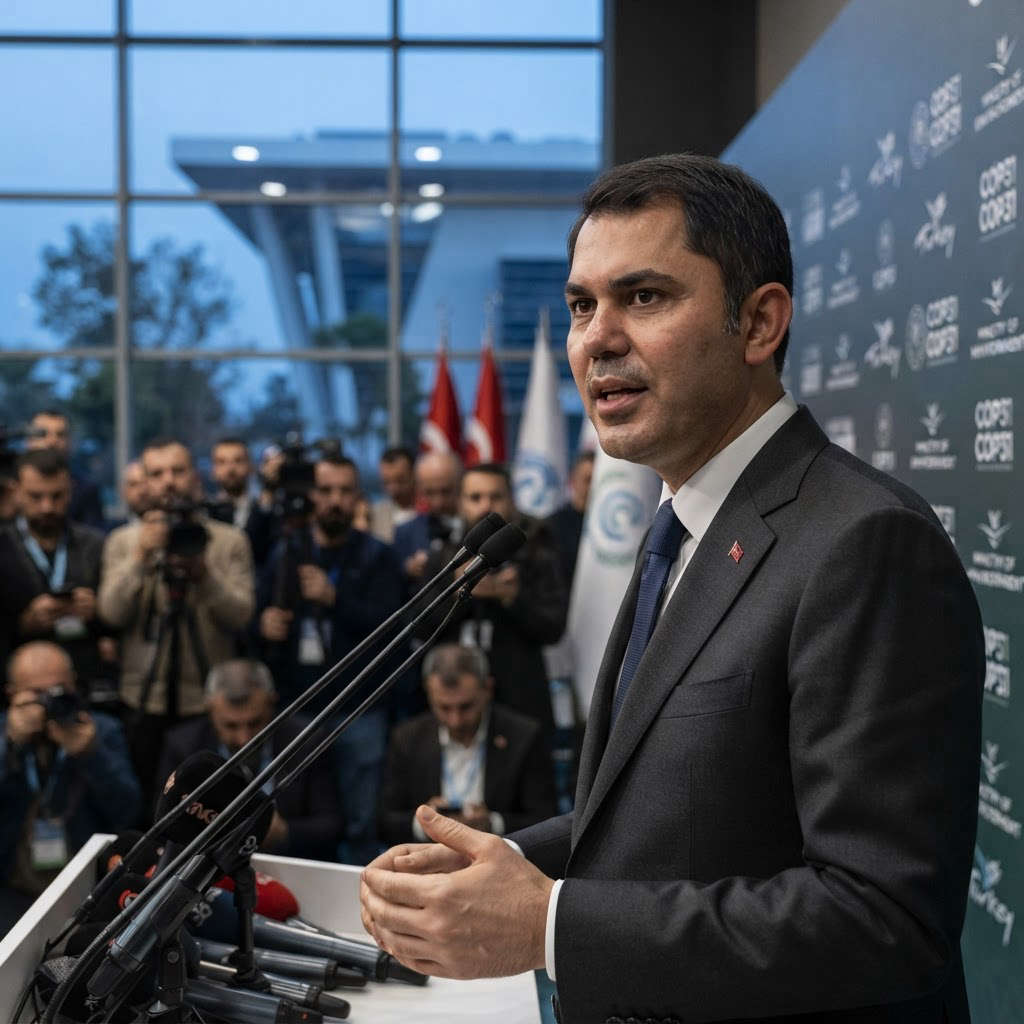
Global Leaders Convene in Antalya for COP31 Climate Summit to Address Implementation Gaps
Summary
The 31st United Nations Climate Change Conference (COP31) is set to begin in Antalya, Türkiye, on November 9, 2026, bringing together representatives from over 190 countries. The summit aims to shift the focus from rule-setting to the practical implementation of climate goals, with a specific emphasis on electrification and climate finance. Heads of State and Government are scheduled to participate in a high-level Leaders' Summit on November 11 and 12 to discuss global cooperation. Negotiators face significant challenges, including geopolitical tensions and the need to secure funding for developing nations amid global economic constraints.
The key actors involved in COP31 include the UNFCCC (United Nations Framework Convention on Climate Change), which organizes the summit, and the host nation, Türkiye, represented by the COP31 Presidency. Australia is serving as the President of Negotiations, coordinating the formal diplomatic tracks. Other participants include Heads of State and Government, international organizations like the International Energy Agency (IEA), corporate lobbyists, and civil society groups.
COP31 is the 31st annual UN climate conference. Unlike previous summits that focused on establishing the rulebook for the Paris Agreement, this year's conference is centered on implementation. Key priorities include the 35-by-35 Global Electrification Pledge, climate finance for developing nations, and adaptation strategies. The summit features a World Leaders' Summit on November 11-12 to facilitate high-level political commitments.
The summit is being held at the Antalya Expo Center in Antalya, Türkiye. The venue serves as the primary hub for plenary sessions, negotiations, and high-level roundtables.
The conference runs from November 9 to November 20, 2026. The high-level World Leaders' Summit is scheduled for November 11 and 12, which is expected to be the focal point for major announcements and political consensus-building.
The primary motivation for COP31 is the urgent need to address the climate crisis as global temperatures continue to rise. The UN has acknowledged that the world is on track to overshoot the 1.5°C warming threshold. The summit aims to bridge the gap between climate ambition and real-world action by securing financial commitments and fostering international cooperation on energy transitions.
The summit operates through a combination of formal negotiations (COP/CMP/CMA/SBSTA/SBI), high-level roundtables, and side events. The IEA provides technical support and data to inform these discussions. The process relies on consensus-based diplomacy among the 190+ parties to the UNFCCC to reach agreements on climate finance, emissions reductions, and adaptation measures.
·
© 2026 Universe One LLC. All rights reserved.

Cookie Notice
18+ BETACookies keep you signed in and run our ads. We do not sell your data. Analytics and ad-personalization stay off until you accept.
We use cookies to keep you signed in, remember your preferences, and run the in-app ad system that keeps Universe One free. We do not sell your data. Analytics and ad-personalization cookies stay off until you accept. Ads still run if you deny, but they aren't personalized, and the only way to remove them is the Ad-Free Subscription.
You must be 18 or older to create an account during Beta testing.