Rwanda Manages Marburg Virus Disease Outbreak
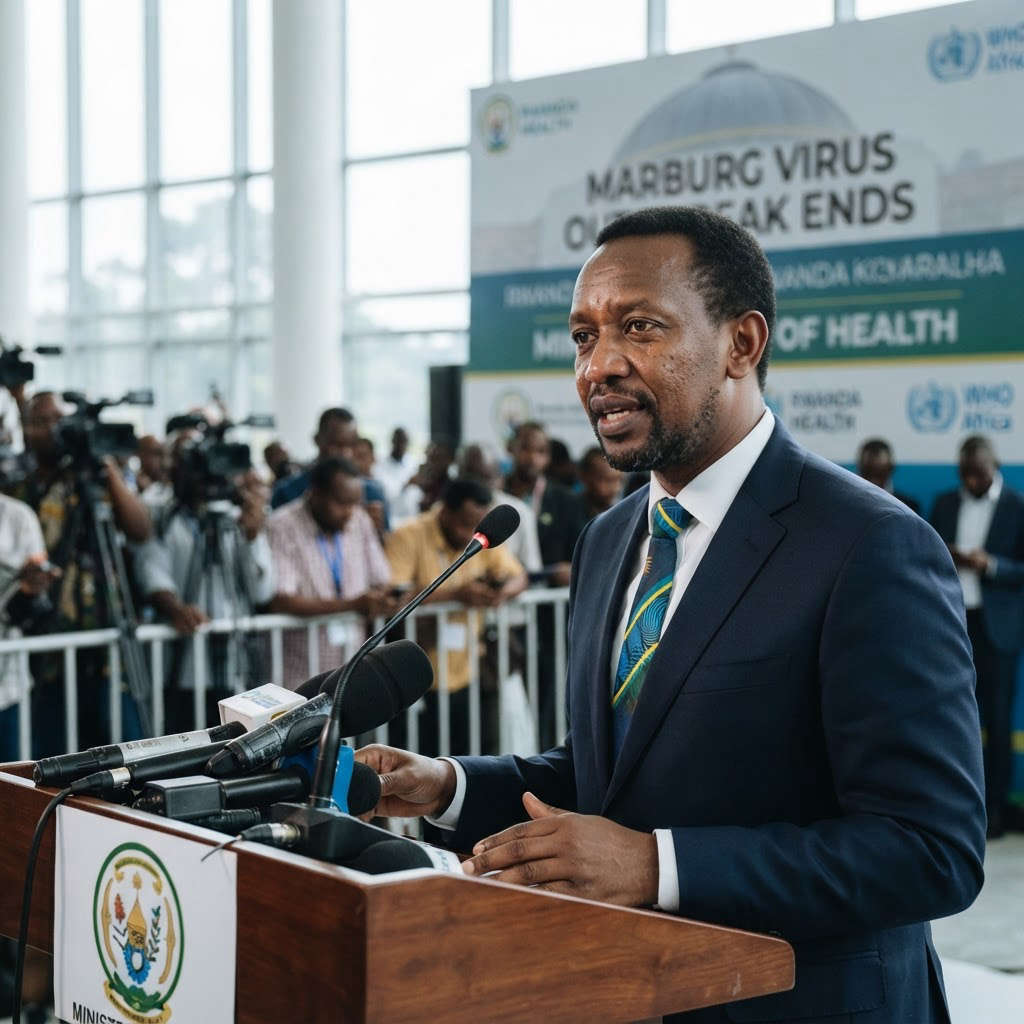
Rwanda experienced a Marburg virus disease outbreak that began in September 2024 and was declared over on December 20, 2024. Health authorities recorded 66 confirmed cases and 15 deaths, resulting in a case fatality ratio of approximately 23%. Following the last patient testing negative by PCR on November 7, 2024, the government initiated a 42-day observation period before officially declaring the outbreak contained.
The primary actors involved in the response to the Marburg virus disease (MVD) outbreak in Rwanda include the Rwanda Ministry of Health and the Rwanda Biomedical Centre (RBC), which have led the national response. International support has been provided by the World Health Organization (WHO), the Africa CDC, and UNICEF. Clinical and research contributions have been facilitated by institutions such as Oxford University and the Africa Health Sciences University.
Rwanda is managing an outbreak of the Marburg virus, a highly infectious and often fatal filovirus related to Ebola. The outbreak, which began in late 2024, has seen 66 confirmed cases and 15 deaths. The current phase involves a 42-day monitoring period to ensure no new cases emerge, a standard protocol for declaring an outbreak over. The response has focused on contact tracing, early detection, and the deployment of viral load testing hubs.
The outbreak is centered in Rwanda, with significant clinical activity in Kigali. The virus is known to circulate in East and Central Africa, with recent research suggesting that the pathogen may persist in animal reservoirs, such as those found in caves in neighboring Uganda.
The first outbreak was declared on September 27, 2024. Following a period of intensive response, the government declared the initial outbreak over on December 20, 2024. However, ongoing surveillance and monitoring continue through late 2026, with the most recent data updates provided in November 2026.
The primary motivation for the response is to prevent the spread of a high-mortality pathogen that poses a significant threat to regional and global health security. The One Health approach, supported by the Pandemic Fund, aims to integrate human, animal, and environmental health data to improve surveillance and response times.
The response utilizes a combination of epidemiologic surveillance, laboratory testing, and community engagement. The Field Epidemiology Training Program (FETP) has been instrumental in training local disease detectives who lead the response. Financial support has been bolstered by grants from the Pandemic Fund and co-investments from international partners, allowing for the rapid scaling of diagnostic and clinical capabilities.
Global Health & Pandemics
WHO Approves Trials for Two New Ebola Vaccines Amid Regional Outbreak Expansion
Summary
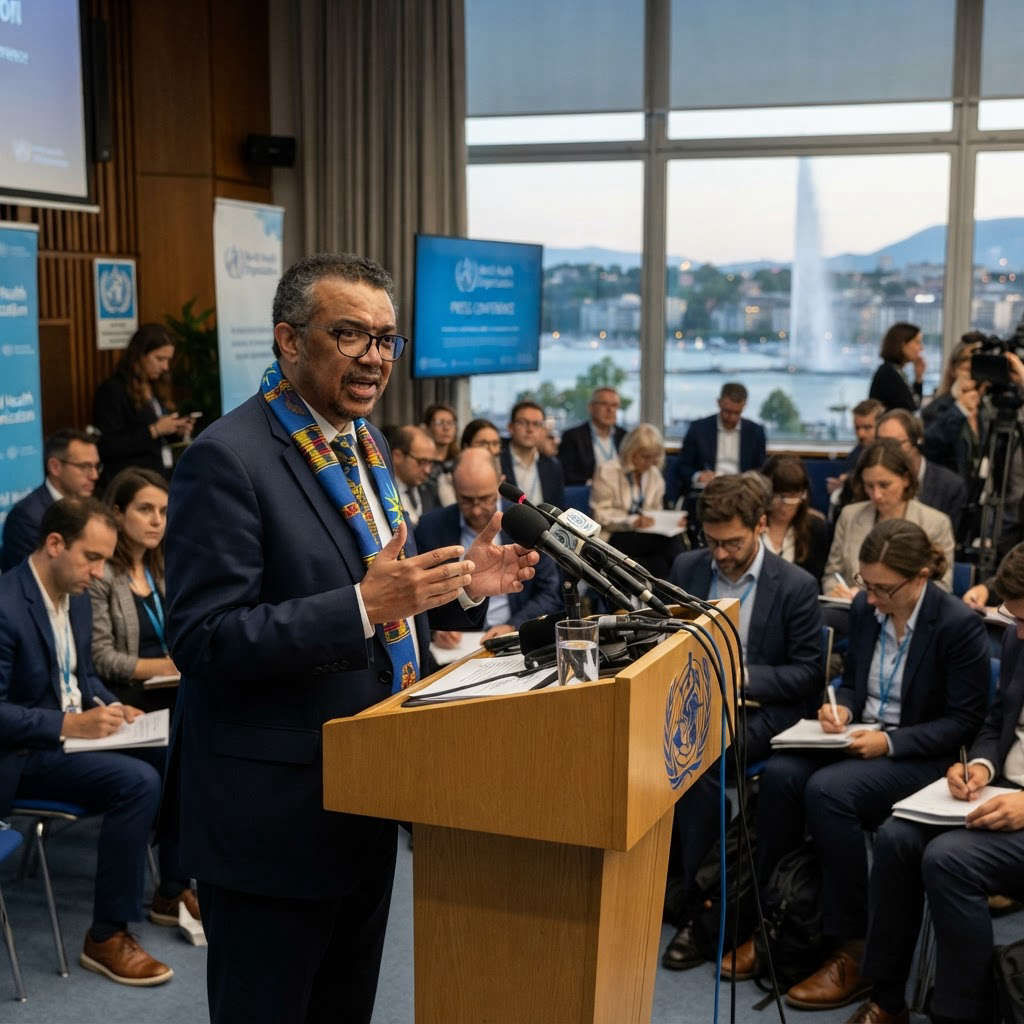
The World Health Organization has recommended the inclusion of two new vaccine candidates in an ongoing clinical trial to address the Bundibugyo Ebola virus outbreak. As of early November 2026, the Democratic Republic of the Congo has reported over 10,700 confirmed cases and more than 5,200 deaths. While the virus has been detected in neighboring countries, international health authorities continue to coordinate response efforts to manage the outbreak and its impact on regional healthcare systems.
The primary actors involved in this response include the World Health Organization (WHO), which is coordinating the international response and vaccine trials, and the Democratic Republic of the Congo (DRC), the epicenter of the outbreak. Other key stakeholders include the Africa Centres for Disease Control and Prevention (Africa CDC), which is working alongside the WHO, and various international health experts deployed by the EU Health Task Force (EUHTF) to support preparedness in the DRC, Kenya, Uganda, and South Sudan. Pharmaceutical developers and research institutions are also critical, as they provide the candidate vaccines currently entering clinical trials.
The current development is the official approval of clinical trials for two new candidate vaccines to combat the Bundibugyo Ebola virus. This strain has caused a significant outbreak in the DRC, with over 10,600 confirmed cases and 5,198 deaths reported as of early November 2026. The outbreak has been declared a Public Health Emergency of International Concern (PHEIC) by the WHO. The new vaccine trials are intended to supplement existing response measures, which include contact tracing, isolation, and community engagement, as the virus has shown signs of spreading beyond the DRC into neighboring countries.
The outbreak is primarily concentrated in the Democratic Republic of the Congo, specifically affecting eight provinces including Ituri. The virus has also been detected in Kenya, Nigeria, and France, with France reporting a case involving a doctor who returned from a humanitarian mission. The geographic spread has necessitated a multi-country response, with international experts deployed to several African nations to bolster surveillance and containment efforts.
The outbreak has been ongoing since May 2026, when the WHO first declared it a PHEIC. As of November 4, 2026, the WHO has officially approved the new vaccine trials. The response has been continuous, with various milestones including the end of the outbreak in Uganda in August 2026 and ongoing monitoring by the ECDC and WHO. The situation remains fluid, with daily updates provided by the DRC government and international health bodies.
The primary motivation for the vaccine trials is the high mortality rate associated with the Bundibugyo strain and the failure of current containment strategies to fully halt the spread of the virus. The WHO and its partners are seeking to reduce the burden of the disease, which has overwhelmed local healthcare systems and caused significant social and economic disruption. The expansion of the outbreak to multiple countries has increased the urgency for effective medical countermeasures.
The response is managed through a combination of epidemiological surveillance, clinical research, and international coordination. The WHO utilizes the International Health Regulations (IHR) framework to monitor the outbreak and coordinate the response. Vaccine trials are conducted through established clinical research protocols, ensuring that safety and efficacy data are collected systematically. The deployment of experts by the EUHTF and other international bodies provides technical support to local health authorities, facilitating the implementation of standardized response measures across affected regions.
Global Natural Disasters
Spanish Government and Opposition Clash Over Recovery Efforts Following DANA Adam Floods

Summary
The Spanish government and opposition parties are in a dispute regarding the adequacy of the response to the DANA Adam floods in Valencia, which resulted in four deaths. While the Generalitat Valenciana has announced a 43.5 million euro emergency aid package, opposition figures have criticized the central government for allegedly lacking a comprehensive reconstruction plan. Prime Minister Pedro Sánchez visited the region on November 7, an event that drew criticism from opposition members who characterized the visit as politically motivated. Government officials maintain that the central administration is actively monitoring the situation and providing necessary support to the affected areas.
The key actors involved in the DANA Adam crisis include the Spanish Prime Minister Pedro Sánchez, the Minister of Finance Arcadi España, and the regional government of the Generalitat Valenciana. Additionally, local victims' associations, the Confederación Hidrográfica del Júcar, and various political parties, including the PSOE and the PP, are central to the ongoing debate regarding recovery and accountability.
The event involves the aftermath of the DANA Adam (Depresión Aislada en Niveles Altos), a severe weather phenomenon that caused significant flooding in Valencia and surrounding regions. The core of the current conflict is the dispute over the adequacy of the central government's financial response. While the regional government has allocated 43.5 million euros, critics argue that the central government has failed to provide sufficient direct aid or a comprehensive reconstruction plan, leading to accusations of political neglect.
The primary impact is concentrated in the Valencia region of Spain, specifically affecting municipalities such as Oliva, Pego, and Els Poblets. The political fallout is centered in the national capital, Madrid, and the regional capital, València, where political rallies and protests are taking place.
The DANA Adam event occurred in late October 2026. As of November 7, 2026, the situation remains a point of intense political contention. The visit of Prime Minister Sánchez to Valencia on November 7 has served as a flashpoint for renewed criticism and political campaigning.
The stated motivations for the government's actions are to provide ongoing support and monitoring of the recovery process. Conversely, the opposition and victims' groups argue that the government's response is insufficient and politically motivated, citing a lack of direct aid and the failure to implement long-term hydraulic infrastructure projects that were identified as necessary years ago.
The recovery process is managed through a combination of regional emergency funds and potential central government intervention. The political conflict is being played out through public statements, media appearances, and political rallies, with both sides attempting to frame the other's actions as either negligent or opportunistic. The legal and administrative mechanisms for declaring a national catastrophe remain a key point of contention, as this would trigger significant federal financial support.
·
© 2026 Universe One LLC. All rights reserved.

Cookie Notice
18+ BETAWe use cookies to keep you signed in, remember your preferences, and run the in-app ad system that keeps Universe One free. We do not sell your data. Analytics and ad-personalization cookies stay off until you accept. Ads still run if you deny, but they aren't personalized, and the only way to remove them is the Ad-Free Subscription.
You must be 18 or older to create an account during Beta testing.