Markets & Financial Stability
Federal Reserve Officials Discuss Future Interest Rate Path
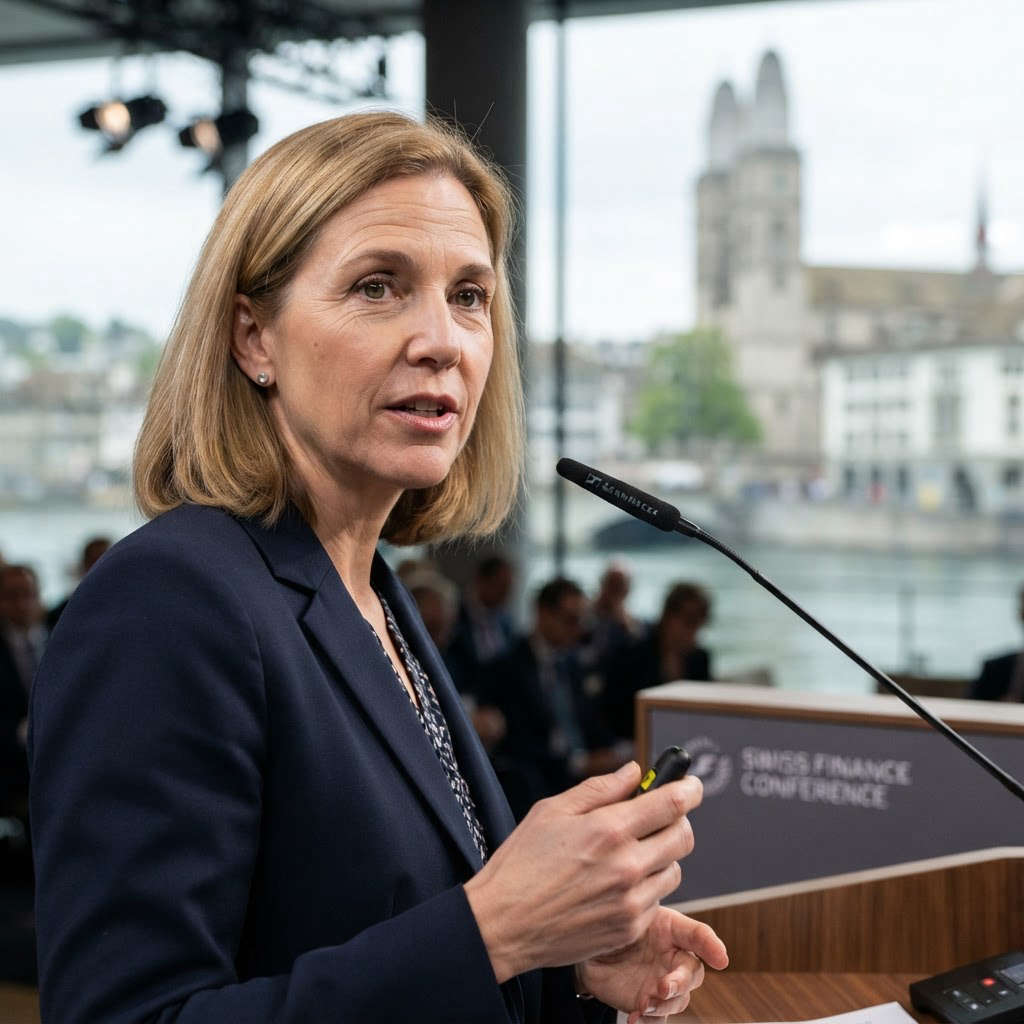
Federal Reserve officials, including Cleveland Fed President Beth Hammack and Richmond Fed President Thomas Barkin, indicated on November 5, 2026, that further interest rate increases may be necessary to address persistent inflation. This follows the Federal Open Market Committee's recent decision to maintain the target range at 3.75%-4.00%. Policymakers noted that while inflation remains above the 2% target, the pace of future adjustments remains a subject of ongoing evaluation. Markets are monitoring these comments alongside broader economic developments.
Federal Reserve interest rate policy directly influences borrowing costs for American consumers and businesses, impacting mortgage rates, credit card interest, and overall economic growth.
The key actors involved are Federal Reserve officials, specifically Cleveland Fed President Beth Hammack and Richmond Fed President Thomas Barkin. These individuals are responsible for shaping the central bank's monetary policy stance. The broader Federal Open Market Committee (FOMC), which sets the benchmark interest rate, remains the primary institution overseeing these decisions. Investors and market participants are the primary audience reacting to these signals.
Federal Reserve officials have signaled a preference for a gradual path of interest rate increases to address persistent inflation. This follows the Fed's recent decision to maintain the benchmark interest rate within the 3.75%-4.00% range. The officials argue that despite some positive economic indicators, the central bank has "more work to do" to bring inflation down to its target levels. This guidance is being communicated to manage market expectations following the recent U.S. midterm elections.
The policy decisions are made at the Federal Reserve headquarters in Washington, D.C., with regional bank presidents like Hammack and Barkin providing input from their respective districts. The impact of these decisions is felt across the entire United States economy, affecting financial markets, corporate investment, and consumer borrowing costs.
These statements were made on November 5, 2026. The Federal Reserve held its most recent rate-setting meeting in late October 2026. The next meeting is scheduled for December 2026, where the committee will decide whether to continue the current pause or resume rate hikes.
The stated motivation for the gradual rate-hike path is the need to combat sticky inflation that has proven resistant to previous policy actions. Officials are attempting to balance the need for price stability with the desire to avoid an abrupt economic contraction. There is also a need to communicate clearly with investors who are currently reassessing the economic landscape following the Democratic sweep in the 2026 midterms.
The Federal Reserve utilizes the federal funds rate as its primary tool to influence the economy. By raising this rate, the Fed increases the cost of borrowing for banks, which in turn raises interest rates for consumers and businesses. This mechanism is intended to reduce aggregate demand, thereby slowing price increases. The Fed also uses forward guidance—public statements by officials—to influence market expectations and long-term interest rates.
This policy direction is critical because it sets the tone for the U.S. economy heading into 2027. If the Fed miscalculates, it could trigger a recession or allow inflation to become entrenched. The interaction between the Fed's monetary policy and the new Congress's fiscal agenda will be a defining feature of the coming year.
Markets will closely watch the December FOMC meeting for any shift in the "gradual" rhetoric. Additionally, upcoming inflation data releases will be scrutinized to see if the Fed's current strategy is yielding the desired results.
Key Unknowns
It remains unclear how the new Congress will respond to the Fed's continued rate hikes, particularly if those hikes are perceived to be slowing economic growth or hindering the AI infrastructure buildout. The extent to which AI-driven productivity gains can offset inflationary pressures is also a subject of ongoing debate.
Watch for further statements from other FOMC members regarding their outlook for 2027. Also, monitor the 10-year Treasury yield, as it serves as a benchmark for many consumer loans and is a key indicator of market confidence in the Fed's strategy.
Sources
Topics
- Universe One
- Markets & Financial Stability
- federal
- reserve
- officials
- discuss
- future
- interest
- rate
- path