Latin America & the Caribbean
Mexico Challenges Texas Land Claim Over Rio Grande Islands Amid Border Tensions
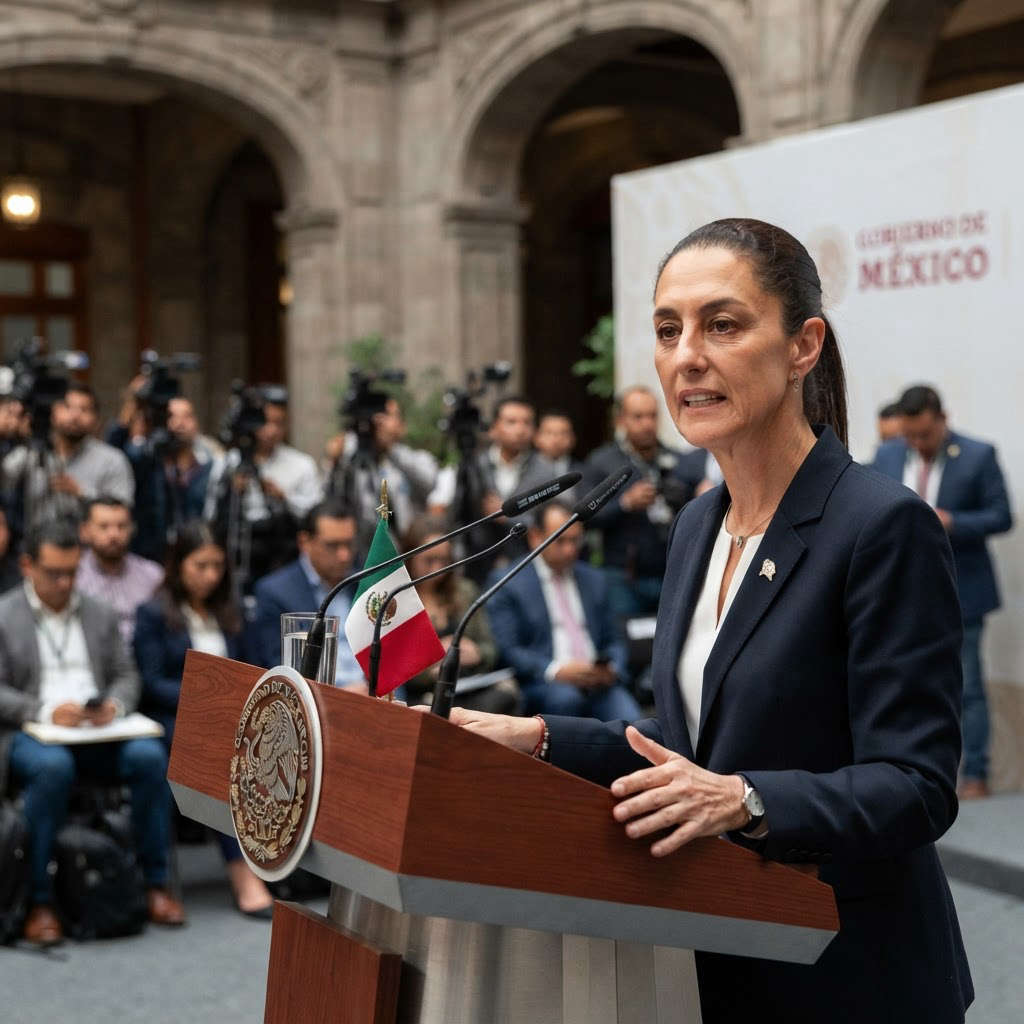
Mexican President Claudia Sheinbaum has formally objected to a recent move by the Texas General Land Office to assert state control over nine islands in the Rio Grande. Mexico contends that the 1970 Boundary Treaty mandates that the binational commission, CILA, must determine the ownership of land formed along the river channel. Texas officials argue the designation is a necessary security measure to prevent criminal organizations from utilizing the islands. The dispute adds a new layer of diplomatic friction to the ongoing bilateral negotiations between the United States and Mexico regarding trade and border security.
The primary actors involved in this dispute are the Mexican government, led by President Claudia Sheinbaum, and the Texas General Land Office, which initiated the claim. The binational commission (CILA), established under the 1970 Boundary Treaty, is the institution tasked with managing the boundary. The U.S. federal government remains a critical, though currently less visible, actor in the dispute.
The Texas General Land Office has designated nine islands in the Rio Grande as state property, citing a need to improve border security and prevent criminal organizations from using the islands as hiding places. Mexico has formally objected to this designation, arguing that the islands' status must be determined by the binational commission (CILA) according to the 1970 Boundary Treaty, which defines the border along the center of the river's normal channel.
The dispute is centered on a stretch of the U.S.-Mexico border along the Rio Grande, specifically involving nine islands that have formed naturally over time. The jurisdiction of the land is contested between the state of Texas and the federal government's treaty obligations with Mexico.
The dispute gained prominence in early November 2026. The 1970 Boundary Treaty serves as the long-standing legal framework for these issues, and the current conflict arises from recent state-level actions taken in the context of ongoing border security and trade negotiations.
Texas officials state that the uncertainty regarding the ownership of these islands has limited their ability to monitor and protect the border, necessitating state control. Mexico, conversely, maintains that the islands are subject to international treaty law and that a single U.S. state cannot unilaterally determine the boundary. The dispute is also influenced by broader tensions regarding migration, drug trafficking, and trade.
The Texas General Land Office utilized a state land survey to assert its claim. Mexico has responded by lodging a formal objection through diplomatic channels, emphasizing the role of CILA. The process for resolution involves either diplomatic negotiation between the U.S. and Mexican governments or potential legal challenges regarding the supremacy of federal treaty obligations over state land management.
Sources
Topics
- Universe One
- Latin America & the Caribbean
- mexico
- challenges
- texas
- land
- claim
- grande
- islands
- amid
- border
- tensions