Diplomacy & Treaties
Fiji Government Moves to Bypass Parliamentary Committee on Australia Defense Treaties
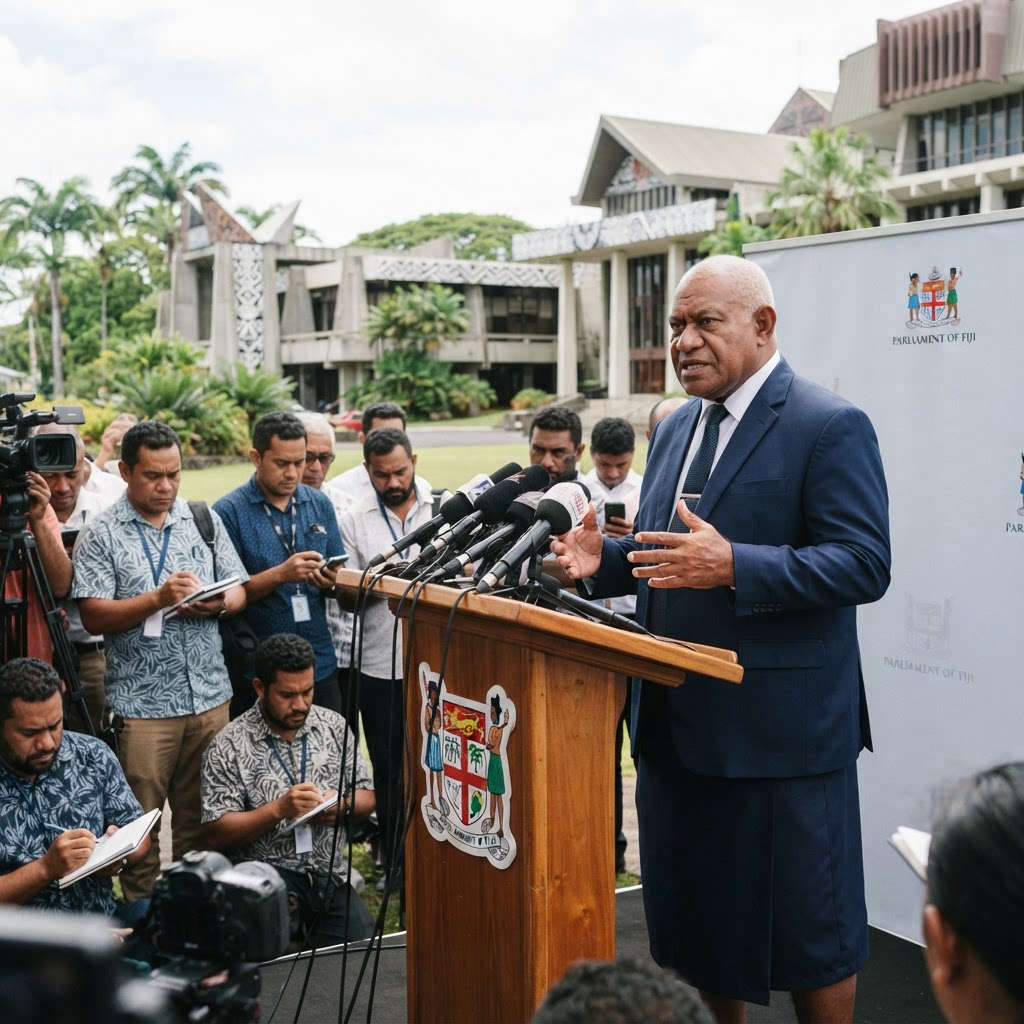
Fiji Prime Minister Sitiveni Rabuka announced plans to bypass a parliamentary committee recommendation that urged the deferral of two major defense and security treaties with Australia. The Standing Committee on Foreign Affairs and Defence had previously warned that the agreements could compromise Fiji's sovereignty and non-aligned foreign policy. Rabuka intends to introduce a new motion directly to Parliament to secure approval for the partnerships. The treaties, known as the Fiji-Australia Vuvale Union and the Ocean of Peace Alliance, remain central to regional security cooperation.
The key actors involved are Prime Minister Sitiveni Rabuka of Fiji, the Standing Committee on Foreign Affairs and Defence chaired by Lenora Qereqeretabua, and the government of Australia. The process involves the Fijian Parliament and various ministries, including the Ministry of Foreign Affairs and External Trade.
The Fijian government is seeking to ratify two major agreements: the Fiji-Australia Vuvale Union and the Ocean of Peace Alliance (also known as the Veitacini Treaty). The Standing Committee on Foreign Affairs and Defence has recommended deferring ratification, citing concerns over sovereignty, independent foreign policy, and national security. Prime Minister Rabuka has announced his intention to bypass this recommendation by introducing a new motion directly to the floor of Parliament.
The events are taking place in Suva, Fiji, within the halls of the Fijian Parliament. The treaties concern the bilateral relationship between Fiji and Australia, with broader implications for the security architecture of the South Pacific region.
The Standing Committee presented its review report on November 3, 2026. Prime Minister Rabuka announced his plan to bypass the committee on November 4, 2026. The treaties have been under review for some time, with the committee noting a lack of timely responses from relevant government divisions.
The government argues that the treaties are essential for economic development, infrastructure, and regional security. Conversely, the Standing Committee argues that the treaties were finalized without adequate legal scrutiny, proofreading, or quality assurance. They emphasize that defense cooperation must preserve Fiji's non-aligned foreign policy and that the current drafting contains inconsistencies, such as the absence of a definition for the term 'party'.
The process involves the standard parliamentary review of international treaties. The Standing Committee acts as a check on executive power. By moving a motion directly to Parliament, the Prime Minister is utilizing the legislative authority of the governing majority to override the committee's advisory role, effectively fast-tracking the ratification process despite the committee's formal recommendation for delay.
This development highlights the ongoing tension between executive foreign policy objectives and legislative oversight in Pacific island nations. It also underscores the complexities of regional security agreements in an era of increased geopolitical competition.
The government will likely introduce the motion in the coming days. The opposition and civil society groups may challenge the move, potentially leading to a contentious parliamentary debate.
Key Unknowns
It remains unclear whether the government has the necessary parliamentary support to pass the motion, and whether the opposition will mount a legal challenge to the procedural bypass.
Watch for the specific timing of the parliamentary motion and the reaction of the Australian government to the internal Fijian political process.
Sources
Topics
- Universe One
- Diplomacy & Treaties
- fiji
- government
- moves
- bypass
- parliamentary
- committee
- australia
- defense
- treaties