Latin America & the Caribbean
Mexican President Sheinbaum Pledges Continued Cooperation Following U.S. Midterm Election Results
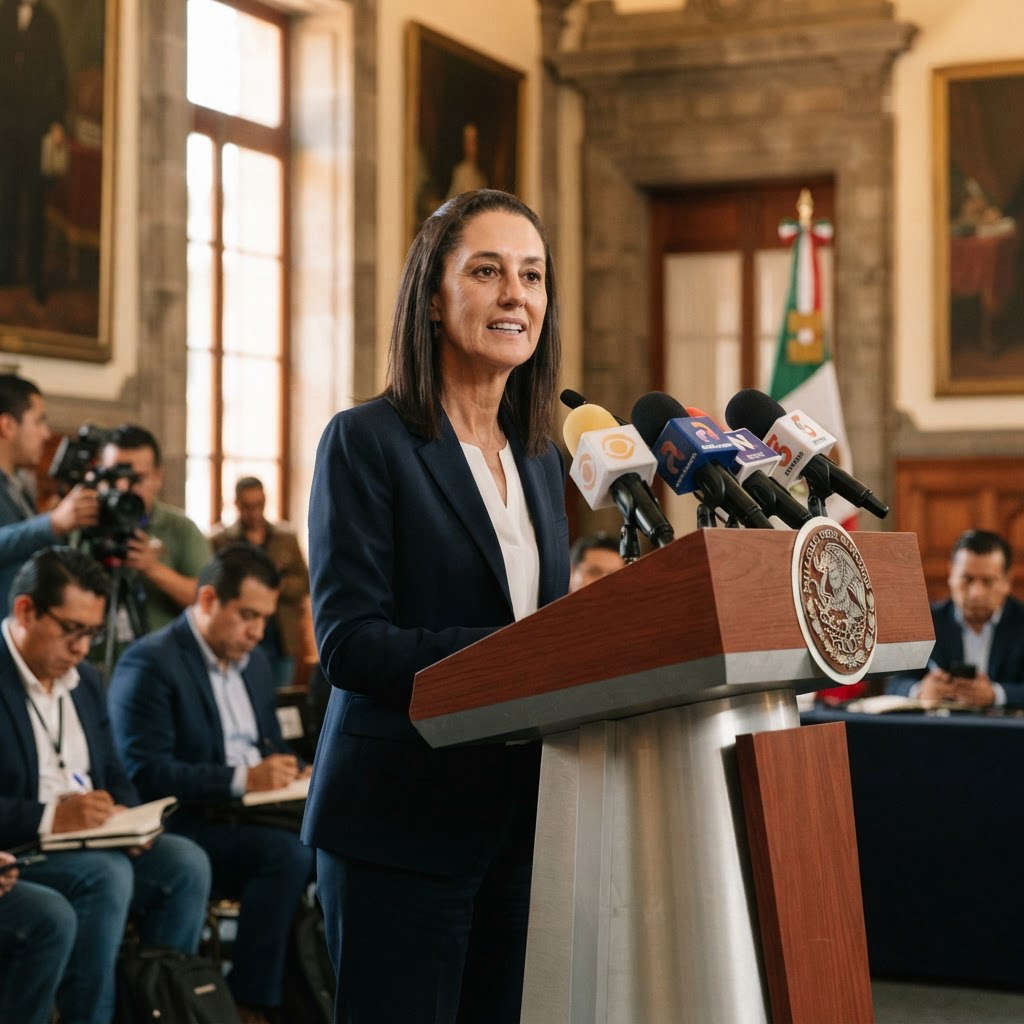
Following the November 2026 U.S. midterm elections, Mexican President Claudia Sheinbaum stated that her government would maintain its commitment to cooperation with the United States based on mutual respect for sovereignty and ongoing trade dialogue. Sheinbaum also publicly recognized the election of two governors of Mexican descent in California and Texas, describing their success as a significant milestone for the Mexican diaspora. The Mexican administration continues to engage in bilateral discussions regarding trade, migration, and security as both nations navigate their current diplomatic relationship.
The stability of U.S.-Mexico relations directly impacts American supply chains, border security, and the economic integration of the two nations, particularly following the shift in congressional control.
The key actors include Mexican President Claudia Sheinbaum, the Office of the United States Trade Representative (USTR), and various U.S. and Mexican labor unions. The U.S. political landscape is defined by the post-midterm shift, which has resulted in a divided government, while the Mexican government continues to manage domestic economic pressures and bilateral trade obligations.
The U.S. has invoked the Rapid Response Labor Mechanism (RRM) under the USMCA to investigate alleged labor rights violations at the Madobox facility in Mexico. Simultaneously, the U.S. and Mexico have reached a memorandum of understanding regarding labor practices at the Industrias Tecnos facility. These actions occur against the backdrop of broader trade tensions, including ongoing disputes over steel tariffs, agricultural imports, and the reopening of border ports for cattle trade following concerns over the New World screwworm.
The events are centered on the U.S.-Mexico border and specific industrial facilities within Mexico. Key locations include the Madobox facility, the Industrias Tecnos site, and various border crossings such as Columbus, New Mexico, and Nogales, Arizona.
The U.S. invoked the RRM for Madobox on November 2, 2026. The U.S. midterm elections concluded on November 3, 2026. The reopening of border ports for cattle has been a phased process occurring throughout the fall of 2026, with further reopenings scheduled through November 30, 2026.
The U.S. government is utilizing the RRM to ensure that Mexican facilities adhere to the labor standards mandated by the USMCA, aiming to prevent unfair competition and protect workers' rights. The Mexican government is balancing these enforcement actions with its own domestic economic goals, including the need to maintain stable trade relations with the U.S. while addressing internal political pressures and the demands of its own labor and producer groups.
The mechanisms involved include the USMCA's Rapid Response Labor Mechanism, which allows for the suspension of liquidation of goods from facilities found to be in violation of labor rights. The U.S. and Mexico also utilize bilateral memoranda of understanding to outline specific remedial actions, such as training programs and compensation for dismissed workers. These processes are overseen by the Interagency Labor Committee for Monitoring and Enforcement (ILC) in the U.S. and the relevant ministries in Mexico.
Sources
- Sheinbaum hails Mexican American victories in U.S. elections — UPI
- United States Seeks Mexico’s Review of Alleged Denial of Workers’ Rights at Madobox — United States Trade Representative
Topics
- Universe One
- Latin America & the Caribbean
- mexican
- president
- sheinbaum
- pledges
- continued
- cooperation
- following
- midterm
- election
- results