Federal Reserve & Interest Rates
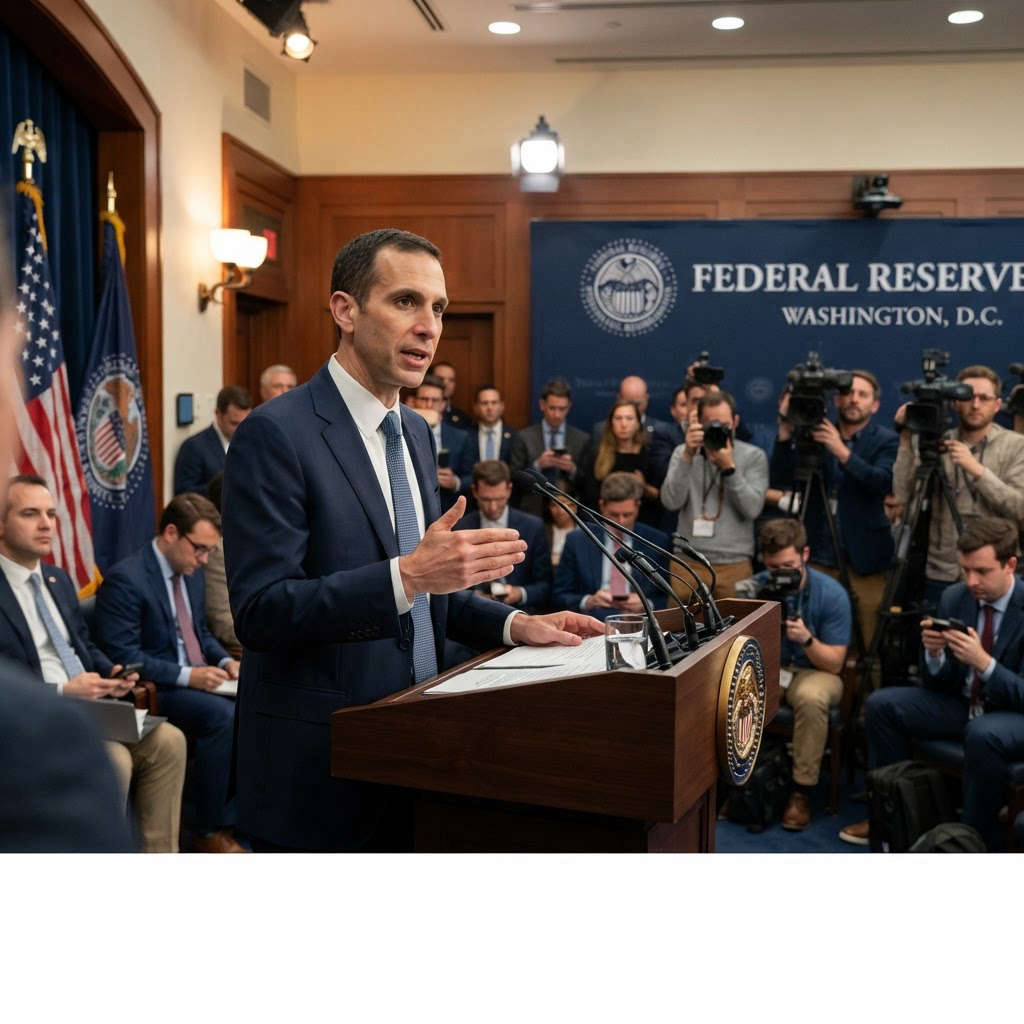
Federal Reserve Chair Kevin Warsh Announces Reduction in Annual Rate-Setting Meetings
Summary
Federal Reserve Chair Kevin Warsh has announced a structural change to the Federal Open Market Committee's meeting schedule for 2027 and 2028. The adjustment will replace one standard rate-setting meeting in 2027 and two in 2028 with strategy-focused sessions that do not include interest rate votes or policy statements. This shift aims to provide the committee with dedicated time for long-term planning outside of the immediate pressure of monetary policy decisions. The Fed recently maintained the federal funds rate target range at 3.75% to 4.0% during its October meeting.
Changes to the Federal Reserve's meeting schedule and interest rate policy directly impact the cost of borrowing for American consumers and businesses, influencing national economic growth and inflation management.
The primary actors involved are the Federal Open Market Committee (FOMC), led by Chair Kevin Warsh, who assumed the role in May 2026. The committee includes the seven members of the Board of Governors and five of the twelve regional Federal Reserve Bank presidents who rotate on a yearly basis.
The Federal Reserve has announced a structural change to its meeting schedule for 2027 and 2028. Specifically, the committee will replace one standard rate-setting meeting in 2027 and two in 2028 with strategy-focused sessions. These sessions will not include interest rate votes or the issuance of policy statements. This change is intended to allow the committee to focus on long-term strategic planning without the immediate pressure of policy implementation.
The meetings are held at the Federal Reserve Board of Governors headquarters in Washington, D.C. The impact of these decisions is national, affecting the entire U.S. financial system and the broader economy.
The announcement was made in early November 2026, with the new schedule taking effect in 2027. The most recent FOMC meeting occurred on October 27-28, 2026, where the committee maintained the federal funds rate at 3.75% to 4.0%. The next scheduled meeting is December 8-9, 2026.
The stated motivation is to provide the committee with dedicated time for long-term strategic planning. By separating strategy from policy action, the Fed hopes to improve the quality of its long-term decision-making. Critics and market observers, however, have raised concerns about the potential for increased market uncertainty if the Fed's communication strategy is not sufficiently clear during these non-voting sessions.
The FOMC operates under the authority granted by the Federal Reserve Act. The Chair has the authority to set the meeting schedule and agenda. The committee's decisions are implemented through the Federal Reserve Bank of New York's open market operations, which influence the federal funds rate. The shift to strategy-only meetings is a procedural change within the committee's internal governance structure.
This change represents a significant shift in how the nation's central bank manages its most critical function: setting interest rates. By reducing the frequency of formal policy votes, the Fed is attempting to prioritize long-term stability over short-term reaction, but this carries the risk of appearing less responsive to immediate economic data.
Market participants will be closely watching the December 2026 meeting to see if the committee provides further guidance on how it plans to communicate during the upcoming strategy-only sessions. The effectiveness of this new approach will be tested by the economic data released throughout 2027.
Key Unknowns
It remains unclear how the Fed will handle unexpected economic shocks that occur during or immediately following a strategy-only meeting. Additionally, the specific criteria for what constitutes a 'strategy' topic versus a 'policy' topic have not been fully defined.
Watch for any statements from Chair Warsh or other governors regarding the communication protocols for the 2027 strategy meetings. Any volatility in the federal funds rate or Treasury yields following these meetings will be a key indicator of market confidence in the new structure.
Sources
Topics
- Universe One
- Federal Reserve & Interest Rates
- federal
- reserve
- chair
- kevin
- warsh
- announces
- reduction
- annual
- rate-setting
- meetings