Materials Science
Could flexible nanoparticle connectors enable the design of next-generation optical and electronic materials
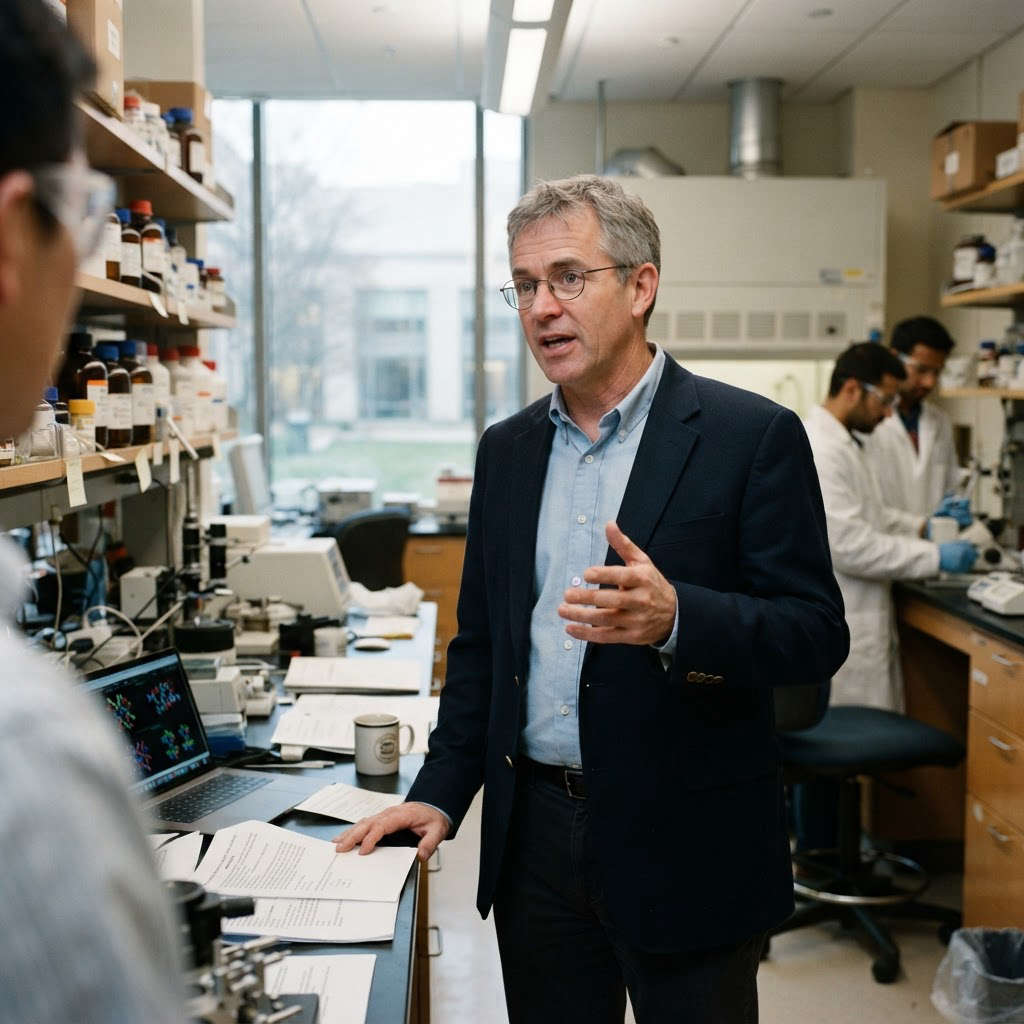
MIT researchers have discovered that using flexible molecular connections instead of rigid ones allows for the creation of previously unseen nanoparticle crystal structures. This approach challenges a two-decade-old rule in materials science that favored rigid linkages for nanoparticle assembly. By controlling these flexible connections, scientists can now arrange nanoparticles into more open and varied configurations. This breakthrough provides a new method for engineering materials with highly specialized optical and electronic properties.
Challenging the Rigid Paradigm
For two decades, the prevailing consensus in materials science held that rigid molecular connections were essential for the stable assembly of nanoparticle superlattices (ScienceDaily, 2026). Researchers at MIT have fundamentally challenged this assumption by demonstrating that flexible molecular linkers can, in fact, facilitate the formation of entirely new, previously unseen crystal structures (ScienceDaily, 2026). This discovery suggests that the flexibility of the connector molecule provides a degree of freedom that allows nanoparticles to arrange themselves in configurations that were previously considered impossible or unstable (ScienceDaily, 2026). By moving away from the requirement for rigid linkages, scientists can now explore a much broader design space for creating materials with tailored properties (ScienceDaily, 2026).
From Laboratory Discovery to Industrial Application
The practical utility of this advancement lies in the ability to engineer materials with specialized optical and electronic properties, which are highly sought after for applications in photonics and advanced electronics (ScienceDaily, 2026). However, the transition from a laboratory-scale demonstration to a scalable industrial process remains a significant hurdle (ScienceDaily, 2026). Future research must focus on the precise control of these flexible linkers to ensure the reproducibility of the resulting crystal structures at scale (ScienceDaily, 2026). Furthermore, researchers need to determine the long-term stability of these structures under real-world operating conditions, such as thermal cycling or mechanical stress (ScienceDaily, 2026). The next logical step is to develop high-throughput synthesis methods that can leverage these flexible linkers to produce functional components, such as optical filters or sensors, which can be integrated into existing manufacturing workflows (ScienceDaily, 2026). Achieving this will require a concerted effort to bridge the gap between fundamental molecular design and large-scale materials engineering (ScienceDaily, 2026).
What It Will Take to Advance This
Researchers must conduct systematic studies to map the relationship between the flexibility of the linker molecules and the resulting crystal structures. This requires a large-scale dataset of different linker types and their corresponding nanoparticle arrangements to establish predictive models. A major barrier is the precise control of the assembly process to ensure the formation of uniform, defect-free crystal structures at scale. Current methods often result in structural variations that limit the performance of the final material. Increased funding is needed for high-throughput synthesis and characterization facilities that can handle the complexity of nanoparticle assembly. This includes access to advanced imaging tools like electron microscopy to verify the structures at the nanoscale. As these materials move toward commercial use, regulatory bodies will need to establish safety protocols for the handling and disposal of nanoparticle-based products. This includes assessing the potential environmental and health impacts of the flexible linker molecules. The development of scalable manufacturing processes, such as roll-to-roll assembly or automated liquid-handling systems, is essential for moving from laboratory-scale production to industrial-scale manufacturing.
Future Possibilities
The ability to engineer nanoparticle structures with precise optical properties could lead to the development of highly sensitive, low-cost diagnostic sensors. These sensors could detect biomarkers at the point of care, significantly reducing the time required for medical diagnosis. By utilizing flexible linkers to create stable, porous structures, researchers can increase the surface area available for binding target molecules. Future research should focus on the biocompatibility of these flexible linkers to ensure they can be used in wearable or implantable diagnostic devices.
- •Mid term (2-5 years)
- •Moderate confidence
Reference: MIT researchers have demonstrated that flexible linkers allow for more open and varied nanoparticle structures, which are ideal for sensing applications (ScienceDaily, 2026).
Advanced materials with specialized optical properties could enable the development of next-generation stealth technologies and high-performance communication systems. By precisely controlling how light interacts with these nanoparticle-based materials, the military could create surfaces that are highly effective at absorbing or redirecting electromagnetic radiation. This would require the development of large-scale manufacturing processes to produce these materials in the quantities needed for defense applications. Researchers should investigate the durability of these structures in extreme environments to ensure their effectiveness in the field.
- •Long term (5+ years)
- •Low confidence
Reference: The ability to engineer materials with specialized optical properties is a key potential application of this research (ScienceDaily, 2026).
The commercialization of designer materials built from nanoparticles could create a new sector in the high-tech manufacturing industry. By reducing the time and cost associated with screening chemically unstable designs, companies can bring innovative products to market faster. This would be supported by AI-driven design tools that predict the behavior of these materials before they are synthesized. The economic impact would be driven by the adoption of these materials in the semiconductor and photonics industries, which are critical to the global economy.
- •Mid term (2-5 years)
- •High confidence
Reference: AI tools like CrysVCD are already being used to cut the time and money spent on screening unstable material designs (MIT News, 2026).
Flexible-linker nanoparticle materials could be used to develop more efficient catalysts for environmental remediation, such as the destruction of pollutants in water. By creating structures with high surface areas and specific chemical properties, these materials could accelerate the degradation of harmful substances. This would require the development of sustainable synthesis methods that minimize the use of toxic chemicals. Future research should focus on the recyclability of these materials to ensure they do not contribute to environmental waste.
- •Long term (5+ years)
- •Low confidence
Reference: The research highlights the potential for these materials in chemical catalysis (MIT News, 2026).
The integration of these materials into consumer electronics could lead to devices that are thinner, lighter, and more energy-efficient. For example, advanced optical coatings could improve the performance of smartphone cameras and displays. As manufacturing costs decrease, these materials could become standard in a wide range of everyday products. Researchers should focus on the long-term stability of these materials to ensure they can withstand the rigors of daily use.
- •Long term (5+ years)
- •Moderate confidence
Reference: The research suggests that controlling nanoparticle arrangement is key to creating materials with new properties (ScienceDaily, 2026).
The National Science Foundation (NSF) should establish a dedicated grant program under the Materials Research Science and Engineering Centers (MRSEC) to explore the scalability of flexible-linker nanoparticle assembly. This funding would support the transition from laboratory-scale synthesis to pilot-scale production of designer optical materials. By prioritizing projects that integrate computational modeling with experimental synthesis, the NSF can accelerate the discovery of new crystal phases. This initiative would mirror the successful structure of the existing Materials Genome Initiative.
- •MIT researchers have already demonstrated the feasibility of using flexible molecules to create novel structures (ScienceDaily, 2026).
- •Computational tools are increasingly capable of predicting nanoparticle behavior, as noted in recent MIT research (MIT News, 2026).
Reference: National Science Foundation (NSF) Materials Research Science and Engineering Centers (MRSEC) program
Manufacturing firms should invest in automated liquid-handling systems capable of precise nanoparticle assembly using flexible linkers. By adopting high-throughput synthesis platforms, companies can test thousands of molecular combinations to identify optimal structures for photonics. This infrastructure investment would allow for the rapid prototyping of materials that were previously impossible to construct. The goal is to achieve a 10x increase in the speed of material discovery compared to current manual methods.
- •The ability to choose properties of nanoparticles independently is a long-sought goal in materials science (ScienceDaily, 2026).
- •Current research indicates that flexible connectors allow for more open and varied structures (ScienceDaily, 2026).
Reference: MIT News, 'A flexible new route to designer materials built from nanoparticles', 2026
The National Institute of Standards and Technology (NIST) should develop standardized characterization protocols for nanoparticle superlattices created with flexible linkers. Establishing these benchmarks will ensure that materials produced in different laboratories are comparable and reliable for industrial use. This standardization process will involve defining metrics for structural stability and optical performance. Such protocols are essential for the eventual certification of these materials in commercial electronics.
- •Standardization is a critical barrier to moving from experimental materials to real products (ScienceDaily, 2026).
- •NIST has a history of setting standards for emerging nanotechnology (NIST, 2026).
Reference: National Institute of Standards and Technology (NIST) Nanotechnology Standards
Universities should integrate interdisciplinary training programs that combine molecular chemistry with advanced computational materials science. By training the next generation of researchers in both the synthesis of flexible linkers and the simulation of nanoparticle assembly, institutions can bridge the gap between theory and application. This curriculum would include hands-on experience with high-resolution imaging and AI-driven design tools. Such training is vital for maintaining a competitive edge in the global materials market.
- •The complexity of nanoparticle assembly requires expertise in both chemistry and physics (ScienceDaily, 2026).
- •AI models are already being used to reason about crystalline materials (MIT News, 2026).
Reference: MIT Department of Materials Science and Engineering curriculum guidelines
The U.S. Department of Energy (DOE) should initiate a collaborative research framework with international partners to share data on nanoparticle assembly and structural characterization. By pooling resources and datasets, researchers can more effectively map the vast landscape of possible crystal structures. This collaboration would focus on open-access databases that allow scientists worldwide to contribute to the understanding of flexible-linker dynamics. Such a partnership would accelerate the development of sustainable energy materials.
- •International collaboration is a standard practice for large-scale materials research (DOE, 2026).
- •The complexity of the problem benefits from diverse research perspectives (ScienceDaily, 2026).
Reference: DOE Office of Science, Scientific Discovery through Advanced Computing (SciDAC) program
Sources
Topics
- Universe One
- Materials Science
- could
- flexible
- nanoparticle
- connectors
- enable
- design
- next-generation
- optical
- electronic
- materials