Energy & Fusion
Could expanded DOE fusion research partnerships accelerate the deployment of commercial fusion power plants
Summary
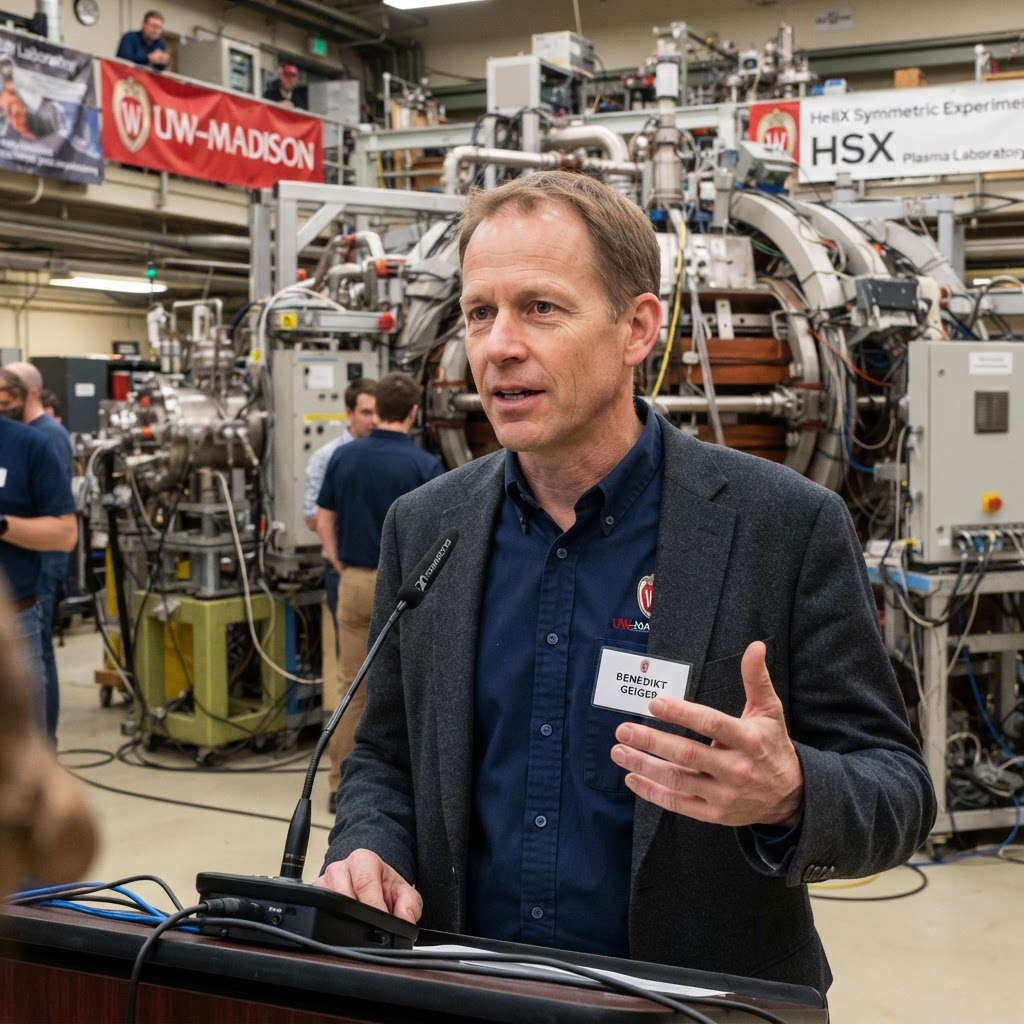
The U.S. Department of Energy has allocated $8.5 million in fiscal year 2026 funding through the Innovation Network for Fusion Energy (INFUSE) program to support 28 projects. These awards facilitate collaboration between private fusion companies and national laboratories or universities to address scientific and technical challenges. Additionally, international research efforts are ongoing, including collaborations between various firms on fusion-related technologies. These initiatives are part of a broader strategy to integrate private-sector innovation with public research infrastructure to support the development of commercial fusion energy.
Bridging the Gap Between Research and Industry
The recent $8.5 million commitment by the U.S. Department of Energy (DOE) to the INFUSE program marks a strategic pivot toward industrializing fusion energy (Innovation News Network, 2026). By providing private developers access to national laboratory facilities, the DOE aims to solve specific technical barriers—such as material degradation and plasma control—that have historically hindered commercial progress (Innovation News Network, 2026). This initiative complements the private sector's own capital-intensive efforts, exemplified by Type One Energy’s recent $200 million Series B financing round (Wilson Sonsini, 2026). The integration of these public and private resources is designed to accelerate the development of 'FusionDirect' technology, which seeks to apply proven energy industry growth models to the nascent fusion sector (Wilson Sonsini, 2026).
International Cooperation and Technical Standardization
Beyond domestic efforts, the fusion landscape is becoming increasingly globalized through collaborative agreements. The recent MOU between Focused Energy and Kyoto Fusioneering, signed during a Japan-Germany meeting, highlights a shared focus on critical infrastructure components like the tritium fuel cycle and diagnostics (Nuclear Newswire, 2026). These partnerships are essential for establishing a standardized global supply chain, as no single nation currently possesses the full suite of manufacturing capabilities required for a commercial fusion plant (Nuclear Newswire, 2026). However, significant technical and regulatory hurdles remain. While the DOE’s roadmap provides a clear path for scientific development, the transition to grid-scale power requires solving the 'asymmetry limits' in inertial confinement and ensuring the long-term resilience of plasma-facing materials like tungsten (Nuclear Newswire, 2026; IOP Science, 2026). The success of these initiatives will depend on the ability of researchers to translate laboratory-scale results into repeatable, industrial-grade performance, a challenge that remains the primary bottleneck for the entire field (Nuclear Newswire, 2026; Wilson Sonsini, 2026).
What It Will Take to Advance This
Researchers must demonstrate repeatable net energy gain in integrated tokamak systems at an industrial scale, moving beyond the current experimental milestones. This requires validating model predictions for tungsten wall resilience and plasma stability under long-duration operation. The industry must overcome the 'asymmetry limits' in inertial confinement and develop robust tritium breeding blankets that can operate continuously. Solving these issues is critical for achieving the self-sustaining fuel cycles necessary for commercial viability. Continued and expanded public-private funding is required to bridge the 'valley of death' between laboratory-scale prototypes and commercial pilot plants. The DOE's INFUSE program must be scaled to support more consortia and preconceptual design projects. The Nuclear Regulatory Commission must establish a clear, fusion-specific regulatory framework that differentiates fusion from fission. This framework is essential for providing the certainty needed for long-term private investment. The industry must develop high-throughput manufacturing processes for critical components like superconducting magnets and vacuum vessels. Establishing a domestic supply chain for these specialized materials is a prerequisite for large-scale deployment.
Future Possibilities
The maturation of fusion technology could fundamentally lower the cost of baseload electricity, potentially reducing energy prices for industrial manufacturing by 30-50% over the long term. By replacing aging fossil fuel infrastructure with modular fusion plants, the U.S. could secure a competitive advantage in energy-intensive sectors like steel and chemical production. This transition requires the successful scaling of manufacturing processes for fusion components, as demonstrated by the current industrialization strategies of firms like Type One Energy. A key research direction is the development of automated, high-throughput manufacturing techniques for superconducting magnets and vacuum vessels.
- •Long term (5+ years)
- •Moderate confidence
Reference: Type One Energy's $200 million Series B round is specifically aimed at building the industrial capabilities required for commercial fusion (Wilson Sonsini, 2026).
Fusion energy offers a path to energy independence, reducing reliance on volatile global oil and gas markets and mitigating the risk of energy-related geopolitical coercion. By deploying fusion plants domestically, the U.S. can ensure a stable, carbon-free power supply that is less vulnerable to supply chain disruptions or international conflict. This shift would require the establishment of a secure, domestic supply chain for fusion fuels like tritium and lithium. Future research should focus on the development of self-sustaining tritium breeding blankets to ensure fuel security.
- •Long term (5+ years)
- •Moderate confidence
Reference: The DOE's Fusion Science and Technology roadmap emphasizes the strategic importance of overcoming engineering challenges for commercial viability (Innovation News Network, 2026).
Commercial fusion could provide a near-limitless source of clean energy, significantly accelerating the decarbonization of the global power grid. Unlike fission, fusion produces no long-lived high-level radioactive waste, and unlike fossil fuels, it emits no greenhouse gases. The successful deployment of fusion would allow for the retirement of coal and natural gas plants, drastically reducing carbon emissions. Research must continue to focus on the environmental impact of fusion materials, particularly the management of neutron-activated components.
- •Long term (5+ years)
- •Low confidence
Reference: The DOE's commitment to fusion is explicitly linked to the goal of achieving carbon-free, baseload power (Innovation News Network, 2026).
The fusion industry is poised to create a new high-tech manufacturing sector, requiring a specialized workforce skilled in plasma physics, advanced materials, and cryogenic engineering. This growth will drive demand for new educational programs and vocational training, particularly in regions hosting fusion pilot plants. The transition from research to industry will require the development of standardized safety and operational protocols, similar to those used in the aerospace or nuclear fission industries. A critical next step is the creation of a national fusion workforce development initiative.
- •Mid term (2-5 years)
- •High confidence
Reference: The recent agreements between international fusion companies and the establishment of new fusion programs in Germany and the U.S. signal a growing industrial sector (Nuclear Newswire, 2026).
Widespread fusion energy could lead to the electrification of sectors currently reliant on fossil fuels, such as residential heating and heavy transport, by providing a reliable and affordable power source. This would improve air quality and reduce the cost of living for households by stabilizing energy prices. The transition will require significant upgrades to the national electrical grid to handle the increased load and the decentralized nature of modular fusion plants. Research should focus on the integration of fusion power into existing grid management systems.
- •Long term (5+ years)
- •Moderate confidence
Reference: The DOE's focus on commercial fusion is driven by the need to meet growing energy demands with reliable, clean energy (Innovation News Network, 2026).
The Department of Energy should expand the INFUSE program's FY 2027 budget to include dedicated grants for preconceptual designs of fusion pilot plants. By increasing the current $8.5 million commitment, the DOE can incentivize private firms to finalize engineering blueprints that meet regulatory safety standards. This funding mechanism, modeled after the successful Milestone-Based Fusion Development Program, would provide the necessary capital for startups to transition from laboratory-scale experiments to integrated pilot plant designs. The next milestone would be the selection of three pilot plant designs for detailed feasibility studies by late 2027.
- •The DOE's Fusion Science and Technology roadmap prioritizes overcoming engineering challenges for commercial viability (Innovation News Network, 2026).
- •The INFUSE program has already opened its FY 2027 Request for Assistance with expanded eligibility for consortia (Innovation News Network, 2026).
Reference: Innovation News Network, 'US commits $8.5m to accelerate commercial fusion energy development', Jack Thomas, 2026
The U.S. should formalize a trilateral fusion research framework with Germany and Japan to standardize testing protocols for tritium fuel cycles and plasma-facing materials. By aligning technical standards, these nations can reduce redundant research costs and accelerate the development of a global supply chain for fusion components. This collaboration would utilize the existing MOU structures between companies like Focused Energy and Kyoto Fusioneering to facilitate scientist exchanges and joint publications. The goal is to establish a shared database of material performance under extreme fusion conditions by 2028.
- •Focused Energy and Kyoto Fusioneering have already signed an MOU to strengthen cooperation on fuel and target technologies (Nuclear Newswire, 2026).
- •Germany has established a milestone-based fusion program to support startups, mirroring U.S. efforts (Nuclear Newswire, 2026).
Reference: Nuclear Newswire, 'Fusion companies sign agreements during Japan-Germany meeting', 2026
Private fusion developers should adopt the 'FusionDirect' industrialization model to integrate manufacturing and engineering capabilities early in the development cycle. By securing large-scale private financing, such as the $200 million Series B round recently completed by Type One Energy, companies can build the necessary infrastructure for commercial deployment at sites like the Tennessee Valley Authority’s Bull Run facility. This approach requires establishing best-in-class partnerships across the value chain to ensure that fusion technology is not just scientifically viable but also manufacturable at scale. The next milestone is the commencement of construction on the first commercial-scale fusion plant by 2029.
- •Type One Energy successfully completed a $200 million Series B round to support its FusionDirect technology (Wilson Sonsini, 2026).
- •The fusion industry is increasingly applying proven energy industry growth models to accelerate deployment (Wilson Sonsini, 2026).
Reference: Wilson Sonsini, 'Wilson Sonsini Advises Type One Energy on $200 Million Series B', 2026
The federal government should designate specific 'Fusion Energy Zones' near existing power infrastructure to streamline the permitting and grid-interconnection process for pilot plants. By utilizing sites like the Bull Run facility, developers can leverage existing transmission capacity and regulatory familiarity to reduce the time-to-market for new fusion assets. This infrastructure strategy would require coordination between the DOE, the Nuclear Regulatory Commission, and regional utility providers to establish a clear regulatory pathway for fusion-specific licensing. The target is to have three operational pilot plants connected to the grid by 2032.
- •Type One Energy is executing Project Infinity at the Tennessee Valley Authority’s Bull Run site (Wilson Sonsini, 2026).
- •Wyoming has already signed an MOU for expedited permitting under FAST-41, providing a precedent for infrastructure streamlining (Nuclear Newswire, 2026).
Reference: Wilson Sonsini, 'Wilson Sonsini Advises Type One Energy on $200 Million Series B', 2026
The Nuclear Regulatory Commission should finalize a dedicated regulatory framework for fusion energy that distinguishes it from traditional fission reactors. By establishing clear safety and operational standards, the NRC can provide the regulatory certainty required for private investors to commit long-term capital to fusion projects. This framework should focus on the unique risks of fusion, such as tritium handling and neutron activation, rather than the meltdown risks associated with fission. The next step is the publication of draft fusion-specific safety guidelines by the end of 2027.
- •The NRC recently finalized a rule setting time limits for contested hearings, indicating a move toward more efficient regulatory processes (Nuclear Newswire, 2026).
- •Clear regulatory pathways are essential for the commercial deployment of fusion energy (Innovation News Network, 2026).
Reference: Nuclear Newswire, 'Fusion companies sign agreements during Japan-Germany meeting', 2026
Sources
- US commits $8.5m to accelerate commercial fusion energy development — Innovation News Network
- Fusion companies sign agreements during Japan-Germany meeting — Nuclear Newswire
Topics
- Universe One
- Energy & Fusion
- could
- expanded
- fusion
- research
- partnerships
- accelerate
- deployment
- commercial
- power