Diplomacy & Treaties
US and Japan Agree to Establish Joint Missile Production Facility in Japan
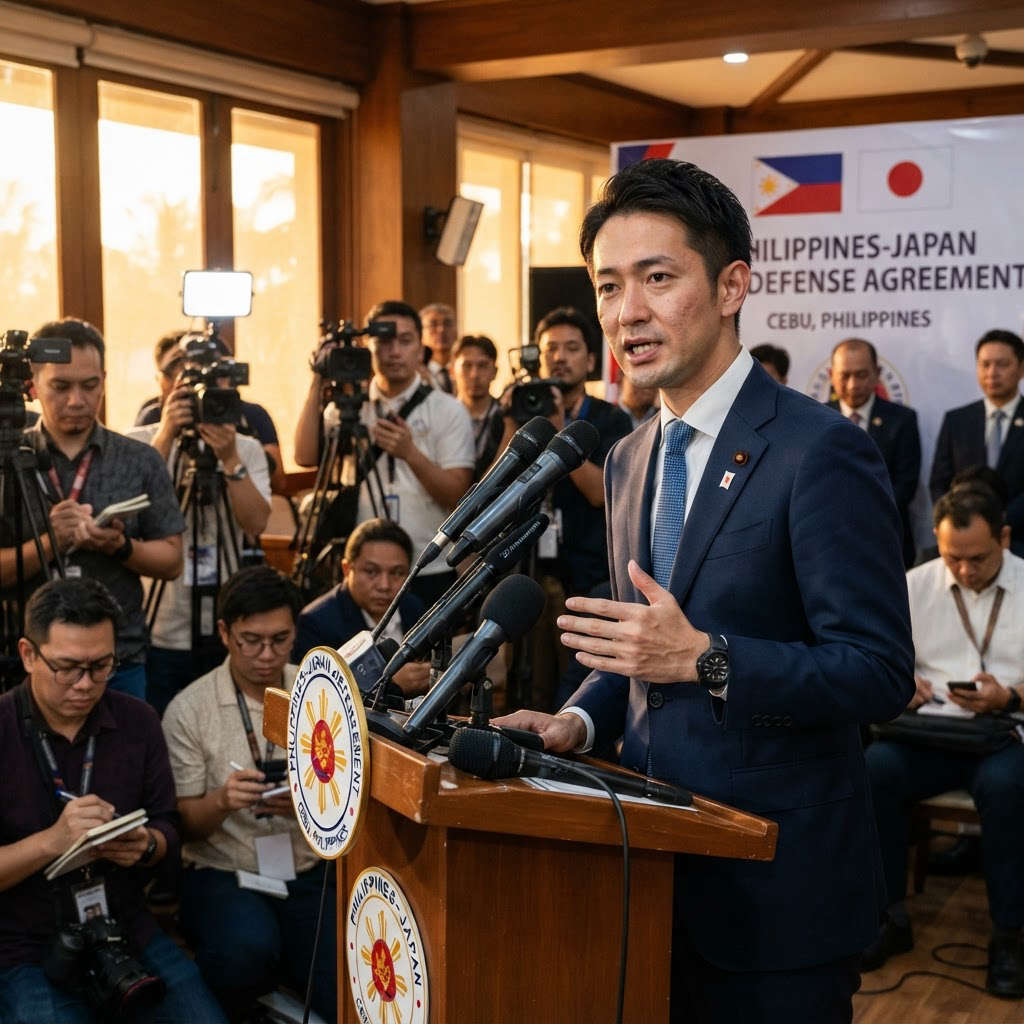
The United States and Japan have formally agreed to establish a final assembly and inspection plant in Japan for the production of Advanced Medium-Range Air-to-Air Missiles (AMRAAM). This initiative, dubbed 'Operation Supercharge,' aims to bolster the defense capabilities of both nations and support the maintenance of F-35 fighter jet fleets. The agreement was announced by Japanese Defense Minister Shinjiro Koizumi following meetings with U.S. Defense Secretary Pete Hegseth in the Philippines. This move reflects a deepening security partnership intended to enhance regional deterrence in the Indo-Pacific.
The primary actors involved in this agreement are the United States Department of Defense, represented by Secretary Pete Hegseth, and the Japanese Ministry of Defense, led by Minister Shinjiro Koizumi. The initiative is supported by the broader diplomatic and military frameworks of the U.S.-Japan alliance, with additional regional context provided by the Association of Southeast Asian Nations (ASEAN) Defence Ministers' Meeting (ADMM) and ADMM-Plus meetings.
The United States and Japan have agreed to establish a final assembly and inspection plant in Japan for the Advanced Medium-Range Air-to-Air Missile (AMRAAM). This project, referred to as 'Operation Supercharge,' is designed to bolster the production capacity of these essential munitions for F-35 fighter jets. The facility will serve as a critical node in the regional defense supply chain, ensuring that both U.S. and Japanese forces have access to necessary air-to-air capabilities.
The agreement was announced in the central Philippine province of Cebu, where the defense ministers were attending the 20th ASEAN Defence Ministers' Meeting and the 13th ADMM-Plus meetings. The facility itself will be located in Japan, though specific site details have not been publicly disclosed.
The agreement was announced on October 29, 2026, following meetings held on October 28, 2026. The initiative is part of an ongoing effort to accelerate defense cooperation in response to the evolving security environment in the Indo-Pacific.
The stated motivation for this agreement is to strengthen the deterrence and response capabilities of the U.S.-Japan alliance. Both nations have expressed concern over the increasingly challenging security environment in the region, characterized by growing assertiveness from regional actors. By increasing the local production capacity of critical munitions, the allies aim to enhance their readiness and resilience in the face of potential regional conflicts.
The facility will operate through a joint production framework, involving the transfer of technical expertise and assembly protocols from the United States to Japan. This process is facilitated by the existing defense cooperation agreements between the two nations. The initiative is intended to be a collaborative effort, with both sides contributing to the establishment and operation of the plant to ensure it meets the strategic requirements of their respective military forces.
This agreement represents a significant deepening of the U.S.-Japan defense industrial partnership. By localizing the production of advanced munitions, the alliance reduces its reliance on long-distance supply chains, thereby increasing its operational flexibility and resilience in the Indo-Pacific theater.
The next steps involve the formalization of the facility's construction plans, the selection of a specific site, and the initiation of the technology transfer process. Observers will be watching for further details on the timeline for the facility's operational readiness and the specific roles of private defense contractors in its management.
Key Unknowns
Key unknowns include the total projected cost of the facility, the specific division of financial responsibilities, the exact timeline for the start of production, and the potential for future expansion of the joint production model to other types of military equipment.
Watch for official announcements regarding the facility's location, the signing of any follow-on contracts with defense manufacturers, and any reactions from other regional powers regarding the implications of this increased defense industrial integration.
Sources
- Japan, US to bolster joint missile production capacity — Wall Street Journal
- US and Japan agree to establish a Japanese facility for joint missile production — Bloomberg
Topics
- Universe One
- Diplomacy & Treaties
- japan
- agree
- establish
- joint
- missile
- production
- facility