China & Indo-Pacific
China Urges Philippines to Exercise Caution Amid South China Sea Tensions
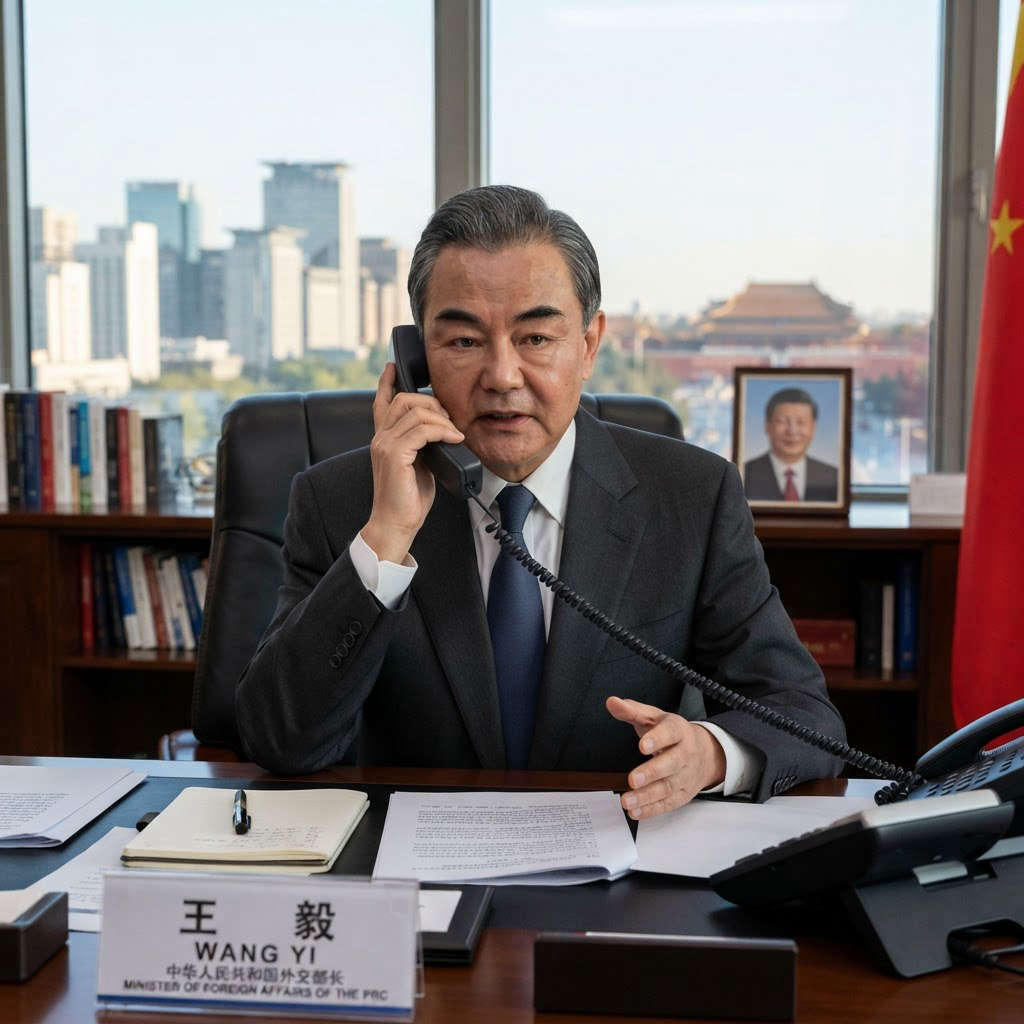
Chinese Foreign Minister Wang Yi and Philippine Foreign Affairs Secretary Ma. Theresa Lazaro held a phone conversation on November 3, 2026, to discuss bilateral relations and maritime disputes. During the call, Wang urged the Philippines to exercise prudence and address what he described as malicious interference in the relationship. The Philippine Department of Foreign Affairs characterized the discussion as frank, pragmatic, and constructive, noting that both sides agreed to maintain diplomatic dialogue to manage differences. This exchange occurred ahead of upcoming regional summits, including the ASEAN meetings in Manila.
The primary actors involved are the Chinese Ministry of Foreign Affairs, led by Foreign Minister Wang Yi, and the Philippine Department of Foreign Affairs, represented by Secretary Theresa Lazaro. The Philippine Department of National Defense, led by Secretary Gilberto Teodoro, has also been a central figure in the recent escalation, having publicly characterized China as a regional 'troublemaker.' The United States, through its 'ironclad' defense commitment, remains a critical stakeholder in the security of the Philippines.
The event centers on a diplomatic phone call between Wang Yi and Theresa Lazaro, during which China issued a formal warning to the Philippines to be 'cautious' in its words and deeds regarding the South China Sea. This follows a series of recent maritime exercises by the People's Liberation Army (PLA) and the China Coast Guard (CCG) near contested features. The dispute involves competing sovereignty claims over areas such as Scarborough Shoal and Second Thomas Shoal, which lie within the Philippines' 200-nautical-mile exclusive economic zone (EEZ).
The tensions are concentrated in the South China Sea, specifically around contested maritime features and the Philippines' EEZ. The broader strategic context involves the 'First Island Chain,' a maritime perimeter that the U.S. considers vital for regional deterrence and security.
The diplomatic call occurred on or around November 3-4, 2026. This follows a period of heightened activity in late October 2026, including joint exercises by the PLA and CCG announced on October 30, and ongoing discussions regarding the modernization of the U.S.-Philippines alliance.
China's stated motivation is to protect its territorial claims and prevent what it describes as 'interference' in the bilateral relationship. Beijing aims to discourage the Philippines from strengthening its security ties with the United States and other regional partners. Conversely, the Philippines is seeking to assert its sovereign rights under the 1982 United Nations Convention on the Law of the Sea (UNCLOS) and maintain its security partnerships to counter what it perceives as coercive behavior.
The conflict is being managed through a combination of diplomatic warnings, maritime posturing, and the strengthening of security alliances. China utilizes a mix of coast guard vessels, scientific research ships, and maritime militia to exert pressure without necessarily triggering an all-out military confrontation. The Philippines, in turn, relies on its Mutual Defense Treaty with the U.S. and the expansion of the Enhanced Defense Cooperation Agreement (EDCA) to bolster its defensive capabilities and interoperability with U.S. forces.
This situation is a critical test of the U.S. commitment to its regional allies and the stability of the international rules-based order in the Indo-Pacific. A failure to manage these tensions could lead to a significant regional conflict that would disrupt global trade and security.
Continued diplomatic friction is expected, with the potential for further maritime incidents as both sides test the limits of their respective positions. The U.S. will likely continue to increase its security assistance to the Philippines to maintain the regional balance of power.
Key Unknowns
The primary unknown is the specific threshold at which China would escalate from gray-zone coercion to direct military action, and how the U.S. would respond in such a scenario. Additionally, the long-term impact of these tensions on ASEAN's ability to negotiate a unified Code of Conduct remains uncertain.
Watch for further reports of maritime encounters, any changes in the frequency or scale of joint U.S.-Philippines military exercises, and any new diplomatic initiatives from ASEAN members aimed at de-escalating the situation.
Sources
- China warns Philippines to be cautious over South China Sea — New York Post
- China warns Philippines to be cautious over South China Sea — The Asahi Shimbun
Topics
- Universe One
- China & Indo-Pacific
- china
- urges
- philippines
- exercise
- caution
- amid
- south
- tensions