Foreign Policy
North Korea Vows Nuclear Buildup Following U.S.-South Korea 'Iron Mace' Exercise
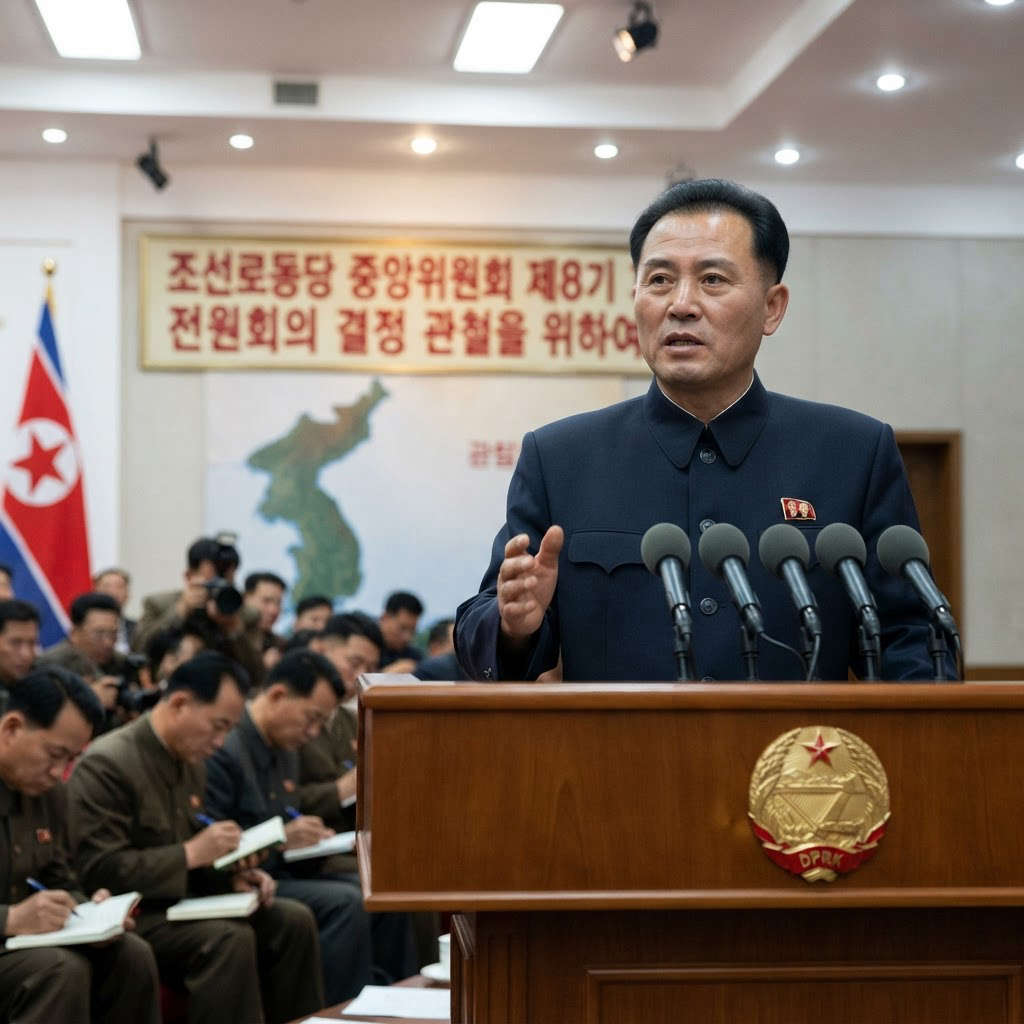
North Korean official Kim Jong-sik declared that the recent U.S.-South Korea 'Iron Mace' military exercise necessitates an accelerated expansion of Pyongyang's nuclear deterrent. The exercise, held from September 29 to October 2, focused on integrating U.S. nuclear capabilities with South Korean conventional forces to enhance regional deterrence. North Korean state media characterized the drill as a 'hideous nuclear war rehearsal' and vowed to strengthen its nuclear forces as an immutable policy. South Korean officials have maintained that the exercises are defensive in nature and essential for regional stability.
The U.S. maintains a critical security alliance with South Korea, including the deployment of nuclear-capable assets to deter North Korean aggression. Escalating tensions on the Korean Peninsula directly impact U.S. military posture and regional stability in the Indo-Pacific.
The primary actors involved are the United States and South Korea, acting through their respective defense and foreign ministries, and North Korea, represented by the Workers' Party of Korea. Key figures include North Korean official Kim Jong-sik, who has taken a prominent role in articulating the regime's nuclear policy, and U.S. and South Korean military commanders responsible for the Iron Mace exercise.
North Korea has issued a formal denunciation of the Iron Mace joint military exercise, which took place from September 29 to October 2, 2026. The exercise was designed to integrate U.S. nuclear capabilities with South Korean conventional forces. In response, North Korea has vowed to accelerate its nuclear weapons buildup, labeling the exercise a 'nuclear war rehearsal' and an 'immutable' threat to its national security.
The exercises were conducted at the Joint Chiefs of Staff headquarters in Seoul, South Korea. The broader geopolitical context involves the Korean Peninsula and the surrounding maritime regions, including the Yellow Sea, where strategic interests of the U.S., South Korea, and North Korea intersect.
The Iron Mace exercise occurred between September 29 and October 2, 2026. North Korea's official statement was released on November 2, 2026, following the conclusion of the U.S. midterm election campaigns. The timing is significant as both the U.S. and South Korea are navigating a transition period in their respective political landscapes.
North Korea claims that the integration of U.S. nuclear assets into regional exercises is a direct threat to its sovereignty and survival. The regime uses this rhetoric to justify its ongoing nuclear and missile development programs. Conversely, the U.S. and South Korea maintain that these exercises are essential for extended deterrence and to ensure the readiness of the alliance against potential North Korean aggression.
The alliance utilizes the Nuclear Consultative Group (NCG), established following the 2023 Washington Declaration, to coordinate nuclear deterrence planning. The Iron Mace exercise is a tabletop simulation that allows military leaders to practice the integration of conventional and nuclear assets. North Korea responds through state-run media channels like the Korean Central News Agency (KCNA) to signal its policy shifts and military intentions to both domestic and international audiences.
The escalation of rhetoric from Pyongyang, combined with the ongoing development of advanced warhead technology, poses a direct challenge to the U.S. policy of denuclearization on the Korean Peninsula. It forces the U.S. to balance its commitment to regional security with the need to prevent a full-scale arms race.
Diplomatic and defense officials from the U.S. and South Korea are expected to hold high-level talks following the U.S. midterm elections to reassess their security posture. The focus will likely be on maintaining the credibility of the nuclear umbrella while managing the risk of further North Korean provocations.
Key Unknowns
It remains unclear whether North Korea will follow through on its threats to resume loudspeaker broadcasts or conduct further missile tests. Additionally, the impact of the U.S. midterm election results on the long-term funding and strategic direction of the U.S.-ROK alliance is a significant variable.
Watch for any official statements from the U.S. Department of Defense regarding the next steps for the Security Consultative Meeting (SCM) and any intelligence reports indicating actual movement of North Korean military assets in response to the recent exercises.
Sources
Topics
- Universe One
- Foreign Policy
- north
- korea
- vows
- nuclear
- buildup
- following
- -south
- iron
- mace