Regenerative Medicine & Stem Cells
Could induced neural stem cell conversion make age-related neurodegenerative disease reversal a reality by 2035
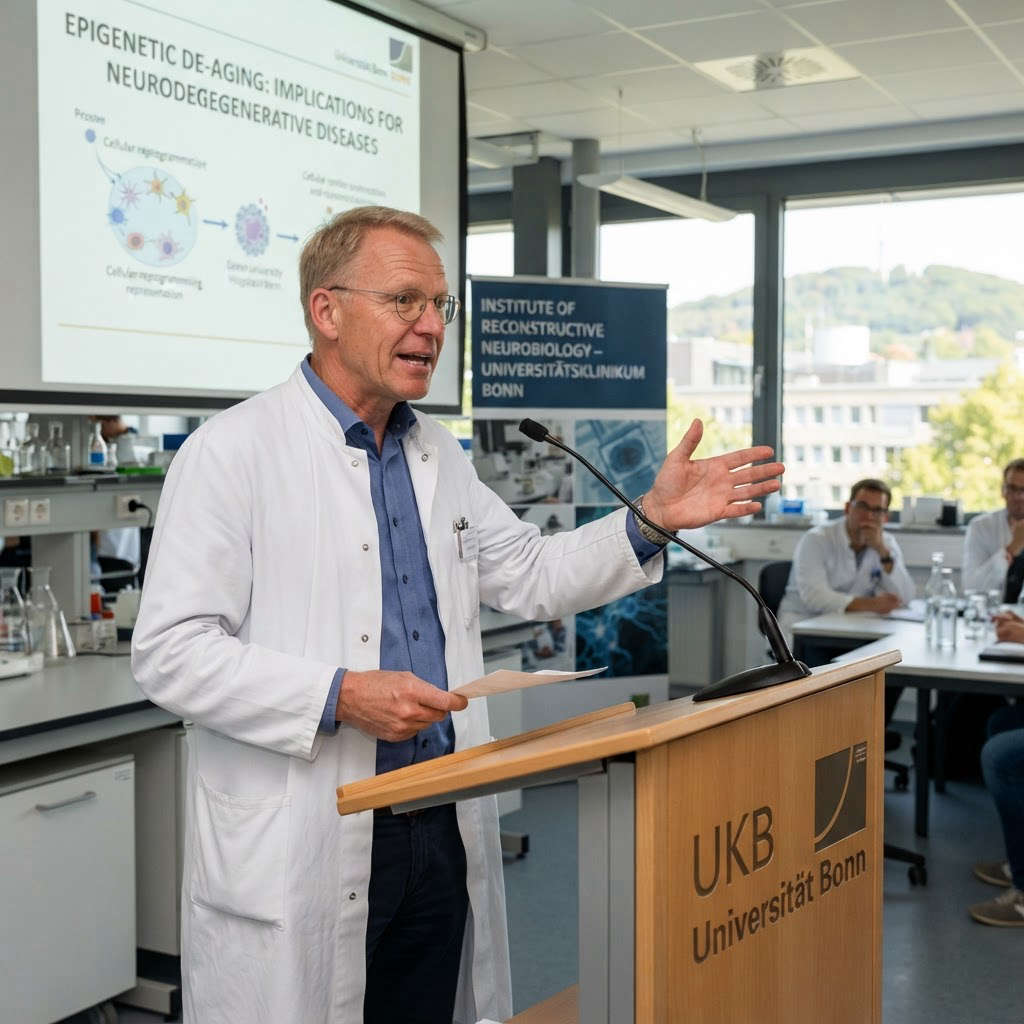
Researchers at the University of Bonn have successfully transformed human blood cells from an 80-year-old donor into neural stem cells that exhibit molecular age markers characteristic of individuals under 20. This process, detailed in the journal Aging Cell, demonstrates a significant epigenetic de-aging effect during the conversion of somatic cells into a neural fate. The study provides a new mechanism for generating patient-specific stem cells that bypass the biological limitations of advanced cellular age. This advancement offers a potential pathway for autologous regenerative therapies that utilize a patient's own cells to repair damaged neural tissue.
The Mechanism of Epigenetic Rejuvenation
The recent study from the University of Bonn represents a significant shift in how researchers approach cellular aging. By transforming blood cells from an 80-year-old donor into neural stem cells, the team demonstrated that the process of induced neural stem cell (iNSC) conversion is accompanied by a profound epigenetic de-aging effect (Aging Cell, 2026). This process effectively resets the molecular clock of the cells, resulting in markers that resemble those of a person under 20 years old (Government Scientific Source, 2026). Unlike traditional methods that often struggle with the accumulated damage of aging, this approach leverages the cell's own plasticity to bypass the limitations of chronological age.
The scientific principle involved is the reprogramming of somatic cells into a pluripotent or multipotent state, which allows for the erasure of age-related epigenetic modifications. The researchers found that this conversion is not merely a change in cell type but a fundamental reset of the cell's biological age (Aging Cell, 2026). This finding challenges the previous assumption that cellular aging is an irreversible process, suggesting that the epigenetic landscape can be manipulated to restore youthful function to aged tissues (ScienceDaily, 2026).
Evidence and Experimental Limitations
The evidence for this rejuvenation is based on the analysis of molecular age markers in the converted neural stem cells. While the results are promising, the study is currently limited to laboratory-based observations (Aging Cell, 2026). The sample size and the long-term stability of these rejuvenated cells in a complex, living environment remain to be determined. Reproducibility across different donor ages and health conditions is a critical next step for the research team (Government Scientific Source, 2026).
Furthermore, the potential for oncogenic transformation during the reprogramming process remains a significant safety concern. The researchers must ensure that the de-aging process does not inadvertently activate pathways that could lead to tumor formation (Aging Cell, 2026). Competing explanations for the observed rejuvenation, such as the selection of a subpopulation of cells that were already younger, must be ruled out through rigorous single-cell analysis and longitudinal tracking of the converted cells (Government Scientific Source, 2026).
The Path to Clinical Application
The transition from laboratory success to clinical reality requires a structured approach to safety and efficacy. The first step is the development of standardized protocols for the conversion process, ensuring that the epigenetic reset is consistent and reliable (Aging Cell, 2026). This will involve the use of animal-free reagents and automated manufacturing processes to ensure the quality and safety of the cells (ScienceDaily, 2026). The regulatory pathway will likely involve early-phase clinical trials to assess the safety of transplanting these cells into human patients, similar to the ongoing trials for Parkinson's disease in Japan (ScienceDaily, 2026).
Regulatory bodies like the FDA will need to establish clear guidelines for the approval of these therapies, focusing on the stability of the rejuvenated state and the absence of long-term adverse effects (Cervicorn Consulting, 2026). The collaboration between academic institutions, biotechnology companies, and regulatory agencies will be essential to navigate the complexities of bringing this technology to the clinic. The ultimate goal is to provide a personalized, autologous treatment that can repair damaged neural tissue without the risk of immune rejection (Government Scientific Source, 2026).
Future Implications for Regenerative Medicine
If this technology matures, it could revolutionize the treatment of neurodegenerative diseases by providing a source of healthy, youthful cells that are perfectly matched to the patient. This would eliminate the need for immunosuppressive drugs, which are a major barrier to the success of current transplantation therapies (Cervicorn Consulting, 2026). Furthermore, the ability to reverse cellular aging could have applications beyond the nervous system, potentially extending to other tissues and organs that suffer from age-related decline (Aging Cell, 2026).
The economic impact of such a breakthrough would be substantial, as it could reduce the long-term costs associated with the care of patients with chronic neurodegenerative conditions (Cervicorn Consulting, 2026). However, the path to widespread adoption is fraught with technical and regulatory challenges that must be addressed through sustained investment and rigorous scientific inquiry (Aging Cell, 2026). The next phase of research will focus on demonstrating the functional integration of these rejuvenated cells in animal models of disease, followed by the design of human clinical trials (ScienceDaily, 2026).
What It Will Take to Advance This
Long-term longitudinal studies are required to confirm the stability of the rejuvenated epigenetic profile in vivo and to rule out the risk of oncogenic transformation. Researchers must demonstrate that these cells can integrate into the complex neural architecture of the brain without causing adverse effects. The conversion process must be optimized to achieve higher yields of high-quality neural stem cells while minimizing the use of exogenous factors that could interfere with cellular function. Standardizing the molecular markers for 'youthful' cells is essential for consistent quality control. Increased federal and private investment is needed to support the transition from laboratory-scale experiments to large-scale, multicenter clinical trials. Dedicated funding for the development of automated, closed-loop bioreactor systems is critical for industrial-scale production. The FDA must establish clear, evidence-based guidelines for the approval of epigenetically rejuvenated cell therapies. This includes defining the necessary safety benchmarks and ensuring that the reprogramming process is transparent and reproducible. The development of industrial-grade, GMP-compliant manufacturing facilities is necessary to produce clinical-grade cells at a scale that can support widespread patient access. This requires the integration of AI-assisted quality control systems to monitor cell culture conditions in real-time.
Future Possibilities
The maturation of iNSC technology could enable personalized, autologous treatments for neurodegenerative diseases like Alzheimer's and Parkinson's. By using a patient's own rejuvenated cells, clinicians could replace damaged neurons without the risk of immune rejection or the need for lifelong immunosuppression. This would represent a shift from symptom management to disease-modifying regenerative therapy. Success depends on proving the long-term stability and functional integration of these cells in human patients, as suggested by the initial clinical trials for Parkinson's in Japan (ScienceDaily, 2026).
- •Long term (5+ years)
- •Moderate confidence
Reference: The University of Bonn study demonstrates the successful conversion of 80-year-old blood cells into youthful neural stem cells (Aging Cell, 2026).
Advancements in regenerative medicine could enhance the resilience of the aging workforce and veteran population by providing treatments for age-related cognitive and physical decline. This could reduce the long-term burden on the Department of Veterans Affairs and improve the overall health and productivity of the nation. The ability to repair neural tissue could also have implications for treating traumatic brain injuries, which are a significant concern for military personnel. Realizing this potential requires significant investment in domestic biomanufacturing and clinical research infrastructure.
- •Long term (5+ years)
- •Low confidence
Reference: The ability to reverse cellular aging markers by 60 years provides a theoretical basis for repairing complex neural damage (Aging Cell, 2026).
The commercialization of iNSC therapies could create a new multi-billion dollar sector within the biotechnology industry, driving job creation and economic growth. As the market for stem cell therapies is projected to reach USD 3.78 billion by 2035, the development of efficient, automated production methods will be key to capturing this value (Cervicorn Consulting, 2026). This would require a robust supply chain for clinical-grade reagents and specialized equipment. The economic viability of these therapies will depend on the ability to scale production while maintaining strict quality control.
- •Mid term (2-5 years)
- •High confidence
Reference: The stem cell therapy market is already expanding due to advances in personalized and regenerative medicine (Cervicorn Consulting, 2026).
The ability to reverse cellular aging raises complex ethical questions regarding the potential for human enhancement and the equitable access to such life-extending technologies. Regulatory frameworks will need to be developed to ensure that these therapies are used for legitimate medical purposes and that they do not exacerbate existing health disparities. The legal status of 'rejuvenated' cells and the potential for patenting these processes will also be a subject of intense debate. Establishing clear ethical guidelines will be essential to maintain public trust in regenerative medicine.
- •Long term (5+ years)
- •Moderate confidence
Reference: The rapid pace of clinical translation in stem cell therapy is outpacing current quality-control and ethical frameworks (Chinese Academy of Sciences, 2026).
In the long term, the widespread availability of regenerative therapies could fundamentally change the experience of aging, allowing individuals to maintain cognitive and physical function well into their later years. This would shift the societal perception of aging from an inevitable decline to a manageable biological process. The impact on quality of life would be profound, potentially reducing the prevalence of age-related disability and dependency. Achieving this vision requires not only scientific breakthroughs but also a societal commitment to integrating these technologies into the healthcare system.
- •Long term (5+ years)
- •Low confidence
Reference: The successful reversal of 60 years of cellular aging in human cells provides a proof-of-concept for future rejuvenation therapies (Aging Cell, 2026).
The National Institutes of Health (NIH) should establish a dedicated grant program under the National Institute on Aging to accelerate the transition of induced neural stem cell (iNSC) conversion from laboratory models to preclinical safety studies. By allocating $150 million over the next three years, the NIH can incentivize the standardization of epigenetic de-aging protocols. This funding would support the development of high-throughput screening platforms to identify the specific molecular triggers that reset cellular age markers. The ultimate goal is to establish a robust pipeline for generating clinical-grade, rejuvenated neural progenitors.
- •The University of Bonn study confirms that blood-derived cells can be successfully reprogrammed to a youthful neural state (Aging Cell, 2026).
- •Existing NIH infrastructure for regenerative medicine research provides a framework for rapid implementation of new cell-reprogramming standards.
Reference: NIH National Institute on Aging Strategic Framework for Regenerative Medicine
Academic medical centers should initiate Phase I safety trials to evaluate the transplantation of autologous, rejuvenated neural stem cells in patients with early-stage neurodegenerative disease. These trials would utilize the protocols established by the University of Bonn to ensure that the converted cells maintain their youthful epigenetic profile post-transplantation. By monitoring patient outcomes over a 24-month period, researchers can assess the safety and potential for functional integration of these cells into the central nervous system. This step is essential to validate the therapeutic efficacy of the de-aging process in a human clinical environment.
- •Initial clinical trials using induced stem cells for Parkinson's disease are already underway in Japan, providing a regulatory precedent (ScienceDaily, 2026).
- •The ability to reverse cellular age markers by 60 years significantly reduces the risk of senescence-related failure in transplanted tissues.
Reference: University of Bonn: Researchers Transform Old Blood Cells into Young Brain Cells (2026)
Biotechnology firms should invest in automated, closed-loop bioreactor systems designed to scale the production of iNSCs while maintaining strict quality control over epigenetic markers. By leveraging AI-assisted analysis of cell culture conditions, manufacturers can ensure that every batch of rejuvenated cells meets the rigorous standards required for human therapeutic use. This infrastructure would replace manual, small-scale laboratory methods with industrial-grade processes capable of supporting large-scale clinical trials. The objective is to reduce the cost per dose, making personalized regenerative medicine accessible to a broader patient population.
- •AI-powered breakthroughs are already being used to manage how stem cells mature into specialized tissues (Cervicorn Consulting, 2026).
- •The shift toward animal-free reagent production is already a standard in modern stem cell manufacturing (ScienceDaily, 2026).
Reference: Cervicorn Consulting: Stem Cell Therapy Market to Reach USD 3.78 Billion by 2035
The FDA should convene a specialized advisory committee to develop regulatory guidelines for the approval of 'epigenetically rejuvenated' cell therapies. These guidelines must define the necessary benchmarks for molecular age markers and ensure that the reprogramming process does not introduce oncogenic risks. By establishing clear criteria for safety and efficacy, the FDA can provide a predictable pathway for developers to bring these innovative therapies to market. This regulatory framework will be critical for ensuring that the benefits of cellular de-aging are realized without compromising patient safety.
- •The FDA has already demonstrated flexibility by granting Fast Track designation to autologous MSC therapies (Cervicorn Consulting, 2026).
- •Standardized reporting guidelines are increasingly recognized as essential for the translational potential of stem cell therapies (Frontiers in Cell and Developmental Biology, 2026).
Reference: FDA Guidance on Regenerative Medicine Advanced Therapies (RMAT)
Universities and medical schools should integrate specialized training in epigenetic reprogramming and neural stem cell biology into their graduate and medical curricula. This initiative would prepare the next generation of scientists and clinicians to work with advanced regenerative technologies, ensuring a steady supply of expertise in the field. By fostering interdisciplinary collaboration between molecular biologists, bioengineers, and neurologists, institutions can accelerate the development of novel therapeutic applications. This workforce development is essential for sustaining the long-term growth of the regenerative medicine sector.
- •The complexity of modern cell therapy requires a workforce skilled in both molecular biology and clinical application (VinUni, 2026).
- •Existing programs in regenerative medicine at institutions like VinUniversity provide a model for integrated training (VinUni, 2026).
Reference: VinUni: A New Era of Living Medicines (2026)
Sources
- Scientists Reverse 60 Years of Cellular Aging: What a New Stem Cell Study Found — Government Scientific Source
- Rejuvenation Breakthrough: Scientists Reverse 60 Years of Aging in Human Cells — ScienceDaily
Topics
- Universe One
- Regenerative Medicine & Stem Cells
- could
- induced
- neural
- stem
- cell
- conversion
- make
- age-related
- neurodegenerative
- disease