USDOT and MARAD Distribute Final Infrastructure Law Grants as Funding Authority Expires
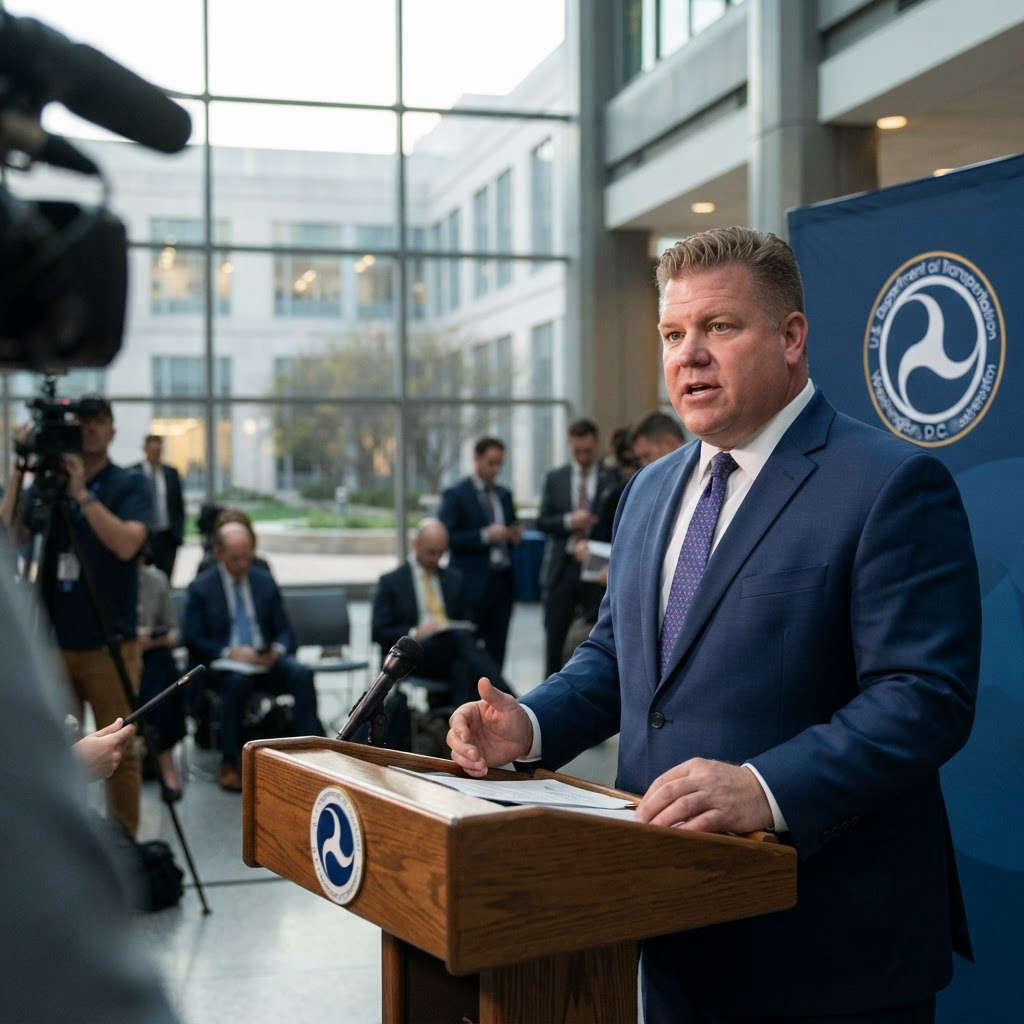
The U.S. Department of Transportation and the Maritime Administration have awarded over $500 million in final grants from the Bipartisan Infrastructure Law to support rail-crossing safety and port infrastructure projects across the nation. These awards represent the conclusion of specific multi-year funding commitments established under the 2021 legislation. With the primary infrastructure law funding exhausted as of September 30, 2026, state and local authorities are now facing uncertainty regarding future project continuity. Congress has enacted a short-term extension through December 11, 2026, but it does not include the guaranteed advance appropriations that previously supported these large-scale developments.
The expiration of guaranteed federal infrastructure funding directly impacts the ability of states to maintain long-term construction schedules for critical transportation, rail, and port projects that support national supply chains and economic growth.
The primary actors involved in this development include the U.S. Department of Transportation (DOT), the Federal Railroad Administration (FRA), and the Maritime Administration (MARAD), which oversee the distribution of federal infrastructure grants. State-level departments of transportation, such as the Texas Department of Transportation (TxDOT), and local government entities are the primary recipients and implementers of these funds. Additionally, the U.S. Congress, specifically the appropriations committees, holds the authority to determine the future of federal infrastructure funding.
The federal government has awarded the final installments of grant funding authorized under the Bipartisan Infrastructure Law (BIL). This includes $1.24 billion for 91 rail-crossing safety projects across 37 states and approximately $498 million for 35 port projects. These grants represent the conclusion of the law's multi-year commitment to these specific programs. However, the broader guaranteed funding for transportation infrastructure expired on September 30, 2026, and is currently operating under a short-term extension that lacks the same level of financial certainty.
These projects are distributed nationwide, with significant activity in states like Texas, which received a major award for rail grade separation, and the Corn Belt region, where ports are receiving infrastructure development grants. The impact is felt across coastal, Great Lakes, and inland river systems, as well as in urban corridors where rail-crossing safety is a priority.
The funding cycle for these specific grants concluded in late October 2026, with awards announced on October 30 and November 1. The broader infrastructure law funding expired on September 30, 2026. A short-term continuing resolution currently funds the government through December 11, 2026, which serves as the next critical deadline for legislative action on infrastructure appropriations.
The stated motivation for these grants is to improve safety, efficiency, and supply chain resilience. The Railroad Crossing Elimination Program aims to reduce accidents and traffic congestion, while the Port Infrastructure Development Program (PIDP) seeks to modernize maritime logistics. The current funding gap exists because the original five-year authorization for guaranteed advance appropriations has reached its end, and Congress has not yet reached a consensus on a new long-term funding mechanism.
Funding is distributed through competitive grant programs administered by federal agencies. Applicants must submit detailed project plans, which are then evaluated based on safety, economic impact, and environmental criteria. Once selected, recipients enter into agreements with the federal government to manage the design, environmental review, and procurement phases. The process is highly regulated, requiring compliance with federal standards, though some reports suggest a trend toward easing certain environmental and safety regulations for specific pipeline and industrial projects to accelerate development.
Infrastructure is the backbone of the U.S. economy, directly influencing the cost of goods, the safety of citizens, and the nation's ability to compete globally. The transition from guaranteed federal funding to a period of uncertainty threatens to disrupt thousands of ongoing projects, potentially leading to increased costs and delays.
Congress must address the funding cliff before the December 11 deadline. The outcome will likely involve either a new multi-year authorization, a further short-term extension, or a significant shift in how infrastructure projects are financed, potentially moving toward more private-sector involvement.
Key Unknowns
It remains unclear whether there is sufficient political will in the current Congress to pass a comprehensive infrastructure reauthorization. Additionally, the extent to which state and local governments can bridge the funding gap using their own resources is unknown.
Watch for legislative activity in the House and Senate appropriations committees regarding the December 11 deadline. Monitor state-level announcements for project delays or cancellations that may signal the impact of the funding expiration.
Sources
- Congress Faces December 11 Funding Deadline — Wall Street Journal
- Congress Is Cutting Off Transportation Investments that Help Families Save Money — CleanTechnica
- FRA selects $1.24 billion for 91 rail-crossing safety projects — Infraday
Topics
- Universe One
- Infrastructure
- usdot
- marad
- distribute
- final
- grants
- funding
- authority
- expires