Could a new non-CRISPR gene editing tool enable complex crop trait engineering by 2030
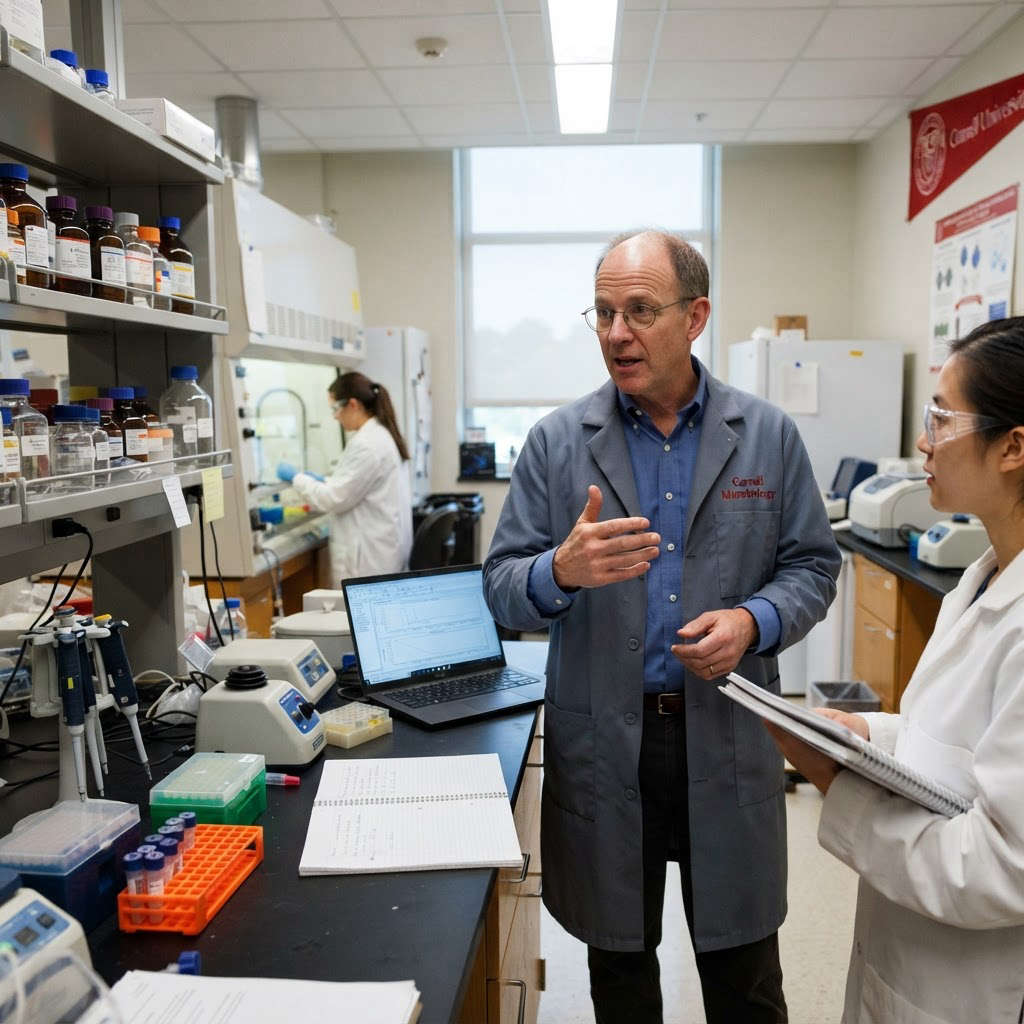
A research team at Cornell University has developed a novel gene editing tool that operates on a mechanical principle distinct from CRISPR-based systems. Published in Molecular Cell on October 1, 2026, the system is designed to facilitate the insertion of large genetic sequences rather than just modifying existing DNA. While currently in the early stages of development, the researchers aim to eventually apply this technology to improve complex agricultural traits that require the coordination of multiple genes.
A New Mechanical Paradigm for Gene Editing
The development of a new gene editing tool by researchers at Cornell University, led by Professor Joe Peters, represents a significant departure from the established CRISPR-Cas9 paradigm (Global Agriculture, 2026). While CRISPR systems rely on RNA-guided endonucleases to create targeted double-strand breaks, this new system utilizes a different mechanical principle to achieve genetic modification. The research, published in Molecular Cell on October 1, 2026, focuses on the structural basis of a mini-RNA-guided endonuclease, specifically Casδ−1, which offers a more compact architecture for genome editing (Nature Communications, 2026).
This compactness is a critical feature, as it potentially simplifies the delivery of the editing machinery into cells. Unlike traditional CRISPR-Cas9, which can be bulky and difficult to package into viral or non-viral delivery vectors, the smaller size of this new endonuclease may allow for more efficient transport into target tissues (Nature Communications, 2026). The researchers have successfully characterized the structural basis for DNA cleavage, providing a foundation for further engineering and optimization of the system for specific applications in both plant and animal cells (Global Agriculture, 2026).
Overcoming the Limitations of CRISPR
CRISPR-Cas9 has been the workhorse of gene editing for the past decade, but it faces inherent limitations, particularly when it comes to the insertion of large genetic sequences (Global Agriculture, 2026). Most CRISPR applications are optimized for gene disruption or small-scale modifications. The ability to insert large, multi-gene cassettes is essential for engineering complex agricultural traits, such as drought resistance or enhanced nutritional profiles, which often depend on the coordinated expression of multiple genes (Global Agriculture, 2026).
By moving beyond the mechanical constraints of standard CRISPR systems, the Cornell team aims to provide a more versatile tool for synthetic biology and crop improvement. The researchers emphasize that while their work is currently in the proof-of-concept stage, the potential for inserting large genes could revolutionize how breeders approach complex trait development (Global Agriculture, 2026). This capability would allow for the introduction of entire metabolic pathways into crops, a feat that is currently extremely challenging with existing gene-editing technologies.
Evidence and Experimental Limitations
The current evidence for this new gene editing tool is based on structural and biochemical characterization, as well as initial demonstrations of its endonuclease activity (Nature Communications, 2026). The researchers have provided a detailed analysis of the structural basis for DNA cleavage, which is a crucial step in validating the mechanism of the system (Nature Communications, 2026). However, it is important to note that the technology has not yet been demonstrated in a practical agricultural or clinical setting.
There are several limitations to the current research that must be addressed before the tool can be considered for real-world use. First, the efficiency of the system in complex eukaryotic genomes, such as those of major food crops, remains to be determined (Global Agriculture, 2026). Second, the potential for off-target effects, which is a major concern for any gene-editing technology, has not been fully evaluated in a large-scale genomic context. Finally, the delivery of the system into plant cells, which are protected by rigid cell walls, remains a significant technical barrier that will require the development of specialized delivery platforms (Frontiers in Plant Science, 2026).
The Path to Real-World Application
The transition from a laboratory discovery to a deployed agricultural or clinical tool is a complex process that involves multiple stages of validation and regulatory approval. The first step will be to demonstrate the efficacy of the system in model plant species, such as Arabidopsis or rice, to prove that it can achieve targeted gene insertion without introducing foreign DNA (Frontiers in Plant Science, 2026). This 'transgene-free' approach is critical for the regulatory acceptance of gene-edited crops, as it distinguishes them from traditional genetically modified organisms (GMOs) (Frontiers in Plant Science, 2026).
Following successful proof-of-concept in model systems, the next phase will involve testing the tool in commercially relevant crops and human cell lines. This will require collaboration between academic researchers, biotechnology companies, and regulatory agencies to ensure that the technology meets safety and efficacy standards (Frontiers in Plant Science, 2026). The development of standardized protocols for the use of this new endonuclease will be essential for its widespread adoption and for the creation of a robust intellectual property landscape that encourages innovation while protecting public interests (Frontiers in Plant Science, 2026).
What It Will Take to Advance This
Comprehensive studies are required to evaluate the efficiency and specificity of the Casδ−1 system in diverse eukaryotic genomes, including major food crops. This must include large-scale genomic analysis to identify and mitigate potential off-target effects. The development of efficient delivery platforms for plant cells, which are protected by rigid cell walls, is a critical technical barrier. Researchers must demonstrate successful, high-throughput insertion of large genetic sequences into plant protoplasts. Increased federal and private funding is necessary to support the transition from laboratory proof-of-concept to functional plant cell testing. A dedicated grant program for non-CRISPR gene editing platforms would accelerate this development. The USDA and FDA must establish clear regulatory frameworks for non-CRISPR gene-edited products. This includes defining the criteria for 'transgene-free' status to ensure that the final products are safe and acceptable for commercial use. Biotechnology firms must invest in the infrastructure needed to scale the delivery of this new endonuclease. This includes the development of specialized electroporation and nanoparticle delivery systems optimized for large-scale agricultural applications.
Future Possibilities
If this tool matures, it could enable the precise insertion of large therapeutic genes into human cells, potentially curing complex genetic diseases that are currently untreatable with CRISPR-Cas9. This would involve replacing or correcting entire gene clusters rather than just single-point mutations. The success of this approach depends on achieving high-efficiency delivery into target tissues, such as the liver or bone marrow, and ensuring minimal off-target activity. The path to clinical use requires rigorous Phase I and II trials to establish safety and long-term durability of the edits.
- •Long term (5+ years)
- •Moderate confidence
Reference: The Cornell team explicitly mentions the potential for treating genetic diseases in human cells (Global Agriculture, 2026).
The ability to rapidly engineer crops with enhanced resilience to climate-induced stresses could bolster national food security against supply chain disruptions. By enabling the development of crops that can withstand extreme temperatures and drought, this technology could reduce the reliance on imported food sources and stabilize domestic agricultural markets. This would require a coordinated effort between the USDA and private sector partners to scale the production of these resilient crop varieties.
- •Long term (5+ years)
- •Moderate confidence
Reference: The potential for engineering complex traits like drought resistance is a key focus of the research (Global Agriculture, 2026).
The commercialization of this tool could create a new market for high-value, gene-edited agricultural products, potentially generating billions in revenue for the biotech sector. By allowing for the development of crops with superior nutritional profiles or industrial applications, this technology could drive innovation in the agricultural economy. The economic impact will depend on the establishment of clear regulatory pathways and the ability of companies to secure intellectual property rights for their specific applications.
- •Mid term (2-5 years)
- •High confidence
Reference: The global regulatory landscape is already shifting to accommodate transgene-free gene-edited crops, indicating a strong market interest (Frontiers in Plant Science, 2026).
This technology could facilitate the development of crops that require fewer chemical inputs, such as fertilizers and pesticides, by engineering natural resistance to pests and diseases. This would lead to a significant reduction in the environmental footprint of industrial agriculture, protecting soil health and water quality. The long-term success of this approach depends on the widespread adoption of these resilient crop varieties and the continued monitoring of their ecological impact.
- •Long term (5+ years)
- •Low confidence
Reference: The potential for engineering disease resistance is a well-documented goal of gene-editing research (Frontiers in Plant Science, 2026).
Consumers could eventually benefit from a wider variety of healthier and more sustainable food options, such as crops with enhanced vitamin content or improved shelf life. This would be achieved through the precise engineering of metabolic pathways, which is currently difficult with existing tools. The availability of these products will depend on consumer acceptance and the ability of the food industry to effectively communicate the benefits of gene-edited crops.
- •Long term (5+ years)
- •Moderate confidence
Reference: The ability to engineer complex traits is a primary objective of the Cornell research (Global Agriculture, 2026).
The National Science Foundation (NSF) should establish a dedicated grant program for non-CRISPR gene editing platforms to diversify the genetic engineering toolkit. By allocating $50 million over five years, the NSF can support the transition of this Cornell-developed system from laboratory proof-of-concept to functional plant cell testing. This funding would prioritize projects that demonstrate the ability to insert large, multi-gene cassettes, which are essential for complex trait engineering.
- •The current reliance on CRISPR-Cas9 limits the scope of genetic insertions, as noted in Global Agriculture (2026).
- •NSF has a history of funding foundational biotechnology research to maintain U.S. leadership in agricultural innovation.
Reference: Global Agriculture, 'Cornell Scientists Build Gene Editing Tool That Goes Beyond CRISPR’s Limits' (2026)
The National Institutes of Health (NIH) should initiate a pilot program to evaluate the safety and precision of this new endonuclease in human cell lines for therapeutic applications. By leveraging the same regulatory pathways used for early-stage CRISPR therapies, the NIH can determine if this tool offers lower off-target effects than existing systems. This would involve a multi-phase study comparing the cleavage efficiency and specificity of the new tool against standard Cas9 in human somatic cells.
- •The tool's potential for human disease treatment is explicitly mentioned by the Cornell research team (Global Agriculture, 2026).
- •The mechanism of DNA cleavage is distinct from CRISPR, potentially offering a safer profile for clinical use.
Reference: Global Agriculture, 'Cornell Scientists Build Gene Editing Tool That Goes Beyond CRISPR’s Limits' (2026)
Agricultural biotechnology firms should invest in the development of high-throughput delivery systems specifically optimized for this new endonuclease. By adapting existing electroporation and nanoparticle delivery platforms, companies can scale the insertion of large genetic sequences into crop protoplasts. This infrastructure development is necessary to move beyond the current limitation of small-scale laboratory experiments.
- •Delivery feasibility is currently the primary bottleneck for clinical and agricultural CRISPR-based applications (Frontiers in Microbiology, 2026).
- •The Cornell tool requires specialized delivery methods to achieve efficient gene insertion in plant cells.
Reference: Frontiers in Microbiology, 'CRISPR-Cas systems as next-generation antimicrobials' (2026)
The USDA and FDA should convene a joint working group to establish regulatory frameworks for gene-edited products that utilize non-CRISPR endonucleases. This group would define the criteria for 'transgene-free' status for this specific tool, ensuring that the final product does not contain foreign DNA. Clear regulatory guidance will provide the certainty needed for private sector investment and commercialization.
- •Global regulatory landscapes are currently evolving to differentiate oversight for new gene-editing techniques (Frontiers in Plant Science, 2026).
- •Regulatory clarity is a prerequisite for the commercial deployment of any new gene-editing technology.
Reference: Frontiers in Plant Science, 'Beyond GMOs: transgene-free gene-edited crops for global food security' (2026)
Land-grant universities should integrate training on non-CRISPR gene editing systems into their graduate-level plant breeding and molecular biology curricula. By creating specialized workshops and certification programs, these institutions can prepare the next generation of scientists to utilize this tool for crop improvement. This workforce development is essential to ensure that the technology is widely adopted and effectively applied across the agricultural sector.
- •The complexity of new gene-editing tools requires specialized knowledge beyond standard CRISPR protocols.
- •Cornell University, as a leader in this research, is well-positioned to spearhead these educational initiatives.
Reference: Global Agriculture, 'Cornell Scientists Build Gene Editing Tool That Goes Beyond CRISPR’s Limits' (2026)
Sources
- Cornell Scientists Build Gene Editing Tool That Goes Beyond CRISPR’s Limits — Global Agriculture
- Molecular basis for DNA cleavage by the mini-RNA-guided endonuclease Casδ−1 — Molecular Cell
Topics
- Universe One
- Biology & Microbiology
- could
- non-crispr
- gene
- editing
- tool
- enable
- complex
- crop
- trait
- engineering