Public Health Research
Could enhanced H5N1 surveillance and PPE protocols prevent severe human avian influenza cases by 2027
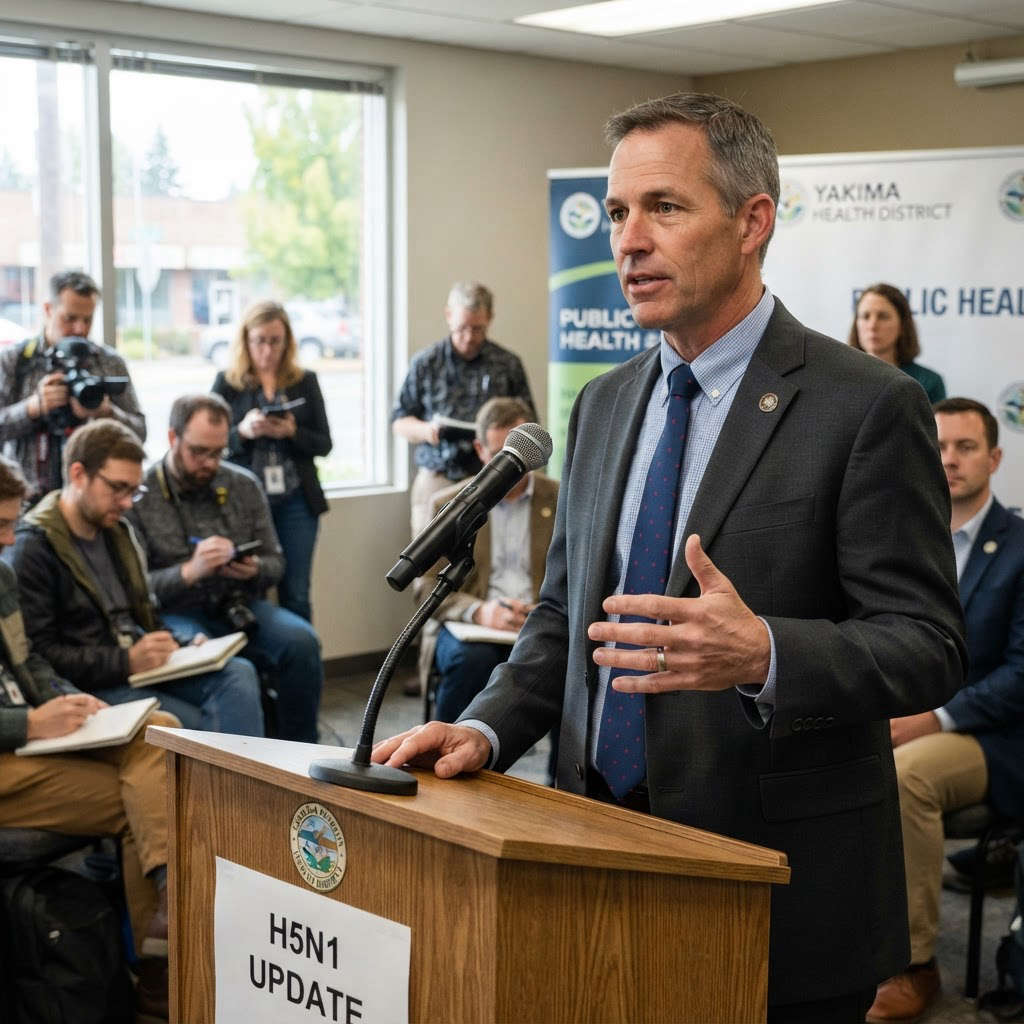
The Yakima Health District has confirmed three human cases of H5N1 avian influenza in residents exposed to infected dairy cattle. One patient, who had underlying health conditions, died after being hospitalized with severe illness, while the other two cases were non-severe. As of October 29, 2026, 33 dairy herds in Yakima County and one in Benton County have tested positive for the virus. Public health officials are monitoring contacts and providing guidance to dairy workers to mitigate further zoonotic transmission.
The Emergence of Severe Zoonotic H5N1
The recent report of a second human case of H5N1 avian influenza in Yakima County, Washington, marks a concerning development in the ongoing U.S. outbreak (Outbreak News Today, 2026). Unlike previous human cases associated with the current dairy-linked B3.13 genotype, which have largely presented with mild ocular or respiratory symptoms, this patient is hospitalized with severe illness (Hogvet51, 2026). The patient, a resident of Yakima County, had documented exposure to infected dairy cattle, highlighting the persistent risk posed by the virus to agricultural workers (Outbreak News Today, 2026). This case underscores the potential for H5N1 to cause significant morbidity, particularly in individuals with underlying health conditions (Flu.org.cn, 2026).
Genomic Surveillance and Viral Evolution
The B3.13 genotype of H5N1 has demonstrated a high degree of unpredictability, with recent recurrences in Kansas and Colorado, alongside the expanding outbreak in Washington (Hogvet51, 2026). Genomic surveillance remains the primary tool for monitoring the virus's evolution, as researchers look for markers of mammalian adaptation, such as the E627K mutation (GISAID, 2026). While most farm workers have experienced only mild symptoms, the severity of this latest case necessitates a deeper investigation into whether specific viral mutations or host factors are contributing to more aggressive disease progression (Hogvet51, 2026). The USDA and CDC continue to analyze specimen data to determine if the virus is changing in ways that could increase its threat to human health (GISAID, 2026).
Containment Challenges in Dairy Operations
As of October 29, 2026, 33 dairy herds in Yakima County have been confirmed positive for HPAI H5N1 (Outbreak News Today, 2026). The rapid expansion of the outbreak suggests that current biosecurity and interstate movement protocols may be insufficient to contain the virus (Hogvet51, 2026). The Yakima Health District, in coordination with the Washington State Department of Health, is actively working to identify and monitor individuals who have had close contact with infected cattle (Outbreak News Today, 2026). However, the logistical challenge of managing dozens of affected farms, combined with the need for consistent PPE usage among workers, remains a significant barrier to effective containment (KING 5, 2026).
The Path to Enhanced Public Health Response
Moving forward, the integration of state and federal resources is critical to managing the outbreak. The Yakima Health District has committed to regular updates on its avian influenza webpage to keep the public informed (Outbreak News Today, 2026). Future efforts must focus on improving the speed of diagnostic testing and ensuring that all dairy workers have access to appropriate protective equipment (KING 5, 2026). Furthermore, the development of targeted training programs for the agricultural workforce could improve early symptom reporting and facilitate faster medical intervention (Outbreak News Today, 2026). The ultimate goal is to prevent the virus from mutating into a form that could facilitate human-to-human transmission, a scenario that remains a primary concern for public health officials (Flu.org.cn, 2026).
What It Will Take to Advance This
Comprehensive genomic sequencing of the B3.13 genotype from all 33 affected Yakima herds is required to identify specific mutations associated with severe human disease. This data must be compared against previous mild cases to determine if viral evolution is driving the increased clinical severity observed in the latest patient. The development of a rapid, field-deployable diagnostic assay that can distinguish between seasonal influenza and H5N1 in dairy environments is essential. Current testing delays must be reduced to ensure that antiviral treatment can be administered within the critical window for efficacy. Emergency federal appropriations are needed to support the Yakima Health District and Washington State Department of Health in their contact tracing and monitoring efforts. This funding should also cover the costs of providing high-quality PPE to all workers at affected dairy facilities. The USDA must finalize and enforce updated interstate cattle movement regulations that mandate rigorous H5N1 testing prior to transport. These regulations must be harmonized across state lines to prevent the further geographic spread of the virus. The dairy industry requires a scalable infrastructure for the mass distribution of specialized PPE, including N95 respirators and eye protection. This infrastructure must be capable of meeting the needs of thousands of workers across multiple states to ensure consistent protection.
Future Possibilities
The maturation of rapid, point-of-care diagnostic testing for zoonotic influenza could allow for immediate identification of H5N1 in dairy workers. If deployed at scale, this would enable clinicians to administer antiviral treatments within hours of symptom onset, potentially preventing severe outcomes in high-risk populations. This capability relies on the widespread availability of CDC-validated assays in rural health clinics. Success depends on the integration of these tests into standard occupational health screenings for agricultural workers.
- •Near term (0-2 years)
- •Moderate confidence
Reference: The Yakima Health District is currently working to arrange testing for exposed individuals who develop symptoms to support prompt diagnosis (Outbreak News Today, 2026).
Enhanced genomic surveillance of H5N1 could become a cornerstone of national biosecurity, allowing for the early detection of viral mutations that signal increased pandemic potential. By establishing a robust, real-time data sharing network between the USDA, CDC, and international partners, the U.S. could preemptively adjust vaccine development and public health strategies. This requires sustained federal funding for genomic sequencing infrastructure and data analysis capabilities. The path is uncertain due to the rapid and unpredictable nature of viral evolution.
- •Mid term (2-5 years)
- •Moderate confidence
Reference: Genomic surveillance and sequence sharing are critical to monitor outbreaks and mitigate identified human and animal health risks (GISAID, 2026).
The implementation of stricter biosecurity and testing standards for the dairy industry could lead to increased operational costs for farmers, potentially impacting milk production and prices. However, these measures would also protect the industry from the catastrophic economic losses associated with large-scale herd culling or prolonged quarantine periods. The long-term stability of the dairy sector depends on the successful adoption of these standards. This shift would require significant investment in farm-level infrastructure and worker training.
- •Mid term (2-5 years)
- •High confidence
Reference: The rapid expansion of the outbreak in Yakima County has already affected 33 dairy herds, highlighting the economic vulnerability of the sector (Outbreak News Today, 2026).
Long-term monitoring of H5N1 in wild bird populations and its spillover into domestic animals could provide critical insights into the ecological drivers of zoonotic disease emergence. This knowledge could inform land-use policies and wildlife management strategies to reduce the frequency of spillover events. Achieving this requires a multidisciplinary approach involving ecologists, veterinarians, and public health experts. The path is currently limited by the complexity of tracking viral dynamics across diverse ecosystems.
- •Long term (5+ years)
- •Low confidence
Reference: Avian influenza is caused by Type A influenza viruses that occur naturally in wild birds and can spread to other animals (Outbreak News Today, 2026).
Increased public awareness and standardized safety protocols for agricultural workers could lead to a broader cultural shift in how zoonotic risks are managed in everyday life. This could include improved hygiene practices in rural communities and a greater emphasis on the health of the food supply chain. The success of this shift depends on effective public communication and the sustained engagement of local health departments. It would ultimately lead to a more resilient society capable of responding to emerging infectious threats.
- •Long term (5+ years)
- •Moderate confidence
Reference: Public health officials are working to provide guidance and resources to help protect exposed individuals (Outbreak News Today, 2026).
The NIH and CDC should prioritize emergency appropriations to expand genomic surveillance of the B3.13 genotype in dairy cattle and human populations. This funding would support rapid sequencing of viral samples from the 33 affected Yakima herds to identify potential mammalian adaptation markers. By establishing a real-time data pipeline, researchers can better predict viral evolution and inform vaccine development strategies. This effort would mirror the rapid response frameworks used during previous influenza surges.
- •Genomic surveillance is critical to monitor outbreaks and mitigate risks (GISAID, 2026).
- •The B3.13 genotype has shown increased activity in recent months (Hogvet51, 2026).
Reference: GISAID: HPAI H5N1 Bird Flu continues to circulate in the United States
Healthcare systems must implement standardized, rapid diagnostic protocols for dairy workers presenting with respiratory or ocular symptoms. By integrating state public health laboratory testing with local clinical care, providers can ensure early intervention for high-risk individuals. This approach would facilitate the immediate administration of antiviral treatments, potentially reducing the severity of illness in patients with underlying conditions. Such clinical pathways are essential for managing sporadic zoonotic cases effectively.
- •Early testing and medical care are vital for exposed individuals (Yakima Health District, 2026).
- •The current case highlights the risk of severe illness in vulnerable populations (Outbreak News Today, 2026).
Reference: Yakima Health District: Second Yakima County Resident Tests Positive for Avian Influenza
The USDA and private sector partners should scale the production and distribution of specialized personal protective equipment (PPE) tailored for dairy environments. This initiative would ensure that all workers in high-prevalence areas have access to high-filtration masks and eye protection. By standardizing PPE requirements across the dairy industry, the risk of zoonotic transmission can be significantly lowered. This infrastructure build-out is a necessary step to protect the agricultural workforce.
- •Health officials are helping dairy farms obtain protective equipment (KING 5, 2026).
- •Worker safety is a primary concern in the ongoing outbreak (Hogvet51, 2026).
Reference: KING 5: Bird flu detected in Washington dairy cattle for first time
Federal agencies should update interstate cattle movement regulations to prevent the spread of H5N1 from incubating herds to unaffected regions. By enforcing stricter testing requirements before transport, the industry can contain the virus within existing hotspots. This regulatory shift would require collaboration between the USDA and state agricultural departments to ensure compliance. Such measures are essential to prevent the further geographic expansion of the B3.13 genotype.
- •Current interstate movement rules appear insufficient to prevent virus spread (Hogvet51, 2026).
- •33 herds in Yakima County have already tested positive (Outbreak News Today, 2026).
Reference: Hogvet51: Washington Dairy Worker Hospitalized with Severe H5N1 infection
Public health departments should launch comprehensive training programs for dairy workers on zoonotic disease prevention and symptom reporting. These programs would be delivered in multiple languages to ensure accessibility for the entire agricultural workforce. By empowering workers to recognize early signs of infection, the system can achieve faster detection and containment. This training would be a cornerstone of a proactive public health strategy in rural communities.
- •Health districts are working to identify and monitor exposed individuals (Outbreak News Today, 2026).
- •Dairy workers face a greater risk of exposure to infected animals (KING 5, 2026).
Reference: Outbreak News Today: H5N1 avian influenza: 2nd human case reported in Yakima County, Washington
Sources
Topics
- Universe One
- Public Health Research
- could
- enhanced
- h5n1
- surveillance
- protocols
- prevent
- severe
- human
- avian
- influenza