Foreign Policy
U.S. and Japan Agree to Joint Missile Production Facility to Bolster Regional Deterrence
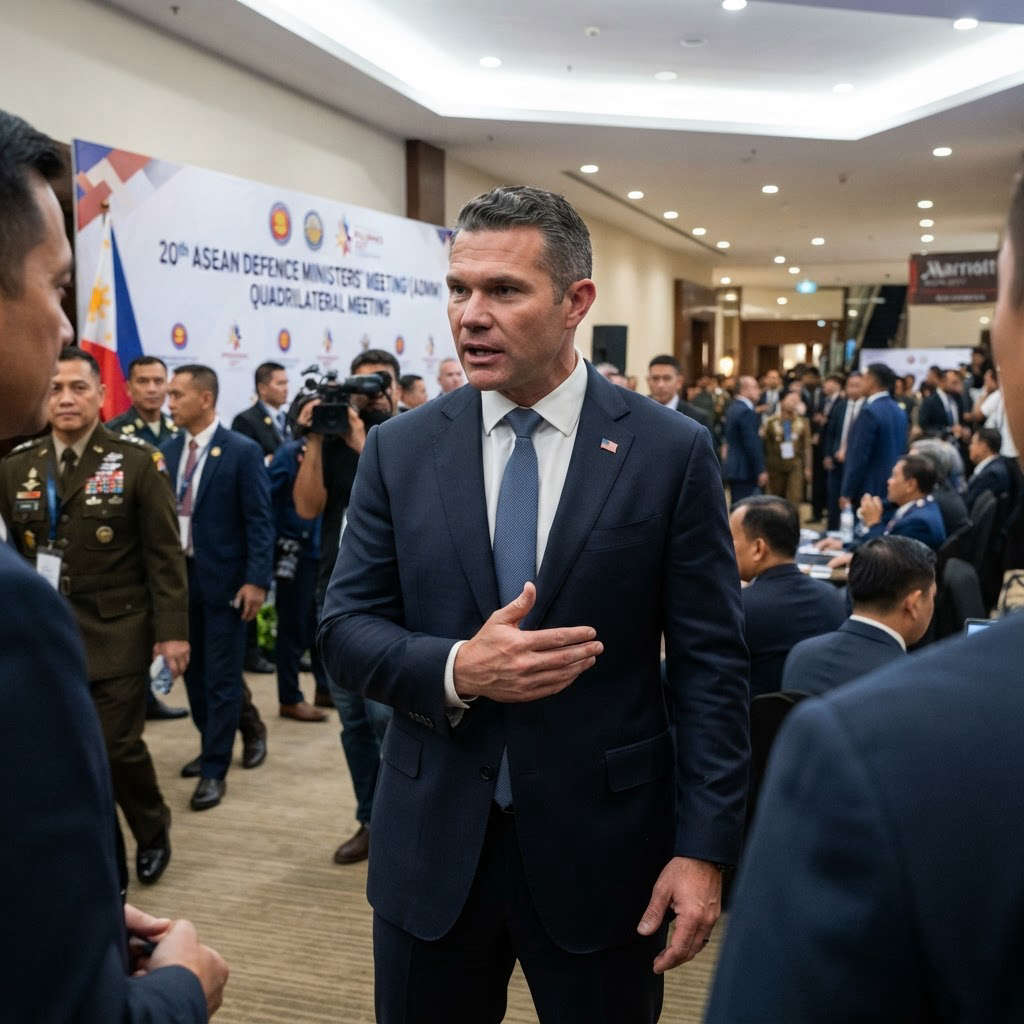
U.S. Secretary of Defense Pete Hegseth and Japanese Defense Minister Shinjiro Koizumi have agreed to establish a final assembly and inspection facility in Japan for the joint production of Advanced Medium-Range Air-to-Air Missiles (AMRAAM). This initiative is part of 'Operation Supercharge,' a bilateral effort to enhance defense equipment and technology cooperation. The agreement aims to strengthen the defense-industrial base and support the maintenance of F-35 fighter jet capabilities. No official announcement regarding cybersecurity cooperation or specific responses to recent data breaches was included in the reports of this meeting.
This agreement directly strengthens the U.S.-Japan alliance by diversifying the production of critical munitions, reducing reliance on long-distance supply chains, and enhancing the collective deterrence posture against regional aggression in the Indo-Pacific.
The primary actors involved are U.S. Secretary of Defense Pete Hegseth and Japanese Defense Minister Shinjiro Koizumi. The agreement involves the defense ministries of both nations, with support from their respective industrial bases. The Chinese government has emerged as the primary external critic of the initiative.
The U.S. and Japan have agreed to establish a facility in Japan for the final assembly and inspection of AMRAAM (Advanced Medium-Range Air-to-Air Missile) missiles. This is part of a broader initiative called 'Operation Supercharge'. The agreement also includes enhanced cooperation on cybersecurity to counter foreign manipulation and data breaches.
The agreement was finalized on the sidelines of the ASEAN Defence Ministers’ Meeting Plus (ADMM-Plus) held in Cebu, Philippines. The production facility will be located within Japan.
The agreement was announced on October 28, 2026, following meetings between the two defense chiefs. The initiative is part of a broader, ongoing effort to revise Japan's National Security Strategy and Defense Buildup Program by the end of 2026.
The stated motivation is to strengthen deterrence against regional aggression and ensure a resilient supply chain for critical munitions. Both nations cite the need to respond to the qualitative and quantitative expansion of military capabilities in the region. Japan specifically frames this as a response to threats while maintaining its 'exclusively defensive' policy.
The mechanism involves a defense-industrial base strategy aimed at creating a 'virtuous cycle' between defense and the economy. This includes sharing threat assessments, methods for countering information manipulation, and integrating production capabilities. The agreement leverages existing security arrangements and the Japan-U.S. Security Treaty framework to facilitate technology transfer and joint training.
Sources
- U.S. and Japan defense chiefs agree to boost cooperation to prevent cyberattacks — The Japan Times
- Japan-U.S. Defense Ministerial Meeting (Summary) — Japan Ministry of Defense
Topics
- Universe One
- Foreign Policy
- japan
- agree
- joint
- missile
- production
- facility
- bolster
- regional
- deterrence