Robotics & Automation
Could AI-driven troubleshooting make industrial robotics maintenance 60% faster by 2028
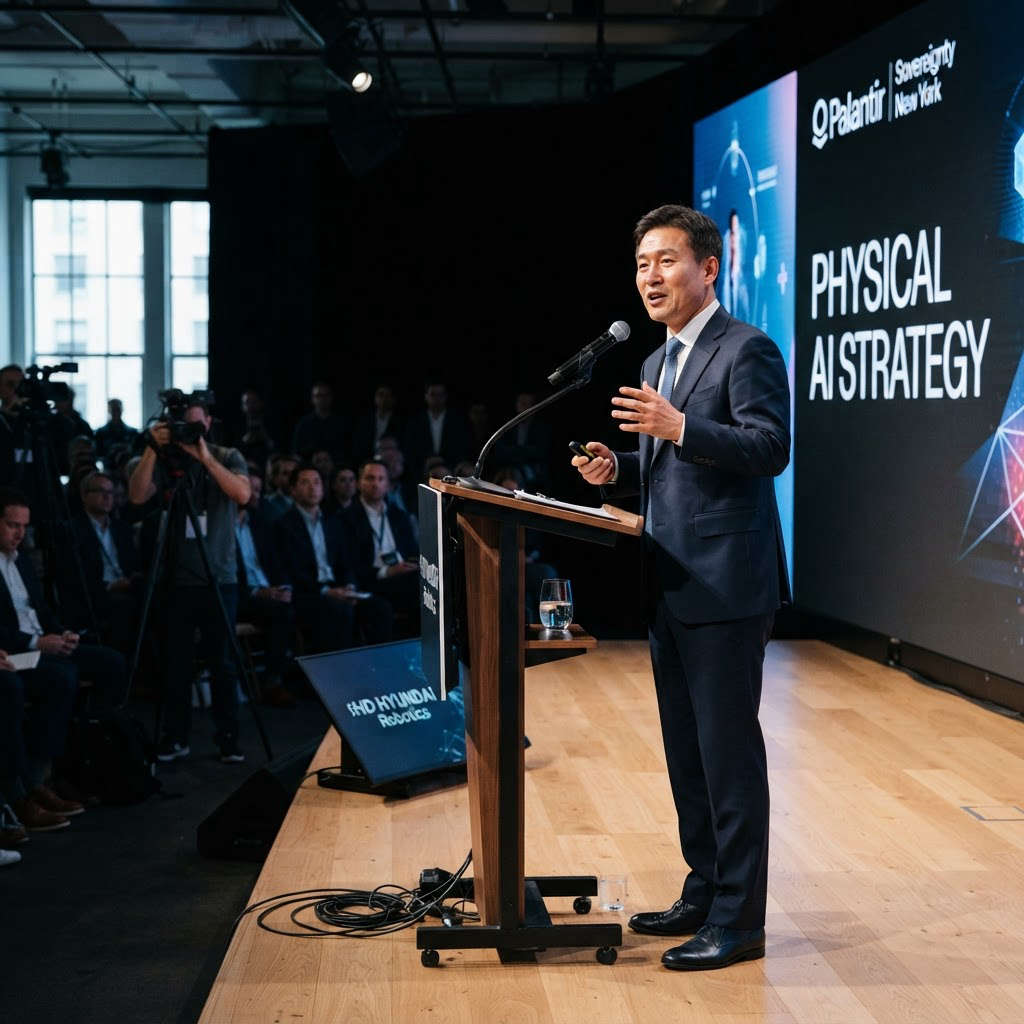
HD Hyundai Robotics and Palantir Technologies have collaborated to integrate AI agents into industrial robot troubleshooting processes. Since the deployment of these agents in August 2026, the company reported a 63% reduction in average problem-solving time, decreasing from 21.5 days to 7.9 days. These results were presented by HD Hyundai Robotics' CTO at Palantir's Sovereignty Bootcamp in New York on November 1, 2026. The company also anticipates that this AI-assisted approach could reduce future robot programming costs by over 50%.
The Shift Toward AI-Driven Industrial Maintenance
The recent deployment of AI agents by HD Hyundai Robotics marks a significant shift in how industrial robots are maintained and programmed. By utilizing software from Palantir Technologies, the company has successfully reduced the time required to resolve robot-related problems from 21.5 days to 7.9 days, a 63% improvement (The Korea Herald, 2026). This development addresses a long-standing bottleneck in industrial automation: the reliance on manual inspection and iterative programming, which are both time-consuming and difficult to standardize across large-scale operations (The Korea Herald, 2026).
Mechanism of AI-Assisted Troubleshooting
The core of this advancement lies in the ability of AI agents to analyze existing robot programs and suggest improvements to operating sequences, routes, and speeds (The Korea Herald, 2026). Previously, engineers were required to manually inspect robot movements and repeatedly adjust parameters, a process that lacked consistency (The Korea Herald, 2026). The new system allows engineers to leverage their field expertise to review and refine the AI's suggestions, effectively creating a human-in-the-loop system that optimizes performance while maintaining safety and operational control (The Korea Herald, 2026).
Evidence and Performance Benchmarks
The effectiveness of this approach is supported by the concrete reduction in troubleshooting time achieved since the deployment in August 2026 (The Korea Herald, 2026). Furthermore, the company projects that this technology will reduce robot programming costs by more than 50% (The Korea Herald, 2026). These figures represent a significant leap in efficiency for industrial robotics, where downtime and programming complexity are major cost drivers (The Robot Report, 2026). The results were unveiled at Palantir's Sovereignty Bootcamp, an event focused on AI adoption while ensuring the protection of sensitive corporate data, which is a critical requirement for industrial applications (The Korea Herald, 2026).
Challenges in Scaling Autonomous Maintenance
While the results are promising, scaling this technology across different industries presents technical and safety challenges. As humanoid and industrial robots leave traditional safety cages, proving their safety becomes increasingly complex (Forbes, 2026). The hardest cases involve multiple uncertainties, such as unpredictable human movement, changing lighting, or objects that were not included in the robot's training data (Forbes, 2026). Consequently, every near-miss or error must be converted into labeled training and validation data to improve the system's reliability (Forbes, 2026).
Future Path to Real-World Integration
The path forward involves integrating these AI-agent diagnostic suites into standard industrial software packages, allowing for broader adoption without the need for custom-built solutions (The Korea Herald, 2026). This will require the development of standardized APIs that allow AI agents to interface with diverse robot controllers, a task that is currently being explored by various robotics firms and research institutions (The Robot Report, 2026). Additionally, the workforce must be trained to manage these AI-powered systems, shifting the role of the technician from manual programming to system supervision and operational oversight (The Korea Herald, 2026).
Broader Implications for Industrial Autonomy
This development is part of a larger trend toward autonomous scientific and industrial operations, as evidenced by the Department of Energy's recent selection of four national laboratory-led projects to advance robotics and automation (Department of Energy, 2026). These projects aim to create solutions for autonomous scientific operations, including the development of adversarial digital counterparts and verified failure atlases (Department of Energy, 2026). As these technologies mature, the ability to deploy and validate autonomy in consequential operations will become a standard requirement for industrial and scientific facilities worldwide (Department of Energy, 2026).
What It Will Take to Advance This
Long-term longitudinal studies are required to determine the reliability and transferability of AI-agent troubleshooting across different industrial environments. Researchers must establish a 'failure atlas' that documents common robot errors and the effectiveness of AI-suggested solutions in diverse settings. Standardized APIs must be developed to allow AI agents to interface seamlessly with diverse robot controllers from different manufacturers. This is essential for achieving the interoperability required for widespread industrial adoption. Increased funding for pilot programs at national laboratories and industrial testbeds is necessary to accelerate the transition from laboratory prototypes to factory-floor reliability. A dedicated $50 million appropriation could support the development of standardized diagnostic benchmarks. The Association for Advancing Automation (A3) must establish a certification framework for 'trusted' AI-assisted maintenance agents. This framework must define safety and data-privacy standards for AI agents interacting with physical robot controllers. Manufacturers must integrate AI-agent diagnostic suites into their standard software packages by 2027 to enable broad adoption. This requires a shift in business models from custom-built solutions to scalable, software-as-a-service (SaaS) offerings.
Future Possibilities
AI-driven maintenance agents could significantly increase the uptime of surgical robotics systems, which are currently prone to lengthy maintenance cycles. By automating the diagnostic process, hospitals could reduce the time surgical robots spend in 'maintenance mode' by 50%, directly increasing the number of procedures performed per day. This would require the integration of diagnostic AI into the robot's control software, ensuring that the system can self-report issues and suggest fixes in real-time. The success of this implementation depends on the ability of manufacturers to provide secure, data-compliant diagnostic loops that do not compromise patient safety or data privacy.
- •Mid term (2-5 years)
- •Moderate confidence
Reference: HD Hyundai Robotics demonstrated a 63% reduction in troubleshooting time using AI agents (The Korea Herald, 2026).
Autonomous maintenance systems could enhance the resilience of contested logistics supply chains by allowing robots to self-diagnose and repair in remote or hazardous environments. If these systems can operate with minimal human intervention, they would reduce the need for specialized maintenance crews in forward-deployed areas. This would require the development of robust, edge-computing-capable AI agents that can function without constant connectivity to a central server. The path to this capability is uncertain, as it requires overcoming significant technical barriers related to hardware durability and autonomous decision-making in unpredictable environments.
- •Long term (5+ years)
- •Low confidence
Reference: The DOE is currently funding projects to deploy and validate autonomy in consequential scientific-facility operations (Department of Energy, 2026).
The widespread adoption of AI-driven troubleshooting could reduce the total cost of ownership for industrial robots by over 50%, making automation accessible to smaller manufacturing firms. By lowering the barrier to entry, this technology could stimulate a surge in domestic manufacturing productivity and competitiveness. This shift would be driven by the commoditization of AI-agent software, which would replace expensive, manual programming services. For this to occur, manufacturers must standardize the interfaces between AI agents and robot controllers, enabling interoperability across different brands and models.
- •Mid term (2-5 years)
- •High confidence
Reference: HD Hyundai Robotics expects the technology to slash robot programming costs by more than 50% (The Korea Herald, 2026).
Optimized robot operation and maintenance could lead to significant energy savings in large-scale manufacturing facilities by reducing the idle time and inefficient movements of robotic systems. By using AI to refine operating sequences, factories can minimize the energy consumption of their robotic fleets, contributing to broader corporate sustainability goals. This would require the integration of energy-monitoring sensors with the AI-agent diagnostic suite, allowing the system to optimize for both performance and power efficiency. The success of this approach depends on the ability of AI models to accurately predict the energy impact of different operating parameters.
- •Long term (5+ years)
- •Low confidence
Reference: AI agents analyze existing programs and suggest improvements to operating sequences, routes, and speeds (The Korea Herald, 2026).
As AI-driven maintenance becomes more common, the reliability of consumer-facing robots, such as home service or delivery units, will increase, leading to higher consumer trust and adoption. If these robots can self-diagnose and resolve minor issues, the need for professional repair services will decrease, making robot ownership more practical for the average household. This would require the development of user-friendly diagnostic interfaces that can communicate issues to the owner or a remote support center. The path to this outcome is dependent on the development of robust, low-cost AI models that can run on consumer-grade hardware.
- •Long term (5+ years)
- •Moderate confidence
Reference: Dyson is incorporating advanced sensing systems and automation into products designed to address everyday household problems (The Jerusalem Post, 2026).
The Department of Energy should expand its 'Robotics and Automation Testbeds for Autonomous Scientific Discovery' program to include industrial maintenance benchmarks. By allocating specific grants for AI-agent integration in facility operations, the DOE can accelerate the transition from laboratory prototypes to factory-floor reliability. This funding would require a $50 million appropriation to support pilot programs at national laboratories, mirroring the scale of the LAB 26-3 solicitation. The goal is to establish a standardized 'failure atlas' that AI agents can use to predict and resolve mechanical issues before they cause downtime.
- •The DOE has already selected four national laboratory-led projects to advance autonomous scientific operations (Department of Energy, 2026).
- •AI agents have demonstrated a 63% reduction in troubleshooting time in industrial settings (The Korea Herald, 2026).
Reference: Department of Energy, 'DOE Announces Four National Laboratory-Led Selections to Advance Robotics and Automation for Autonomous Scientific Discovery', 2026
Medical robotics manufacturers should adopt AI-driven diagnostic agents to reduce the maintenance cycles of surgical robots. By implementing the same logic used by HD Hyundai Robotics, hospitals could reduce the time surgical systems spend in 'maintenance mode' by 50%. This requires collaboration between robot OEMs and AI software providers to create secure, data-compliant diagnostic loops. Once validated, this would increase the availability of surgical suites and lower the cost of robotic-assisted procedures.
- •Surgical robots are increasingly adding rooms and complexity, necessitating faster maintenance (Robotics Herald, 2026).
- •AI agents can analyze existing programs to suggest improvements, reducing manual inspection time (The Korea Herald, 2026).
Reference: The Korea Herald, 'HD Hyundai Robotics cuts troubleshooting time 63% with Palantir AI', 2026
Industrial robot manufacturers should integrate AI-agent diagnostic suites into their standard software packages by 2027. This would allow factory operators to achieve the same 63% reduction in troubleshooting time without needing custom-built solutions. The scale-up requires the development of standardized APIs that allow AI agents to interface with diverse robot controllers. Once these interfaces are standardized, the cost of robot programming and maintenance is expected to drop by over 50%.
- •HD Hyundai Robotics expects the technology to slash robot programming costs by more than 50% (The Korea Herald, 2026).
- •Global and US orders for industrial robots are climbing, driving demand for automation efficiency (The Robot Report, 2026).
Reference: The Korea Herald, 'HD Hyundai Robotics cuts troubleshooting time 63% with Palantir AI', 2026
The Association for Advancing Automation (A3) should establish a certification framework for AI-assisted industrial maintenance. This framework would define the safety and data-privacy standards for AI agents interacting with physical robot controllers. By creating a 'trusted agent' certification, A3 can encourage widespread adoption while mitigating risks associated with autonomous system errors. This would provide a clear regulatory path for companies to deploy AI agents in sensitive manufacturing environments.
- •Palantir's Sovereignty Bootcamp focuses on AI adoption while safeguarding sensitive corporate data (The Korea Herald, 2026).
- •Safety remains a critical concern as robots leave traditional safety cages (Forbes, 2026).
Reference: The Korea Herald, 'HD Hyundai Robotics cuts troubleshooting time 63% with Palantir AI', 2026
Technical colleges and vocational training programs should incorporate AI-agent management into their robotics curricula. Training engineers to identify operational challenges and oversee AI-powered solutions will be essential as the role of the technician evolves from manual programming to system supervision. This curriculum shift should be supported by industry-academic partnerships, ensuring that graduates are proficient in both field expertise and AI-assisted troubleshooting. This will prepare the workforce for the next generation of intelligent industrial machines.
- •HD Hyundai Robotics plans to train engineers to identify operational challenges and develop AI-powered solutions (The Korea Herald, 2026).
- •Labor shortages are driving demand for automation, necessitating more efficient workforce utilization (The Robot Report, 2026).
Reference: The Korea Herald, 'HD Hyundai Robotics cuts troubleshooting time 63% with Palantir AI', 2026
Sources
- HD Hyundai Robotics cuts troubleshooting time 63% with Palantir AI — The Korea Herald
- 28 Zero-Day Findings in Less Than Two Days: What AI-Speed Discovery Means for Robotics — The Robot Report
Topics
- Universe One
- Robotics & Automation
- could
- ai-driven
- troubleshooting
- make
- industrial
- robotics
- maintenance
- faster
- 2028