Space & Astronomy
Could mapping exoplanet atmospheric composition via stellar chemistry make planetary habitability assessment faster
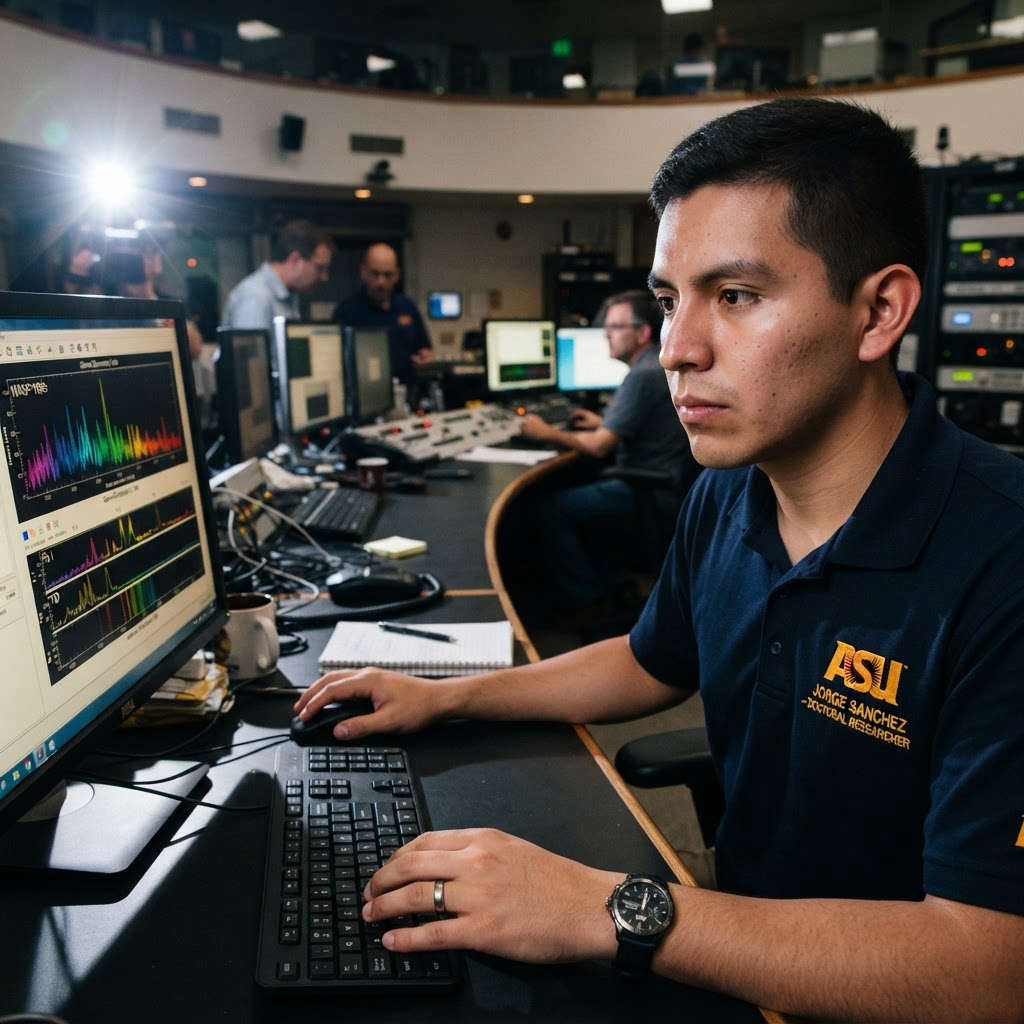
Astronomers have achieved the first simultaneous measurement of gaseous magnesium and silicon in the atmosphere of the exoplanet WASP-189b. By utilizing spectroscopy via the Gemini Observatory, researchers confirmed a direct correlation between the chemical composition of the host star and the materials present in the planet's atmosphere. This finding validates the use of stellar chemistry as a reliable proxy for determining the composition of distant, rocky exoplanets. The study provides a critical observational foundation for characterizing planetary systems beyond our own solar neighborhood.
Validating the Stellar-Planetary Chemical Link
The recent study of the exoplanet WASP-189b represents a significant milestone in exoplanetary science, providing the first direct observational evidence that a planet's atmospheric composition is fundamentally linked to the chemistry of its host star (ScienceDaily, 'A planet 320 light-years away confirms what scientists long suspected'). For years, astronomers have operated under the theoretical assumption that the elemental abundances in a planet's atmosphere reflect the composition of the protoplanetary disk from which it formed, which in turn is dictated by the host star's chemistry. However, until this measurement, this relationship was primarily supported by evidence from our own Solar System, leaving a gap in our understanding of distant planetary systems.
By utilizing the Gemini Observatory to perform simultaneous measurements of gaseous magnesium and silicon, researchers were able to confirm this relationship in a system located 320 light-years away (ScienceDaily, 'A planet 320 light-years away confirms what scientists long suspected'). This breakthrough was achieved through high-precision spectroscopy, a method that separates light into distinct wavelengths to reveal the specific chemical signatures present in the planet's atmosphere. The ability to detect these elements directly provides a robust empirical basis for using stellar chemistry as a proxy for planetary composition, a tool that will be vital as astronomers shift their focus toward smaller, rocky exoplanets.
Advancing Spectroscopic Capabilities
The success of the WASP-189b observation highlights the increasing power of modern astronomical instrumentation. As noted by Chris Davis, NSF Program Director for NOIRLab, these discoveries demonstrate the capability of current telescopes to help scientists understand the 'remarkable zoo of exoplanets' in our neighborhood (ScienceDaily, 'A planet 320 light-years away confirms what scientists long suspected'). The study underscores the importance of multi-wavelength observations, which allow researchers to probe different layers and chemical components of an exoplanet's atmosphere. This capability is not limited to gas giants; it is a foundational step toward characterizing the atmospheres of Earth-sized worlds.
Technological advancements in photonic chips and high-resolution sensors are further enhancing these capabilities, enabling telescopes to link data more effectively and achieve higher-resolution imaging (Space Headlines, 'AI Daily Briefing'). These tools are essential for overcoming the technical barriers associated with observing planets that are often obscured by the intense glare of their host stars. As these technologies mature, the scientific community expects to uncover a much wider range of elements in exoplanet atmospheres, providing a more comprehensive picture of planetary formation and evolution.
Limitations and Future Research Directions
Despite the significance of the WASP-189b findings, the research is subject to inherent limitations. The current method relies on the assumption that the host star's surface chemistry accurately reflects the composition of the entire protoplanetary disk, which may not account for complex processes like planetary migration or late-stage accretion (ScienceDaily, 'A planet 320 light-years away confirms what scientists long suspected'). Furthermore, the sample size of exoplanets with such detailed chemical measurements remains small, necessitating further observations to determine if the observed correlation holds true across different types of planetary systems and stellar environments. Reproducibility across diverse systems is the next major hurdle for the field.
Future research will likely focus on applying these spectroscopic techniques to a broader range of targets, including smaller, rocky planets that are more likely to harbor conditions suitable for life. The integration of data from the James Webb Space Telescope, the Gemini Observatory, and the upcoming Nancy Grace Roman Space Telescope will be critical in this effort (NASA Science, 'NASA’s Webb Catches Exoplanet Getting Roasted'). By combining these resources, astronomers aim to build a comprehensive catalog of exoplanetary compositions, ultimately refining our understanding of how common Earth-like planets are in the universe and what chemical signatures might indicate the presence of life.
What It Will Take to Advance This
Researchers must expand the sample size of exoplanets with measured elemental abundances to confirm the universality of the stellar-planetary chemical correlation. This requires a systematic survey of diverse planetary systems to account for variables such as planetary migration and accretion history. The primary technical barrier is the intense glare of host stars, which obscures the light from orbiting planets. Advancements in coronagraphy and high-contrast imaging are necessary to isolate the light from smaller, rocky worlds for spectroscopic analysis. Sustained funding for ground-based facilities like the Gemini Observatory and space-based missions like the Nancy Grace Roman Space Telescope is essential. These resources are required to maintain the high-precision instrumentation needed for ongoing atmospheric characterization. While not subject to traditional safety regulations, the international coordination of astronomical data requires adherence to standardized reporting protocols. The International Astronomical Union must continue to facilitate the development of these standards to ensure global data interoperability. The manufacturing of next-generation photonic chips and high-resolution sensors must be scaled to support the increased demand from upcoming space missions. This requires the development of robust supply chains for specialized aerospace-grade materials and components.
Future Possibilities
While the primary application is astronomical, the spectroscopic techniques developed for exoplanet characterization have direct parallels in medical diagnostics. The ability to detect trace elements in distant atmospheres at extreme distances mirrors the need for high-sensitivity detection of biomarkers in human blood or tissue samples. If these sensors are miniaturized, they could lead to faster, non-invasive diagnostic tools for early disease detection. This would require the adaptation of current astronomical sensor technology for clinical use, a process that is currently in the early stages of research.
- •Long term (5+ years)
- •Low confidence
Reference: The study of exoplanet atmospheres is opening an entirely new dimension in astronomical research, utilizing high-precision spectroscopy to identify chemical signatures (ScienceDaily, 'A planet 320 light-years away confirms what scientists long suspected').
The development of advanced photonic chips and high-resolution imaging sensors for space-based telescopes has dual-use potential for national security. These technologies can be adapted for enhanced satellite surveillance, allowing for the detection of subtle chemical or thermal signatures from space. This would improve the US's ability to monitor global activities with greater precision and at longer ranges. The path to this capability depends on the successful integration of these sensors into next-generation satellite platforms.
- •Mid term (2-5 years)
- •Moderate confidence
Reference: Photonic chips are currently being designed to link radio telescopes for higher-resolution imaging, a technology with clear applications in surveillance (Space Headlines, 'AI Daily Briefing').
The maturation of exoplanet characterization techniques will drive demand for specialized aerospace components and data analysis services. This will create a new market for high-precision sensors, photonic chips, and AI-driven data processing software. As the US invests in these technologies, it will strengthen its position in the global space economy, fostering innovation in both the public and private sectors. The growth of this sector is contingent on sustained government funding for space science and the continued expansion of commercial space activities.
- •Mid term (2-5 years)
- •High confidence
Reference: The discovery involving WASP-189b provides a significant step toward understanding planetary composition, which is a key driver for future space science investment (ScienceDaily, 'A planet 320 light-years away confirms what scientists long suspected').
Understanding the atmospheric composition of distant planets provides a comparative framework for studying Earth's own climate and atmospheric evolution. By identifying the chemical processes that lead to stable or unstable atmospheres on other worlds, scientists can better model the long-term impacts of human-induced changes on Earth's atmosphere. This research requires the development of sophisticated climate models that can incorporate data from diverse planetary environments. The ultimate goal is to improve our ability to predict and mitigate climate-related risks on Earth.
- •Long term (5+ years)
- •Low confidence
Reference: The breakthrough opens an entirely new dimension in our study of exoplanet atmospheres, providing a window into the conditions that shape them (ScienceDaily, 'A planet 320 light-years away confirms what scientists long suspected').
The pursuit of exoplanet research inspires public interest in science and technology, potentially increasing enrollment in STEM fields. This long-term cultural shift can lead to a more scientifically literate population, better equipped to navigate a technology-driven society. The success of missions like the James Webb Space Telescope serves as a catalyst for this engagement, demonstrating the value of scientific inquiry to the general public. This impact is sustained through ongoing public outreach and the dissemination of new discoveries.
- •Long term (5+ years)
- •Moderate confidence
Reference: The study of exoplanets is a key area of public interest, with NASA and other institutions actively sharing findings to engage the public (NASA Science, 'NASA’s Webb Catches Exoplanet Getting Roasted').
The National Science Foundation should prioritize grant allocations for high-resolution spectroscopic instrumentation to expand the catalog of exoplanets with measured elemental abundances. By increasing funding for the Gemini Observatory and similar ground-based facilities, the US can accelerate the transition from general exoplanet detection to detailed chemical characterization. This investment would enable a systematic survey of the 'remarkable zoo of exoplanets' in our neighborhood, as noted by NSF Program Director Chris Davis.
- •The WASP-189b study confirms the feasibility of linking stellar and planetary chemistry.
- •Current spectroscopic methods are already capable of detecting gaseous magnesium and silicon.
Reference: ScienceDaily, 'A planet 320 light-years away confirms what scientists long suspected'
While not a medical technology, the application of this chemical mapping technique to planetary science mirrors the precision medicine approach of identifying specific biomarkers. Future research programs should adopt this 'precision astronomy' framework to standardize the identification of habitable-zone planets. By applying the same spectroscopic rigor used for WASP-189b to smaller, rocky worlds, researchers can create a standardized 'habitability index' based on elemental ratios.
- •Spectroscopy allows for the separation of light into wavelengths to reveal specific chemical signatures.
- •Establishing a reliable connection between stellar chemistry and planetary composition is essential for future rocky planet studies.
Reference: ScienceDaily, 'A planet 320 light-years away confirms what scientists long suspected'
The development of next-generation photonic chips and high-resolution imaging sensors must be scaled to support the simultaneous measurement of multiple elements across thousands of exoplanets. NASA and private aerospace partners should integrate these sensors into upcoming space-based observatories to increase the throughput of atmospheric analysis. This infrastructure will allow for the rapid processing of light data, moving beyond the current manual, target-by-target observation model.
- •Photonic chips are currently being designed to link radio telescopes for higher-resolution imaging.
- •The WASP-189b discovery demonstrates the power of simultaneous measurement capabilities.
Reference: Space Headlines, 'AI Daily Briefing'
The international astronomical community, led by the International Astronomical Union, should establish standardized protocols for reporting exoplanet atmospheric composition data. By creating a unified database for stellar-planetary chemical correlations, researchers can ensure reproducibility and cross-mission data integration. This standard would facilitate the comparison of findings from the James Webb Space Telescope, the Gemini Observatory, and the upcoming Nancy Grace Roman Space Telescope.
- •The WASP-189b findings provide a significant step toward establishing reliable connections between stellar and planetary chemistry.
- •Future observations using multiple wavelengths are expected to uncover a wider range of elements.
Reference: ScienceDaily, 'A planet 320 light-years away confirms what scientists long suspected'
Universities and research institutions should develop interdisciplinary training programs that combine stellar astrophysics with planetary geology and chemical analysis. By training the next generation of astronomers in these integrated methods, the US can maintain its leadership in space science. This workforce will be essential for interpreting the complex data streams expected from the next decade of space-based and ground-based telescope missions.
- •The study of exoplanet atmospheres is opening an entirely new dimension in astronomical research.
- •Interdisciplinary approaches are required to understand the characteristics of the diverse zoo of exoplanets.
Reference: ScienceDaily, 'A planet 320 light-years away confirms what scientists long suspected'
Sources
- A planet 320 light-years away confirms what scientists long suspected — ScienceDaily
- NASA’s Webb Catches Exoplanet Getting Roasted — NASA Science
Topics
- Universe One
- Space & Astronomy
- could
- mapping
- exoplanet
- atmospheric
- composition
- stellar
- chemistry
- make
- planetary
- habitability