Demography & Population Science
Could the 2026 World Population Data Sheet enable evidence-based policy for aging and low-fertility societies
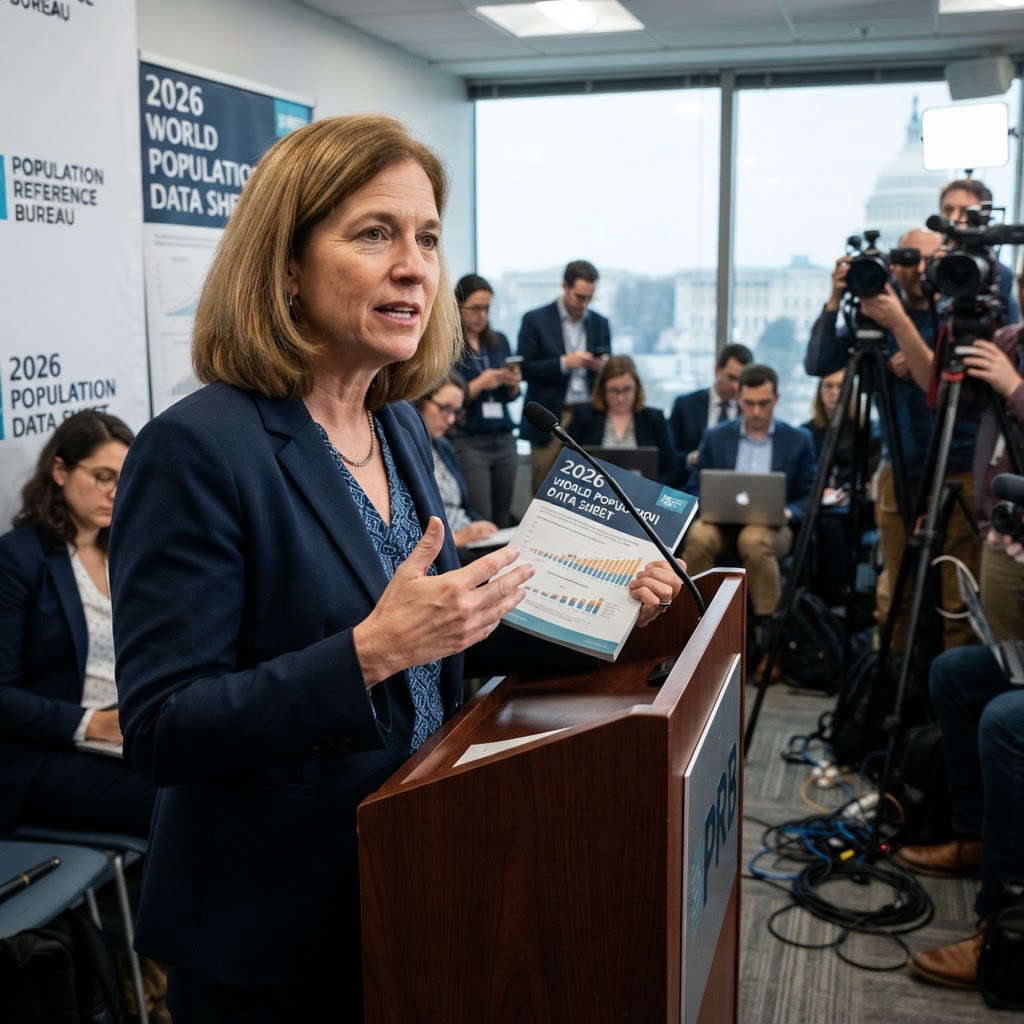
The Population Reference Bureau released its 2026 World Population Data Sheet on October 20, 2026, revealing that over 2.8 billion people now reside in countries where adults aged 65 and older outnumber children under 15. The report highlights that fertility rates in over 70 percent of the world's population are at or below replacement levels. These findings underscore a global shift toward population aging, driven by sustained low fertility and increased longevity.
The Global Shift Toward Aging Populations
The 2026 World Population Data Sheet, published by the Population Reference Bureau (PRB) on October 20, 2026, provides a comprehensive overview of the demographic transformations currently reshaping the global landscape (PRB, 'One-Third of the World’s Population Lives Where Older Adults Already Outnumber Children', 2026). The most striking finding is that over 2.8 billion people now live in regions where the population of adults aged 65 and older exceeds that of children under 15 (PRB, 2026). This demographic inversion is not limited to developed nations but is a widespread phenomenon, with over 70 percent of the global population residing in countries where fertility is at or below replacement levels (PRB, 2026).
This shift is primarily driven by the dual forces of declining fertility and increasing life expectancy. While these trends are often discussed in the context of population decline, the PRB report clarifies that global population growth is still projected to continue, albeit at a slower pace, reaching 8.5 billion by 2030 (UN, 'Data Portal', 2026). The demographic transition, a historical shift toward longer lives and smaller families, is now reaching a critical stage where the potential support ratio—the number of working-age persons relative to those aged 65 and over—is projected to decline from 5.1 in 2021 to 3.0 by 2050 (UN, 2026).
Data Collection Fragility and Methodological Challenges
A significant concern highlighted by the PRB is the fragility of global data collection systems. Recent disruptions in development funding have interrupted major initiatives, such as the Demographic and Health Surveys (DHS), which are essential for tracking population health and family planning (PRB, 2026). The accuracy of demographic projections relies heavily on censuses, civil registration, and vital statistics systems, which remain incomplete or unavailable in many parts of the world (PRB, 2026).
When direct observations are missing, researchers must rely on modeled estimates, which are inherently subject to uncertainty (PRB, 2026). The UN Population Division has noted that while population trends are more predictable than economic or technological shifts in the short term, the loss of primary data collection capabilities poses a risk to the validity of these models (UN, 'World Population Prospects 2024', 2024). The 2026 methodology report on the living arrangements of older persons further emphasizes the need for robust, standardized data to inform policy in an aging world (UN, 2026).
Economic and Fiscal Implications for the United States
The United States is not immune to these global trends. According to the Congressional Budget Office (CBO), the U.S. population is projected to grow from 349 million in 2026 to 364 million in 2056, but this growth will be increasingly driven by net immigration as annual deaths begin to exceed annual births starting in 2030 (CBO, 'The Demographic Outlook: 2026 to 2056', 2026). The aging of the U.S. population has profound implications for the federal budget, particularly regarding the sustainability of Social Security and Medicare (CBO, 2026).
As the average age of the U.S. population rises, the labor force participation rate is expected to face downward pressure, necessitating policy interventions to maintain economic productivity (CBO, 2026). The CBO's projections, which were updated in June 2026 to ensure consistency with immigration estimates, serve as a critical tool for long-term fiscal planning (CBO, 2026). The interplay between demographic aging and economic growth remains a central challenge for U.S. policymakers, requiring a balance between fiscal restraint and investment in the 'longevity economy' (CBO, 2026).
Policy Responses and the Longevity Economy
In response to these demographic shifts, international bodies and national governments are exploring new policy frameworks. The European Union, for instance, has developed a 'Demography Toolbox' to help member states integrate demographic trends into their policymaking (JRC, 'Demographic transformation in the EU', 2026). This approach recognizes that while aging presents challenges for labor markets and public finances, it also offers opportunities for the 'longevity economy,' which focuses on products and services designed for an older population (JRC, 2026).
Effective policy responses require a multi-faceted approach, including gender-responsive strategies that support labor force participation and family well-being (PRB, 2026). The UN Commission on Population and Development has held expert consultations to address the intersection of population, technology, and sustainable development, emphasizing that technology can enhance productivity and support multigenerational workforces (UN, 2026). Ultimately, the ability of nations to adapt to these demographic realities will depend on their commitment to high-quality data collection and evidence-based policy design (PRB, 2026).
What It Will Take to Advance This
Researchers must conduct more granular longitudinal studies to understand the health and economic outcomes of aging populations in diverse socioeconomic contexts. This includes validating the impact of current policy interventions on the quality of life for those aged 65 and older. The development of robust, interoperable data systems is required to bridge the gaps in global demographic reporting. This involves creating standardized protocols for civil registration and vital statistics that can function even in resource-constrained environments. Sustained funding for international demographic surveys, such as the Demographic and Health Surveys (DHS), is essential to prevent data gaps. Governments and international organizations must prioritize these surveys as a core component of global development infrastructure. Policymakers need to establish regulatory frameworks that support the 'longevity economy' while protecting older adults from exploitation. This includes setting standards for geriatric care technology and financial products tailored to aging populations. Infrastructure must be scaled to support an aging population, including the deployment of smart-home technologies and accessible public transportation. This requires a coordinated effort between urban planners and the private sector to ensure that cities are designed for all ages.
Future Possibilities
Healthcare systems will need to shift from acute care models to chronic disease management for an aging population. This requires a massive expansion of geriatric services and home-based monitoring technologies to maintain the independence of the 65+ demographic. If this transition is not managed, the burden on hospital infrastructure will likely exceed capacity by the mid-2030s. Success depends on the integration of AI-driven diagnostics and remote patient monitoring, as noted in the WHO's guidance on aging and health.
- •Mid term (2-5 years)
- •High confidence
Reference: WHO reports that the number of people aged 60 and older is projected to reach 1.4 billion by 2030, necessitating a shift in public health strategies (WHO, 'Ageing: Global population', 2025).
Demographic decline in key regions may alter global power dynamics and military recruitment capabilities. As the working-age population shrinks, nations may face challenges in maintaining force readiness and industrial output for defense. This could lead to increased reliance on autonomous systems and AI to compensate for smaller human workforces. The stability of these nations will depend on their ability to manage the economic consequences of an aging society while maintaining security commitments.
- •Long term (5+ years)
- •Moderate confidence
Reference: The UN Population Division projects that the potential support ratio will decline to 2.0 by the end of the century, impacting labor availability (UN, 'Data Portal', 2026).
The 'longevity economy' will become a primary driver of market growth, with new sectors emerging to serve the needs of older adults. Companies that pivot to provide specialized services, healthcare, and financial products for this demographic will likely outperform traditional markets. However, this growth must be balanced against the fiscal strain of supporting an aging population through public pension and healthcare systems. The CBO projects that U.S. population growth will slow to 0.1 percent annually by 2037, necessitating structural economic adjustments.
- •Mid term (2-5 years)
- •High confidence
Reference: The CBO's 'Demographic Outlook: 2026 to 2056' highlights the significant implications of population composition for the economy and federal budget (CBO, 2026).
Slower population growth and eventual stabilization could reduce the pressure on natural resources and environmental systems in the long term. However, the transition period will require careful management of urban infrastructure to accommodate an aging population while meeting sustainability goals. If urban planning fails to adapt, the environmental footprint of aging societies could increase due to inefficient energy use in housing and transportation. Success requires integrating demographic projections into urban development and climate policy.
- •Long term (5+ years)
- •Low confidence
Reference: The UN notes that achieving the 2030 Agenda for Sustainable Development can help avoid extreme demographic outcomes (UN, 'World Population Prospects 2024', 2024).
Multigenerational living arrangements and lifelong learning will become more common as individuals live longer and work later into life. This shift will require changes in housing design, workplace culture, and social support systems to accommodate diverse age groups. If these changes are implemented, society could see increased social cohesion and knowledge transfer between generations. The path forward depends on policy support for flexible work arrangements and age-inclusive community planning.
- •Long term (5+ years)
- •Moderate confidence
Reference: The UN's 2026 methodology report on living arrangements of older persons underscores the evolving nature of household structures (UN, 2026).
National science agencies should prioritize funding for longitudinal studies that track the economic impact of aging populations. By allocating specific grants to analyze the 'longevity economy,' researchers can identify how to maintain productivity in older workforces. This funding would support the development of predictive models for healthcare demand, ensuring that public health resources are allocated efficiently before crises emerge. Such investment is essential to validate the demographic trends identified in the 2026 PRB report.
- •The PRB report highlights the necessity of high-quality data for validating models.
- •Longevity economies are identified as a key opportunity for innovation in the EU and globally.
Reference: Population Reference Bureau, 'One-Third of the World’s Population Lives Where Older Adults Already Outnumber Children', 2026
Healthcare systems must transition toward geriatric-focused preventative care models to address the rising ratio of older adults to children. This involves integrating technology to monitor chronic conditions remotely, reducing the burden on hospital infrastructure. By scaling these clinical interventions, nations can improve the quality of life for the aging population while managing costs. This shift is a direct response to the demographic reality that older populations will soon dominate the health landscape.
- •WHO notes that good health in older age is not distributed equally.
- •The PRB data confirms that 19% of the population in certain regions is already 65 or older.
Reference: World Health Organization, 'Ageing: Global population', 2025
Industries should invest in automation and robotics to compensate for the shrinking working-age population. As the potential support ratio declines, companies must deploy labor-saving technologies to maintain output levels. This transition requires a coordinated effort between private sector manufacturers and government vocational training programs. Scaling these technologies will be critical to sustaining economic growth in countries where the workforce is contracting.
- •The UN Population Division projects a decline in the potential support ratio to 3.0 by 2050.
- •The EU Joint Research Centre notes that demographic shifts create challenges for the labor market.
Reference: United Nations, 'Data Portal - Population Division', 2026
Governments should adopt standardized demographic reporting frameworks to ensure international comparability of aging data. By harmonizing how countries track vital statistics and migration, policymakers can better coordinate cross-border labor and social security agreements. This regulatory alignment is necessary to address the fragility of data collection systems identified in recent years. Establishing these standards will provide the foundation for global demographic stability.
- •PRB emphasizes that regular, high-quality data collection is essential for validating models.
- •The UN Population Division provides interactive access to global demographic indicators.
Reference: Population Reference Bureau, 'One-Third of the World’s Population Lives Where Older Adults Already Outnumber Children', 2026
Educational institutions must implement lifelong learning programs to facilitate the transition of older workers into new roles. By retraining the workforce, nations can extend working lives and mitigate the economic impact of a smaller labor pool. This initiative requires collaboration between the Department of Labor and private industry to align training with emerging technological needs. Such programs are vital for maintaining economic competitiveness in an aging society.
- •The UN notes that countries may need to leverage technology to create lifelong learning opportunities.
- •The EU report suggests that skilled migration and innovation can help offset aging effects.
Reference: United Nations, 'Population', 2026
Sources
- Key Findings for Reporters: 2026 World Population Data Sheet — Population Reference Bureau
- The Demographic Outlook: 2026 to 2056 — Congressional Budget Office
Topics
- Universe One
- Demography & Population Science
- could
- 2026
- world
- population
- data
- sheet
- enable
- evidence-based
- policy
- aging