Federal Agencies & Regulation
Internet Service Providers Drop Legal Challenge to California Net Neutrality Law
Summary
Major telecommunications companies have officially withdrawn their long-standing federal lawsuit against California's net neutrality statute, SB 822. This development leaves the state-level regulations in place, effectively ending a years-long legal battle over the state's authority to enforce open internet standards. Industry representatives indicated a shift in strategy toward seeking a unified federal framework through Congress and the FCC rather than continuing state-level litigation. The move marks a significant victory for proponents of state-level consumer protections in the telecommunications sector.
This development impacts the regulatory landscape for internet service providers and consumers across the United States, as it preserves a stringent state-level model that may influence future federal policy debates regarding broadband oversight.
The primary actors involved in this development include major telecommunications companies (ISPs), the State of California, the California Attorney General's office, and federal regulatory bodies such as the Federal Communications Commission (FCC). Consumer advocacy groups, such as The Utility Reform Network (TURN), have also played a significant role in defending the state's regulatory stance.
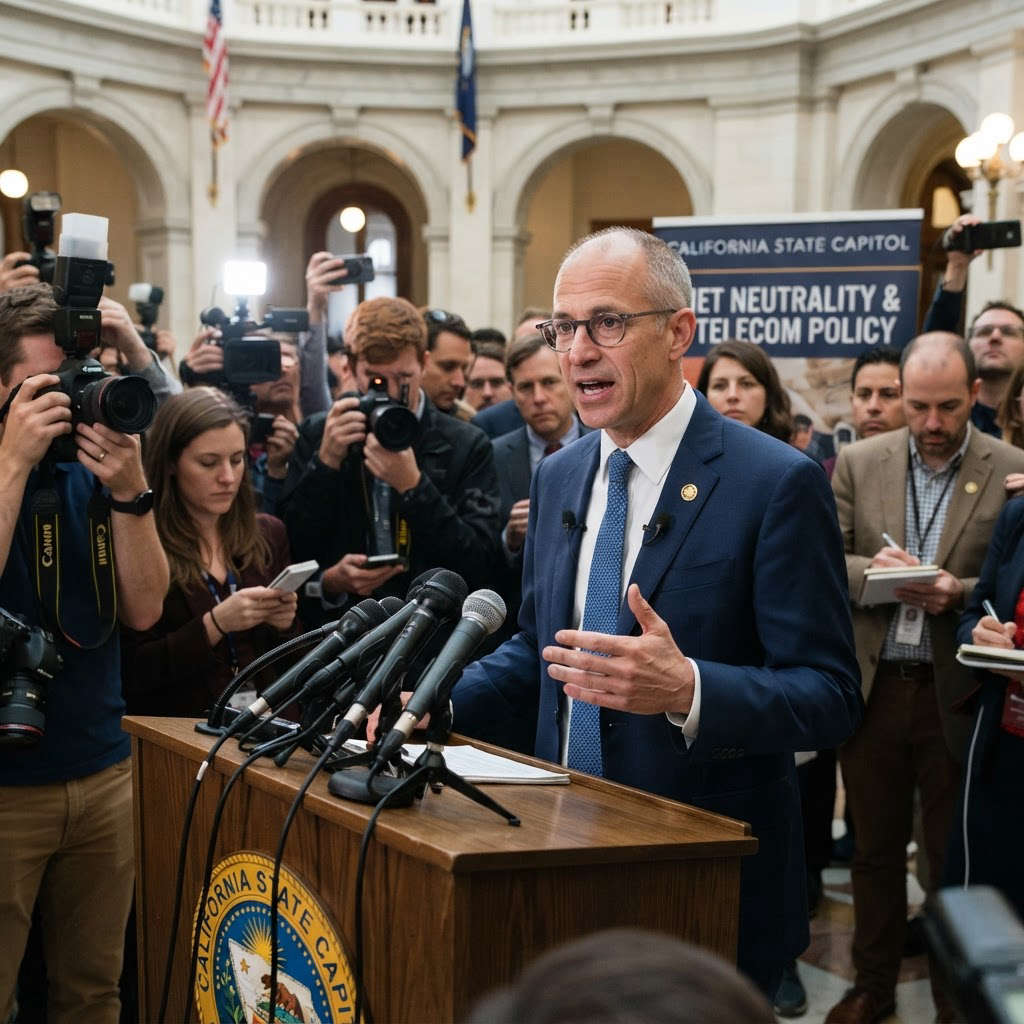
Multiple telecommunications companies have dropped their federal lawsuit challenging California's Senate Bill 822 (SB 822), the California Internet Consumer Protection and Net Neutrality Act of 2018. This law prohibits ISPs from blocking, throttling, or engaging in paid prioritization of internet traffic, and it includes a broad 'catch-all' provision against unreasonable interference with consumer access. The withdrawal of the lawsuit effectively leaves these state-level rules in place for the foreseeable future.
The legal action took place in a Sacramento federal court. The regulations themselves apply to all internet service providers operating within the State of California.
The lawsuit was dropped on October 30, 2026. SB 822 was originally enacted in 2018, and the Ninth Circuit Court of Appeals upheld the law in January 2022. The current federal regulatory environment remains in flux following the Sixth Circuit's 2025 decision to strike down the FCC's 2024 net neutrality order.
Industry groups have argued that outdated internet laws and a patchwork of state regulations hurt investment and complicate national network management. By dropping the lawsuit, these companies are signaling a shift in strategy, opting to lobby Congress and the FCC for a unified federal approach rather than continuing to fight individual state laws in court. Proponents of the law view the withdrawal as a major victory for consumer protection and state-level regulatory authority.
The legal challenge was withdrawn through a filing in federal court. The law remains enforceable under the authority of the California Attorney General, who has consistently defended its validity. The absence of a preemptive federal standard, following the invalidation of the FCC's 2024 order, has left a regulatory vacuum that California's law currently fills.
Why It Matters
This event marks a pivotal moment in the ongoing debate over internet governance in the United States. It highlights the tension between state-level consumer protections and the desire for a uniform national regulatory framework. The persistence of California's law may force federal lawmakers to address the issue more urgently to avoid a fragmented digital landscape.
What Happens Next
Attention will likely shift to Washington, D.C., where industry groups and consumer advocates will intensify lobbying efforts for a federal net neutrality bill. Meanwhile, California will continue to enforce its own standards, potentially serving as a model or a cautionary tale for other states.
Key Unknowns
It remains unclear whether Congress will be able to reach a bipartisan consensus on a federal net neutrality bill, given the deep ideological divides on the issue. Additionally, it is uncertain how the FCC will respond to the continued existence of state-level rules in the absence of its own federal mandate.
What to Watch
Watch for any new legislative proposals in Congress regarding broadband regulation and any potential future actions by the FCC to reassert its authority over internet traffic management.
Sources
- Internet Service Providers Drop California Net Neutrality Lawsuit — California Globe
- Newsom Urged to Reject $1.4 Billion from BEAD over Net Neutrality — Broadband Breakfast
- SB 822 California Net Neutrality: Rules and Enforcement — LegalClarity
Topics
- Universe One
- Federal Agencies & Regulation
- internet
- service
- providers
- drop
- legal
- challenge
- california
- neutrality