Washington State Reports First Human H5N1 Case Linked to Dairy Cattle Exposure
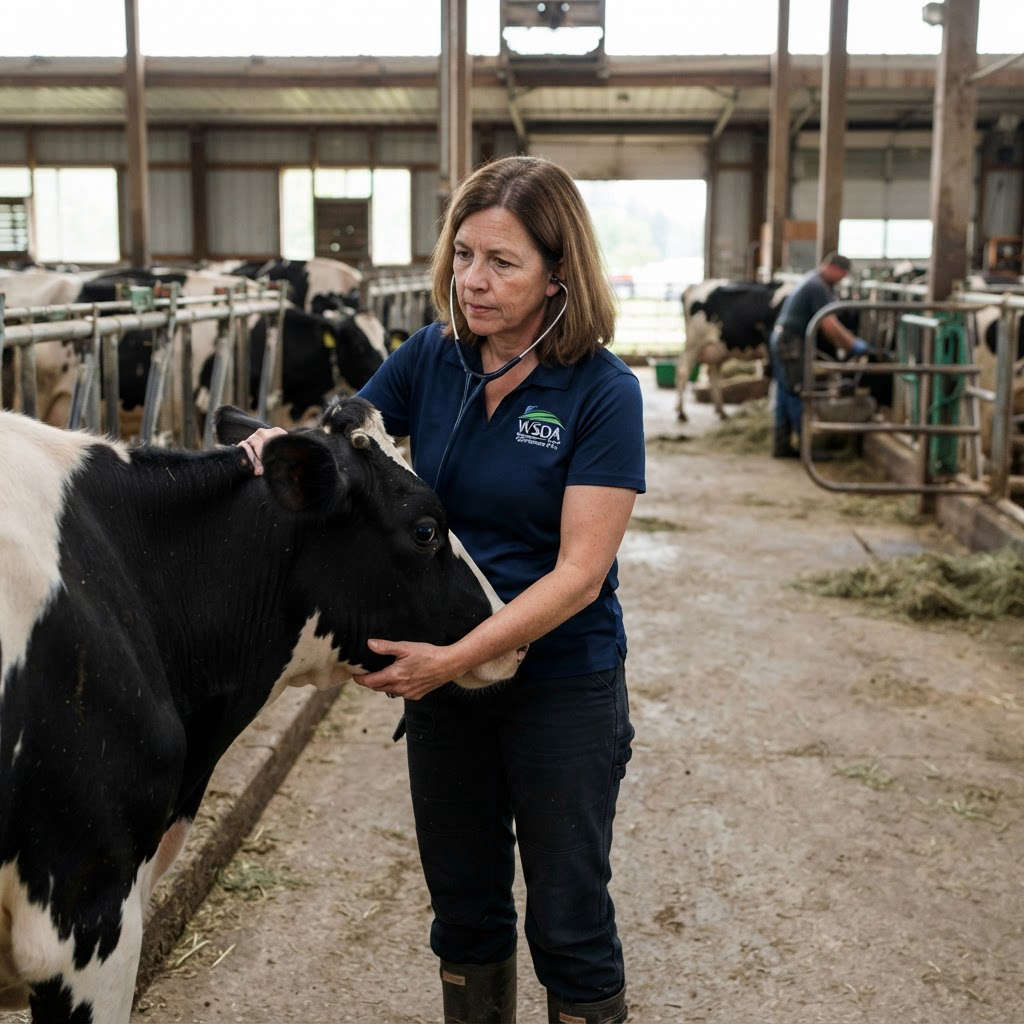
Public health officials in Washington state have confirmed the first human case of H5N1 avian influenza associated with exposure to infected dairy cattle in Yakima County. This development follows the initial detection of the virus in two Washington dairy herds earlier in October 2026. While the CDC maintains that the risk to the general public remains low, the incident highlights the ongoing spread of the virus among livestock and farm workers. State and federal agencies are conducting active surveillance and monitoring to prevent further transmission.
This event directly impacts U.S. national health security by demonstrating the continued evolution and spread of H5N1 in domestic livestock, necessitating ongoing federal and state coordination to protect the food supply and public health.
The primary actors involved include the U.S. Department of Agriculture (USDA), specifically the Animal and Plant Health Inspection Service (APHIS), the Centers for Disease Control and Prevention (CDC), and the Washington State Department of Agriculture (WSDA). The affected parties are dairy farmers in Yakima County and the individual worker who tested positive for H5N1.
This event marks the first confirmed human case of H5N1 avian influenza in Washington state linked to exposure to infected dairy cattle. The virus, identified as HPAI H5 clade 2.3.4.4b, was previously detected in two dairy herds in the same county. The infected individual experienced mild symptoms and is currently being monitored by local health authorities.
The outbreak is centered in Yakima County, Washington, with the virus having spread across various states since the initial U.S. dairy cattle outbreak began in March 2024. The detection in Washington represents a geographic expansion of the virus's reach in the Pacific Northwest.
The virus was first detected in Washington dairy herds on October 8, 2026. The human case was confirmed shortly thereafter, with reports surfacing around October 15, 2026. Surveillance and monitoring efforts are ongoing as of early November 2026.
The primary motivation for the current response is to prevent the virus from adapting to human-to-human transmission. Public health officials are conducting epidemiological investigations to understand the specific transmission dynamics between cattle and humans, while the USDA is focused on maintaining the safety of the commercial milk supply.
The detection was confirmed via PCR (polymerase chain reaction) testing conducted by the National Veterinary Services Laboratories (NVSL). The response mechanism involves a coordinated effort between state and federal agencies to conduct on-farm investigations, diagnostic testing, and the implementation of biosecurity measures to limit further spread.
Why It Matters
This development is critical because it confirms that the H5N1 virus is successfully jumping from cattle to humans in new geographic regions. While the risk to the general public remains low, the continued presence of the virus in livestock increases the probability of further human infections and potential viral reassortment.
What Happens Next
Authorities will continue to monitor the affected farms and conduct contact tracing for the infected individual. The USDA will likely continue its national milk testing strategy to ensure the virus does not enter the commercial supply chain.
Key Unknowns
The exact mode of transmission from cattle to humans remains a subject of investigation. Additionally, the potential for the virus to mutate into a form that spreads easily between humans remains the primary concern for global health security.
What to Watch
Watch for updates from the CDC regarding any new human cases and any changes in the genetic profile of the virus that might indicate increased human adaptation.
Sources
- Bird Flu Found in Washington Dairy Herd — Wall Street Journal
- Washington State Confirms First Human Bird Flu Case Linked to Dairy Cows — Bloomberg
- Washington state reports first human case of bird flu linked to dairy cattle — Associated Press
Topics
- Universe One
- Global Health & Pandemics
- washington
- state
- reports
- first
- human
- h5n1
- case
- linked
- dairy
- cattle