World Elections & Leadership Changes
Moldova's Pro-Western President Maia Sandu Secures Second Term Amid Allegations of Russian Interference
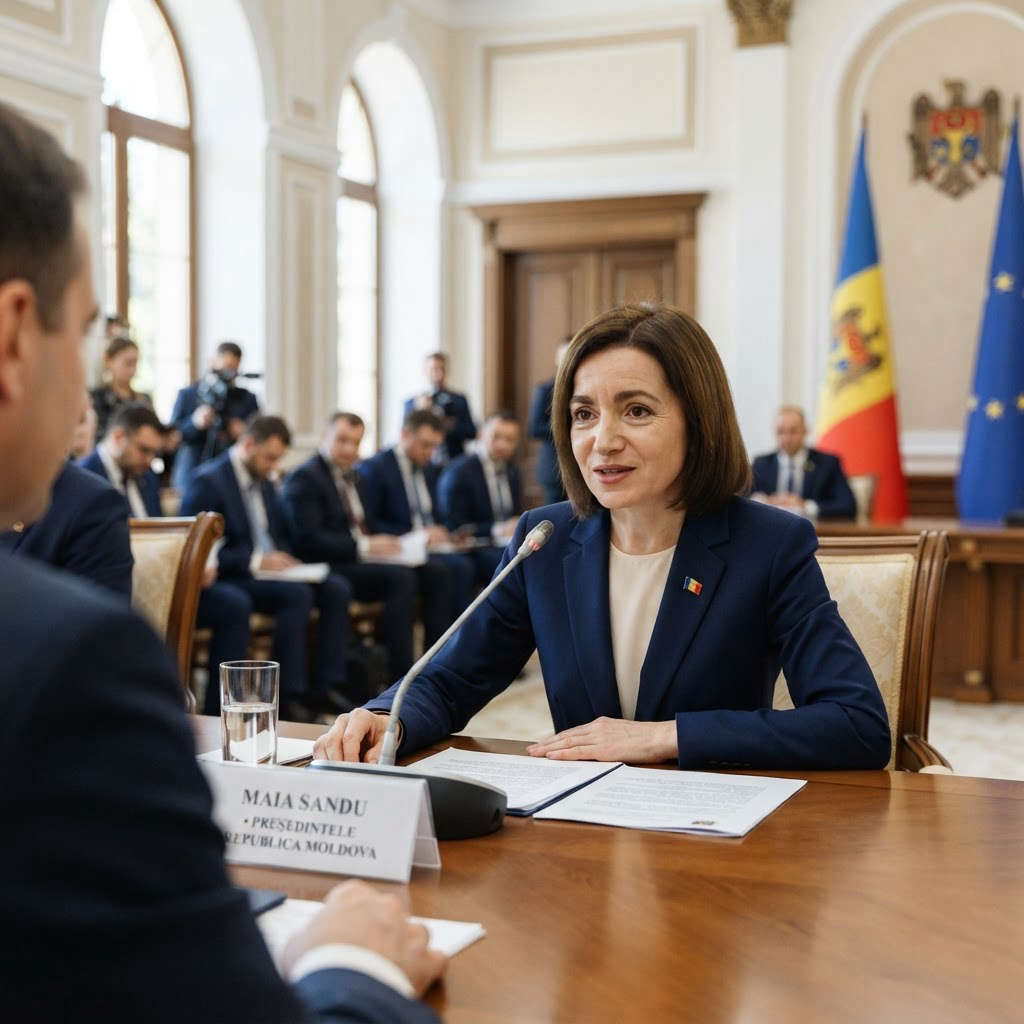
Moldovan President Maia Sandu has won a second term in a presidential runoff election, defeating her opponent Alexandr Stoianoglo. The election was characterized by significant concerns regarding alleged Russian-backed voter corruption and hybrid influence campaigns. Official results confirmed Sandu's victory, though the Kremlin has publicly contested the legitimacy of the process. The outcome reinforces Moldova's current trajectory toward European Union integration despite deep societal divisions.
The primary actors in this election were incumbent President Maia Sandu, representing the pro-European Party of Action and Solidarity (PAS), and her challenger Alexandr Stoianoglo, a former Prosecutor General supported by the Party of Socialists (PSRM). The Central Electoral Commission (CEC) of Moldova managed the administration of the vote, while international bodies like the National Democratic Institute (NDI) provided observation and technical assessment.
President Maia Sandu won a second term in a presidential runoff election. The contest was framed as a choice between continued integration with the European Union and a pivot toward closer ties with Russia. The election was marked by widespread allegations of foreign interference, including claims of illicit financing and voter corruption aimed at swaying the electorate.
The election took place across the Republic of Moldova, with significant participation from the Moldovan diaspora in various European countries. The region of Transnistria, which hosts Russian military personnel, remains a focal point of geopolitical tension and a source of potential instability.
The first round of the election occurred on October 20, 2024, alongside a constitutional referendum on EU integration. The decisive runoff election took place on November 3, 2024. Official results were tabulated and released by the CEC in the days following the vote.
The election was driven by Moldova's desire to secure its future through EU membership, a goal championed by the Sandu administration. Conversely, opposition forces and external actors, particularly the Kremlin, sought to leverage economic grievances and societal divisions to halt this pro-Western shift. The Kremlin has characterized the election as undemocratic, citing alleged irregularities and repression of opposition voices.
The electoral process involved a two-round system for the presidency. The CEC oversaw the logistics, while law enforcement agencies investigated reports of money being funneled into the country to influence voters. The process was monitored by international observers who assessed the fairness and transparency of the campaign and the voting procedures.
Why It Matters
This election is a bellwether for the resilience of democratic institutions in Eastern Europe against hybrid warfare. It confirms Moldova's current geopolitical orientation but highlights the fragility of its political consensus.
What Happens Next
President Sandu will begin her second term, likely facing continued pressure from opposition parties and external actors. The government will need to address the underlying economic and social issues that fueled the opposition's campaign.
Key Unknowns
The extent to which the alleged foreign interference will impact future legislative elections and the long-term stability of the governing coalition remains unclear.
What to Watch
Watch for upcoming parliamentary elections and any further developments regarding the status of Transnistria and the government's ability to implement its energy and economic reforms.
Sources
Topics
- Universe One
- World Elections & Leadership Changes
- moldova
- pro-western
- president
- maia
- sandu
- secures
- second
- term
- amid
- allegations