Coups & Political Upheaval
Georgia's Constitutional Court Continues Hearings on Ruling Party's Bid to Ban Opposition Parties
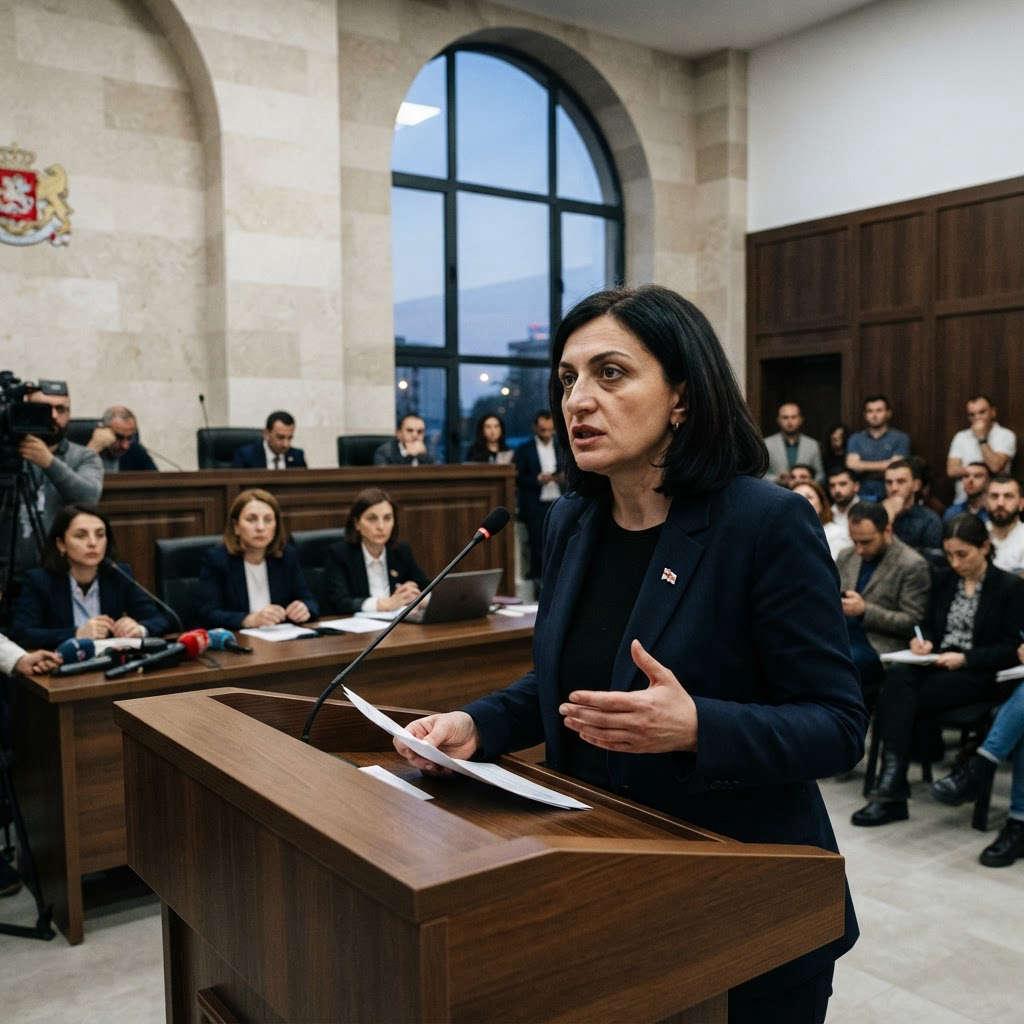
The Constitutional Court of Georgia is currently conducting hearings on a lawsuit filed by the ruling Georgian Dream party that seeks to outlaw five major opposition political parties. The proceedings, which began in late October 2026, represent a critical escalation in the ongoing political crisis that has gripped the nation since the contested 2024 parliamentary elections. Opposition leaders and civil society groups have responded by launching a new wave of protests, with a mass demonstration scheduled for November 28. The court is mandated to reach a final, non-appealable decision on the potential ban by June 2027.
The primary actors include the ruling Georgian Dream party, which initiated the lawsuit, and the five opposition parties facing potential dissolution: the United National Movement, the Coalition for Change, Strong Georgia – Lelo, the Federalists, and Gakharia for Georgia. The Constitutional Court of Georgia is the judicial body presiding over the case, with seven judges tasked with reaching a decision. Civil society organizations, such as the Georgian Young Lawyers’ Association, and international bodies like the OSCE are monitoring the situation closely.
The ruling party has filed a lawsuit seeking to permanently ban five opposition parties, accusing them of attempting to overthrow the government and undermining national independence. This legal action is part of a broader political crisis that has seen the government suspend EU accession talks until 2028 and implement restrictive measures on NGOs and election observers. The opposition and various international monitors characterize these moves as an attempt to consolidate power and eliminate political competition ahead of future elections.
The legal proceedings are taking place in Batumi, Georgia, where the Constitutional Court is holding hearings. Protests are concentrated in the capital, Tbilisi, particularly around the university and Rustaveli Avenue, which serves as the center of political demonstrations.
The Constitutional Court began hearing the case on October 13, 2026, with formal hearings opening on October 21. The court is required to deliver a final, non-appealable ruling by June 24, 2027. A mass protest is scheduled for November 28, 2026, marking the two-year anniversary of the government's decision to halt EU accession talks.
The ruling party claims the ban is necessary to protect the country from threats posed by the opposition, which it accuses of being foreign-influenced and destabilizing. Conversely, the opposition and international observers argue that the government is using the judiciary to dismantle democratic institutions and ensure its own political survival. The underlying tension stems from a deep divide over Georgia's geopolitical orientation—between integration with the European Union and a more ambiguous stance that critics fear favors Russian interests.
The process is governed by the Constitutional Court of Georgia, which requires a simple majority (at least four of the seven judges) to uphold the lawsuit. The legal framework allows for the banning of parties if they are found to be acting against the constitutional order. The government has utilized its legislative majority to pass laws that facilitate this process, including rules that limit the ability of election observers to monitor voter verification and increase oversight of foreign-funded civil society groups.
Why It Matters
The outcome of this case will determine whether Georgia remains a pluralistic democracy or shifts toward a consolidated authoritarian system. It serves as a bellwether for the health of democratic institutions in the region and the effectiveness of international pressure in preventing democratic backsliding.
What Happens Next
The court will continue to hear submissions through late 2026, with a final ruling expected by mid-2027. In the interim, the country is likely to see increased civil unrest, particularly around the November 28 protest date.
Key Unknowns
It remains unclear whether the court will maintain its independence or succumb to political pressure from the ruling party. Additionally, the long-term impact of potential sanctions or international isolation on the government's decision-making remains a significant variable.
What to Watch
Watch for the size and intensity of the November 28 protests, as well as any statements from the European Union or the United States regarding the legitimacy of the court's proceedings.
Sources
- Georgian Dream Seeks to Ban the Opposition — Jamestown Foundation
- Protests, tourists and the Kremlin: Georgia at a crossroads – photo essay — The Guardian
- What happened at Georgia’s opposition ban hearing — JAMnews
Topics
- Universe One
- Coups & Political Upheaval
- georgia
- constitutional
- court
- continues
- hearings
- ruling
- party
- opposition
- parties