Governors & State Legislatures
North Carolina General Assembly Enacts Temporary Motor Fuel Tax Suspension
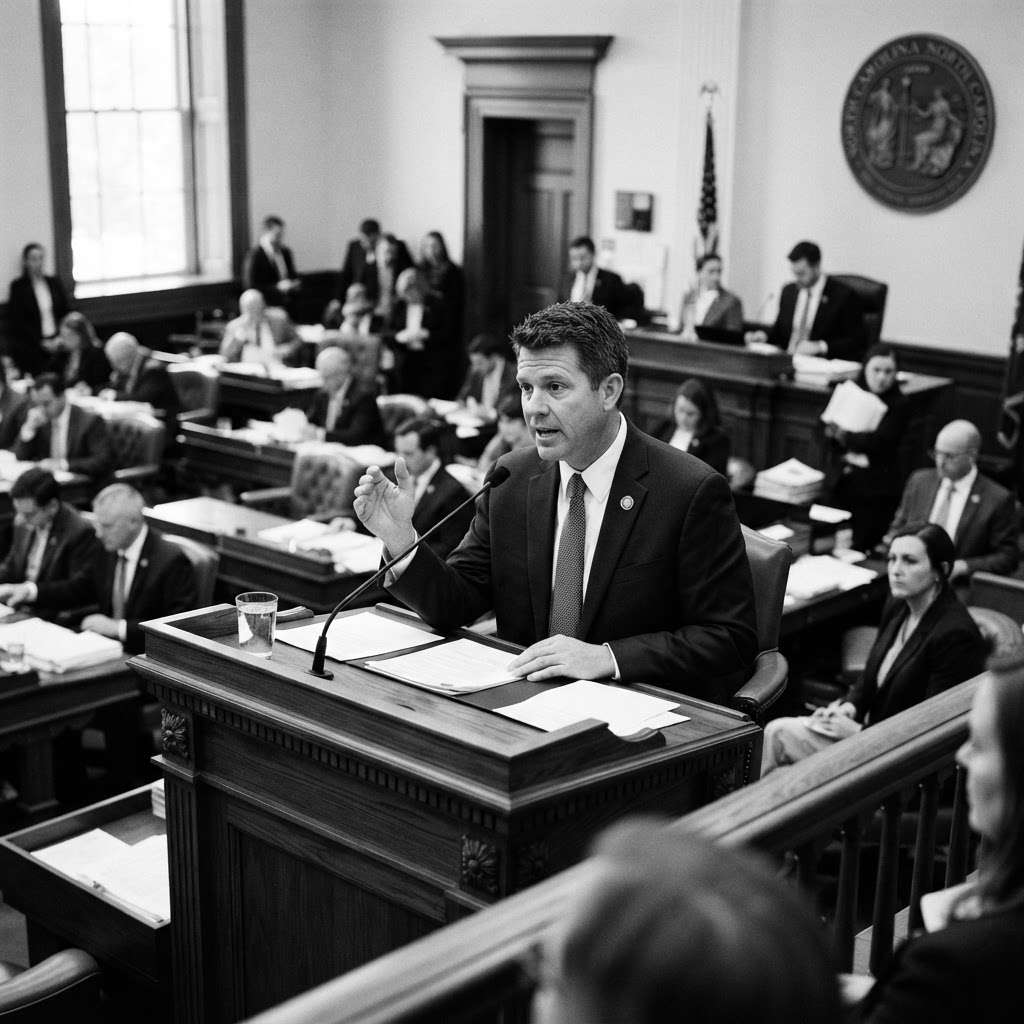
The North Carolina General Assembly convened a special session on October 7, 2026, to pass legislation temporarily suspending the state's 41-cent-per-gallon motor fuel tax. The suspension, which took effect on October 10 and runs through November 30, 2026, aims to provide immediate economic relief to motorists facing high fuel costs. To maintain critical infrastructure funding, the state is utilizing funds from its Stabilization and Inflation Reserve to replace the lost tax revenue. This legislative action follows a bipartisan agreement among state leaders to address rising energy prices ahead of the midterm elections.
This state-level policy directly impacts the cost of living for North Carolina residents and serves as a model for how states manage infrastructure funding during periods of high inflation. It highlights the intersection of state fiscal management and national economic pressures ahead of the 2026 midterm elections.
The primary actors involved in this legislative action are the North Carolina General Assembly, specifically House Speaker Destin Hall (R-Caldwell) and Senate Leader Phil Berger (R-Rockingham). These leaders orchestrated the special session to address rising fuel costs. The North Carolina Department of Revenue is tasked with implementing the tax suspension, while the State Bureau of Investigation and State Highway Patrol have been granted specific procurement flexibilities as part of the broader legislative package. Governor Roy Cooper signed the legislation into law as Session Law 2026-62.
The General Assembly passed legislation to temporarily suspend the state's 41-cent-per-gallon motor fuel tax. This suspension, which began on October 10, 2026, is scheduled to remain in effect through November 30, 2026. To ensure that critical transportation infrastructure projects continue to receive funding, the state is utilizing its Stabilization and Inflation Reserve to replace the lost tax revenue. The legislation also includes various other provisions, such as allocations for Hurricane Helene relief and changes to state board governance.
The legislation applies statewide across North Carolina. The special session was held at the North Carolina Legislative Building in Raleigh. The impact of the fuel tax suspension is felt by all motorists and commercial entities operating within the state's jurisdiction.
The special session was announced in early October 2026, following an agreement between Republican leadership. The session took place on October 7, 2026. The tax suspension officially began on October 10, 2026, and is set to expire on November 30, 2026. This timeline was specifically chosen to provide relief ahead of the midterm elections.
The stated motivation for the special session was to provide immediate economic relief to North Carolinians struggling with high gas and diesel prices. Republican leaders argued that the state's budget surplus and healthy reserve funds allowed for this intervention without compromising the state's long-term financial stability. Critics, including some Democratic lawmakers, have argued that the move is politically motivated and that the underlying economic issues require more comprehensive solutions.
The mechanism for this relief is a legislative suspension of the state's motor fuel tax, authorized by the General Assembly. The state is using its Stabilization and Inflation Reserve to backfill the revenue gap, ensuring that the Highway Fund remains solvent. The process involved a special session called by the legislature, which required the signatures of three-fifths of the members in both chambers to convene outside of the regular session schedule. This process is governed by the state's constitutional and statutory provisions for special legislative sessions.
This event is significant because it demonstrates the use of state-level fiscal policy to mitigate the impact of national economic trends. It highlights the tension between providing immediate relief to citizens and maintaining long-term infrastructure investment. The outcome of this policy will be closely watched as a potential indicator of how states can navigate similar economic pressures in the future.
The tax suspension will remain in effect until November 30, 2026. After this date, the motor fuel tax will automatically be reinstated at its previous rate. The General Assembly will likely evaluate the effectiveness of this relief and the impact on the state's reserve funds during the next regular session, which is scheduled to begin in January 2027.
Key Unknowns
It remains unclear how global energy markets will fluctuate during the suspension period and whether the relief will have a measurable impact on consumer behavior. Additionally, the long-term impact on the state's reserve funds and the potential for future legislative action if fuel prices remain high are currently unknown.
Watch for reports from the North Carolina Department of Revenue regarding the total revenue impact of the suspension. Also, monitor the political discourse surrounding the expiration of the tax holiday, as it may become a focal point in post-election legislative debates.
Sources
Topics
- Universe One
- Governors & State Legislatures
- north
- carolina
- general
- assembly
- enacts
- temporary
- motor
- fuel
- suspension