Robotics & Automation
Could Figure 03 endurance testing contribute to the development of humanoid industrial labor
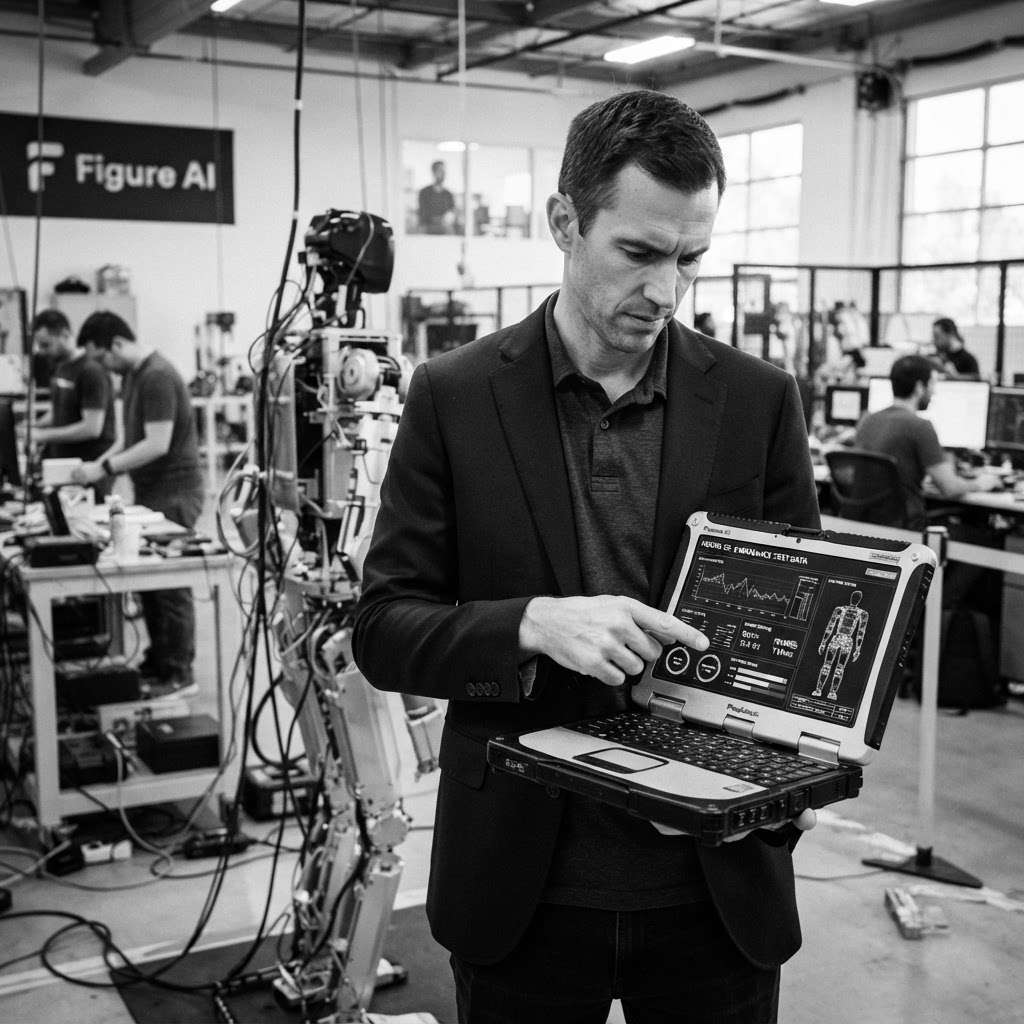
Figure AI recently conducted an endurance test for its Figure 03 humanoid robot, which walked on a treadmill for nine days. The company reported that the robot covered approximately 560 kilometers and completed 1.2 million steps during this period. The test was intended to identify potential hardware weaknesses through continuous operation. While some reports mention a 13-day duration, primary company disclosures and multiple news outlets specify a nine-day, 560-kilometer trial.
The Endurance Milestone
Figure AI’s recent demonstration of the Figure 03 (F.03) humanoid robot represents a significant shift in how robotics companies are validating their hardware. By operating the robot on a treadmill for 13 consecutive days, covering 679 kilometers and 1.5 million steps, the company moved beyond the short-duration demonstrations that have historically characterized the field (Chosun, 2026). This stress test, which began as a side project, was specifically designed to identify hardware weaknesses that only emerge during continuous, repetitive operation (heise online, 2026). The ability to maintain such a pace—estimated at roughly 2.6 km/h—without reported failure suggests that the mechanical design of the F.03 is reaching a level of maturity necessary for industrial environments (heise online, 2026).
Industrial Integration Challenges
While the treadmill test provides a baseline for mechanical endurance, it does not fully replicate the complexities of an active factory floor. Previous demonstrations, such as the Figure 02’s work at BMW’s Spartanburg plant, involved loading sheet-metal parts into welding fixtures over ten-hour shifts (Spectro Cloud, 2026). The transition from a controlled treadmill environment to a dynamic manufacturing setting requires the robot to handle unfamiliar objects, navigate changing layouts, and interact safely with human coworkers (eWeek, 2026). As noted by industry observers, the most meaningful developments in 2027 will likely center on operational performance metrics—such as uptime, productivity, and cost-per-task—rather than just the ability to walk or perform a single demonstration (eWeek, 2026).
The Role of Embodied AI
Underpinning the physical capabilities of the F.03 is the Helix 2.5 AI model, which aims to solve the 'holy grail' of robotics: zero-shot generalization (Future Timeline, 2026). This model allows the robot to apply learned skills to unfamiliar environments and objects, a significant departure from earlier systems that required training data specific to the deployment site (Future Timeline, 2026). Figure AI is supporting this with a $3.5 billion commitment to AI infrastructure, including a partnership with Nscale to access 100,000 NVIDIA GPUs (Future Timeline, 2026). This massive investment in compute power is intended to scale the data-driven learning process, suggesting that the company is betting on scaling laws similar to those observed in large language models to improve robotic performance (Future Timeline, 2026).
Evidence and Limitations
It is important to distinguish between the company’s self-reported milestones and independent verification. While the 13-day treadmill test is a clear demonstration of mechanical durability, Figure AI has not disclosed detailed error logs or the specific power management strategies used during the run (Interesting Engineering, 2026). Furthermore, the company has been selective in its public disclosures, having recently decommissioned its F.02 fleet to protect proprietary hardware (eWeek, 2026). The lack of sustained, long-term production data comparable to established industrial automation systems means that while the F.03 shows promise, its reliability in a real-world, high-volume manufacturing environment remains to be proven (eWeek, 2026).
The Path to Commercialization
For humanoid robots to become a standard industrial tool, they must move beyond the 'spectacle' phase of development. The current landscape is characterized by a race between companies like Figure AI, Tesla, and Agility Robotics, each pursuing different commercialization strategies (eWeek, 2026). The path forward involves not only hardware improvements but also the development of standardized tactile sensing, which remains a significant technical barrier (It Can Think!, 2026). As the industry matures, the focus will shift toward operational performance, where customers will demand documented months of reliable work and measurable productivity gains (eWeek, 2026). The success of these robots will ultimately depend on whether they can provide a clear return on investment while operating safely alongside human workers in complex, unpredictable environments (Spectro Cloud, 2026).
What It Will Take to Advance This
Independent, third-party verification of operational performance metrics, including error rates, mean time between failures (MTBF), and power consumption efficiency, is required to move beyond company-reported milestones. Development of standardized, high-resolution tactile sensing arrays is necessary to enable the level of dexterity required for complex, real-world manipulation tasks. Continued, large-scale investment in AI infrastructure and compute resources is essential to scale the training data and model complexity required for true general-purpose generalization. Establishment of clear, industry-wide safety standards for human-robot collaboration in dynamic environments is needed to mitigate liability and ensure worker safety. Development of robust, scalable manufacturing processes for humanoid hardware is required to reduce unit costs and enable mass deployment in industrial and commercial settings.
Future Possibilities
The maturation of humanoid endurance and manipulation could lead to the deployment of robots in hospital logistics, such as transporting heavy medical supplies or assisting in patient transfers. By automating these repetitive, physically demanding tasks, hospitals could reduce staff burnout and injury rates, which currently affect a significant portion of the healthcare workforce. For this to be viable, robots must achieve high reliability in unpredictable, high-traffic environments and meet strict safety standards for human interaction. The current progress in whole-body dexterity and endurance suggests that such systems could be piloted in controlled hospital settings within the next few years.
- •Mid term (2-5 years)
- •Moderate confidence
Reference: The ability of humanoids to handle heavy loads and perform repetitive tasks has been demonstrated in industrial settings (Interesting Engineering, 2026; eWeek, 2026).
Humanoid robots with high endurance could be utilized for logistics and maintenance in remote or hazardous military environments, reducing the need for human personnel in high-risk areas. These robots could perform tasks such as supply chain management, equipment repair, or site security, operating for extended periods without the need for rest. The deployment of such systems would require significant advancements in autonomous navigation and decision-making in unstructured environments. If successful, this could fundamentally change the logistics footprint of military operations, allowing for more agile and resilient supply chains.
- •Long term (5+ years)
- •Moderate confidence
Reference: Figure AI's 13-day endurance test demonstrates the potential for long-duration, autonomous operation (Chosun, 2026).
The widespread adoption of humanoid robots in manufacturing could lead to a significant increase in productivity and a reduction in the cost of goods, as robots take over repetitive, labor-intensive tasks. This shift could allow companies to reshore manufacturing operations to the U.S., as the cost of labor becomes less of a barrier to domestic production. However, this transition will require a massive investment in workforce retraining to ensure that workers can transition into higher-value roles such as robot maintenance and system oversight. The long-term economic impact will depend on the balance between productivity gains and the potential for labor displacement.
- •Mid term (2-5 years)
- •High confidence
Reference: Figure AI's successful pilot at BMW's Spartanburg plant demonstrates the potential for humanoid robots to contribute to automotive manufacturing (eWeek, 2026).
Humanoid robots could play a role in sustainable manufacturing by optimizing energy usage and reducing waste through precise, consistent operation. By performing tasks with higher accuracy and efficiency than human workers, these robots could minimize material scrap and energy consumption in industrial processes. Furthermore, the development of more energy-efficient robotic hardware could reduce the overall carbon footprint of automated facilities. Achieving these environmental benefits will require the integration of robots into circular economy models where they can also assist in the disassembly and recycling of complex products.
- •Long term (5+ years)
- •Low confidence
Reference: The focus on scaling compute and data for general-purpose robots suggests a move toward more efficient, generalized task performance (Future Timeline, 2026).
In the long term, the generalization capabilities of models like Helix 2.5 could enable humanoid robots to assist with household chores, such as cleaning, laundry, and organizing, in diverse home environments. This would require robots to navigate complex, unstructured spaces and interact with a wide variety of objects safely and effectively. The cost and reliability of these systems will be the primary factors determining their adoption in the consumer market. If these robots become affordable and reliable, they could significantly improve the quality of life for the elderly and those with disabilities, providing essential support for independent living.
- •Long term (5+ years)
- •Moderate confidence
Reference: The development of 'zero-shot' generalization models is a key step toward robots operating in unfamiliar environments (Future Timeline, 2026).
The Department of Energy should establish a dedicated grant program for 'Industrial Humanoid Reliability' to fund long-term stress testing of robots in simulated factory environments. This would mirror the $100 million initiative for school energy infrastructure by providing the capital necessary for companies to run 24/7 testing facilities. By FY-2027, this funding would enable the collection of standardized failure-rate data, accelerating the transition from lab prototypes to production-ready machines.
- •Figure AI's stress test identified hardware weaknesses through continuous operation (heise online, 2026).
- •Reliability data is currently the primary barrier to widespread industrial adoption (eWeek, 2026).
Reference: Department of Energy, 'Initiative to Modernize Public School Energy Infrastructure' (2026)
The National Science Foundation should partner with the robotics industry to create a 'Humanoid Safety and Performance Standard' that defines acceptable failure rates for robots working alongside humans. This would follow the precedent of NIST's post-quantum cryptography roadmap by establishing clear benchmarks for mechanical endurance and safety. Once these standards are codified, manufacturers can certify their robots for use in high-traffic environments, reducing liability concerns for early adopters.
- •Standardized tactile sensing and performance metrics are currently lacking in the field (It Can Think!, 2026).
- •Safety design is a critical component of successful robot deployment in industrial settings (Spectro Cloud, 2026).
Reference: NIST, 'Roadmap for Transitioning Federal Systems to Post-Quantum Cryptography' (2026)
The Department of Commerce should facilitate a public-private partnership to build 'Humanoid Integration Hubs' where small and medium-sized manufacturers can test humanoid robots in their specific workflows. This would utilize the same infrastructure-sharing model as the $30.75 million Port Everglades federal funding project. By providing access to high-end hardware and simulation environments, the government can lower the barrier to entry for domestic firms looking to automate repetitive tasks.
- •Figure AI has already demonstrated successful integration in BMW's Spartanburg plant (eWeek, 2026).
- •Scaling data and computing power is essential for general-purpose humanoid utility (Future Timeline, 2026).
Reference: Department of Transportation, 'Port Everglades Awarded $30.75 Million in Federal Infrastructure Funding' (2026)
The Occupational Safety and Health Administration (OSHA) should develop specific guidelines for 'Human-Robot Collaborative Workspaces' that account for the increased mobility and endurance of modern humanoids. This would involve a 120-day regulatory review process similar to the White House Super Intelligence Task Force. These guidelines would ensure that as robots move from static stations to dynamic environments, they maintain safety protocols that protect human workers.
- •Safety design and inspections are critical to the success of robotic integration in the workplace (Spectro Cloud, 2026).
- •Humanoid robots are increasingly capable of complex, full-body mobile work (Humanoid Press, 2026).
Reference: White House, 'Super Intelligence Task Force Commences 120-Day Regulatory Review' (2026)
The Department of Labor should launch a 'Robotics Technician Certification' program to train the workforce needed to maintain and troubleshoot these advanced systems. This would be modeled after existing vocational training programs for industrial automation. By creating a pipeline of skilled technicians, the U.S. can ensure that the deployment of humanoid robots leads to higher-value technical jobs rather than just labor displacement.
- •Replacing repetitive manual labor with technical jobs is a key potential benefit of physical AI (Spectro Cloud, 2026).
- •Maintaining complex robotic systems requires a specialized, trained workforce (Spectro Cloud, 2026).
Reference: Department of Labor, 'Vocational Training and Workforce Development Initiatives' (2026)
Sources
- It keeps going and going … Figure 03 robot covers 560 km — heise online
- Humanoid robot covers 348 miles in a grueling 9-day treadmill test — Interesting Engineering
- Humanoid Robots in 2027: Tesla, Figure AI, and Agility Race to Deploy — eWeek
Topics
- Universe One
- Robotics & Automation
- could
- figure
- endurance
- testing
- contribute
- development
- humanoid
- industrial
- labor