Life Support & Habitation Systems
Could the Moon Base Student Challenge accelerate the development of sustainable lunar life support systems
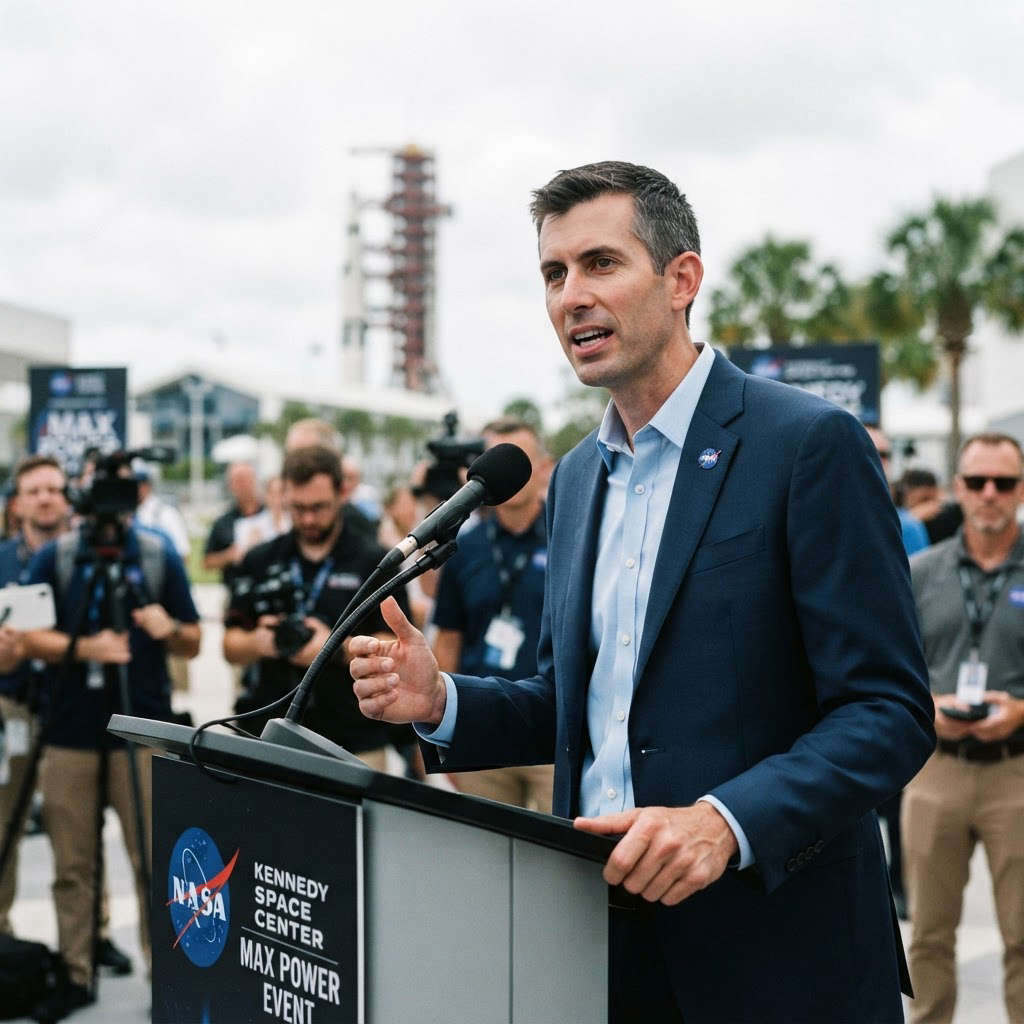
NASA has launched a $1 million Moon Base Student Challenge to solicit innovative designs for lunar surface operations from U.S. students. The competition focuses on six critical areas, including life-support systems, power generation, and habitat construction, to address the environmental challenges of the lunar South Pole. Participants are tasked with developing trade studies and concept proposals that reflect real-world mission parameters for long-term habitation. This initiative aims to cultivate the next generation of the aerospace workforce while generating novel technical solutions for future lunar infrastructure.
Integrating Student Innovation into Lunar Infrastructure
The Moon Base Student Challenge, announced by NASA on November 8, 2026, represents a strategic effort to crowdsource technical solutions for the agency's long-term lunar habitation goals (NASA, 2026). By focusing on six categories—including life-support systems, power generation, and habitat construction—the challenge forces participants to grapple with the same environmental constraints that currently drive NASA's internal research, such as the abrasive nature of lunar dust and the extreme thermal cycling of the lunar South Pole (New Space Economy, 2026). The requirement for industry-standard deliverables, such as trade studies and stakeholder briefings, ensures that the concepts generated are not merely theoretical but are grounded in the practical realities of mission design (NASA, 2026).
Bridging the Gap Between Simulation and Deployment
This challenge arrives as NASA continues to refine its life support strategies through analog missions like the 378-day CHAPEA simulation, which recently concluded in Houston (EconoTimes, 2026). Data from these simulations, which cover everything from crop cultivation to habitat maintenance, provide the necessary context for evaluating the feasibility of the student-proposed systems (EconoTimes, 2026). While the challenge is an educational initiative, it serves as a critical pipeline for identifying novel approaches to resource management, such as the integration of bioregenerative systems or advanced power storage (NASA, 2026). The next logical step for researchers is to determine how these student-led concepts can be validated against the performance benchmarks established by the International Space Station's ongoing exploration-class ECLSS testing (NASA, 2026). Success in this area will depend on the ability to translate these early-stage concepts into modular, flight-ready hardware that can be tested in the harsh conditions of the lunar surface, potentially utilizing the infrastructure being developed for the 2028 Space Reactor-1 Freedom mission (NASA, 2026).
What It Will Take to Advance This
Researchers must conduct long-term stability testing of bioregenerative life support components in simulated lunar gravity and radiation environments. This is necessary to ensure that biological systems, such as cyanobacteria, can maintain consistent performance over the multi-year durations required for a permanent lunar base. The primary technical barrier is the development of robust, dust-tolerant seals and mechanical interfaces for modular life support systems. Current research indicates that lunar dust adhesion and abrasion are significant threats to the longevity of surface systems, requiring new material solutions that can be validated through the DMEMS project (NASA, 2026). There is a need for a dedicated funding line to transition successful student concepts from the Moon Base Student Challenge into Phase I and Phase II SBIR-style development contracts. This would provide the necessary capital to move from conceptual design to functional prototype testing. NASA must establish a clear regulatory framework for the certification of commercial life support hardware intended for human-rated lunar missions. This includes defining the safety standards for systems that integrate both mechanical and biological components, ensuring they meet the stringent requirements for crew health and mission success. The industry must scale the production of modular, 3D-printable materials that can be manufactured using in-situ lunar regolith. This requires the development of large-scale, autonomous robotic assembly systems capable of operating in the extreme lunar environment, building upon the current capabilities of the ARMADAS project (NASA, 2026).
Future Possibilities
The maturation of student-designed life support systems could lead to more efficient, closed-loop medical and environmental monitoring for long-duration space missions. By optimizing resource usage, these systems could reduce the mass of medical supplies required for lunar missions, allowing for more robust diagnostic equipment. Future research should focus on integrating real-time physiological data from crew members into the life support control loop to automate environmental adjustments. This would require a high degree of sensor reliability and autonomous decision-making capability.
- •Mid term (2-5 years)
- •Moderate confidence
Reference: NASA is currently using health and performance data from the 378-day CHAPEA simulation to inform lunar mission planning (EconoTimes, 2026).
Advancements in modular, autonomous habitat construction and life support could have dual-use applications for remote, austere environments on Earth, such as military outposts or disaster relief zones. If these systems can operate reliably on the Moon, they could be adapted to provide rapid, self-sustaining infrastructure in inaccessible regions. Researchers should investigate the scalability of these modular designs for terrestrial deployment, focusing on the energy efficiency of the life support components. This would require testing the systems in extreme terrestrial climates to validate their resilience.
- •Long term (5+ years)
- •Low confidence
Reference: NASA's SBIR funding has already supported the development of 3D printed structures for the U.S. Air Force, demonstrating the potential for dual-use technology (NASA Spinoff, 2026).
The challenge fosters a pipeline of skilled engineers and designers, potentially reducing the long-term costs of lunar mission development by creating a competitive market for life support components. As students gain experience with NASA's mission parameters, they become a valuable workforce for the growing commercial space sector. Future research should focus on creating standardized interfaces for these life support modules, which would allow for interoperability between different commercial providers. This would require a collaborative effort between NASA and private industry to define open-source technical standards.
- •Mid term (2-5 years)
- •High confidence
Reference: The challenge is explicitly designed to cultivate the technical skills of the future aerospace workforce (NASA, 2026).
Developing bioregenerative life support systems, such as those incorporating cyanobacteria, could provide a blueprint for sustainable resource management in closed environments. If these systems can effectively recycle waste and produce oxygen on the Moon, they could be adapted for carbon-negative urban housing or vertical farming on Earth. Researchers should prioritize the genetic engineering of cyanobacteria to improve their efficiency in utilizing urea as a nitrogen source, which is essential for closing nutrient loops. This would require extensive laboratory testing to ensure the stability of these biological systems in varying environmental conditions.
- •Long term (5+ years)
- •Low confidence
Reference: Research into cyanobacteria for Martian biological life support systems is already identifying key priorities for closing nutrient loops (Frontiers, 2026).
The technologies developed for lunar habitats, particularly in water recycling and air purification, could lead to more efficient, compact, and sustainable home appliances. As these systems are refined for the extreme constraints of space, they will likely become more cost-effective and energy-efficient for terrestrial use. Future research should focus on the miniaturization of these life support components, making them suitable for residential integration. This would require a shift in focus from mission-critical reliability to consumer-grade affordability and ease of maintenance.
- •Long term (5+ years)
- •Moderate confidence
Reference: NASA's ongoing work on the ISS as a testbed for exploration-class ECLSS is maturing technologies that have potential for terrestrial spin-offs (NASA, 2026).
NASA should allocate a portion of the $1 million prize pool to fund follow-on research grants for the most promising life-support concepts, allowing student teams to transition from paper designs to laboratory prototypes. This would mirror the successful SBIR Phase III contract model used for lunar construction technology, which provided $57 million to advance 3D printing capabilities (NASA Spinoff, 2026). By formalizing this funding pipeline, the agency ensures that high-potential ideas are not lost after the competition concludes.
- •The $57 million SBIR Phase III contract for lunar construction demonstrates the efficacy of sustained funding for promising technologies (NASA Spinoff, 2026).
- •The challenge explicitly requires industry-standard deliverables like trade studies, which are essential for securing follow-on research funding (NASA, 2026).
Reference: NASA Spinoff, 'Mission: Home', 2026
The data gathered from the Moon Base Student Challenge should be integrated into the health and performance datasets currently being generated by the CHAPEA Mars simulation missions. By comparing student-designed life support parameters with the actual physiological and psychological data from the 378-day simulation, NASA can refine the requirements for medical care and behavioral support systems. This cross-pollination of student innovation and analog mission data will accelerate the development of closed-loop life support systems that prioritize crew health.
- •NASA is currently using health and performance data from the 378-day CHAPEA simulation to inform lunar mission planning (EconoTimes, 2026).
- •The challenge requires students to address astronaut safety, which is a primary focus of the current CHAPEA data collection (NASA, 2026).
Reference: EconoTimes, 'NASA Crew Completes 378-Day Mars Simulation in Houston Habitat', 2026
NASA should leverage the student challenge to identify modular, lightweight materials that can be manufactured using in-situ resource utilization (ISRU) techniques. By encouraging students to design for regolith-based construction, the agency can build a pipeline of concepts that align with the ARMADAS project, which focuses on autonomous robotic assembly of lunar structures. This approach will help scale the production of habitable volumes from small-scale prototypes to full-sized lunar base modules.
- •The ARMADAS project is already developing autonomous systems for building reconfigurable structures on the Moon (NASA, 2026).
- •The challenge specifically includes habitat construction as a core category for student innovation (NASA, 2026).
Reference: NASA, 'Lunar Surface Technology', 2026
The agency should use the stakeholder briefings required by the challenge to establish a standardized set of performance benchmarks for lunar life support systems. By requiring students to justify their designs against established environmental constraints like lunar dust and extreme temperature fluctuations, NASA can create a baseline for future commercial procurement. This standardization will provide a clear regulatory framework for private companies looking to supply life support hardware for the Artemis program.
- •The challenge requires students to address authentic environmental parameters, such as lunar dust and temperature (NASA, 2026).
- •NASA is currently using the ISS as a testbed to mature exploration-class ECLSS standards (NASA, 2026).
Reference: NASA, 'International Space Station as a Testbed for Exploration Environmental Control and Life Support Systems: 2026 Status', 2026
NASA should formalize the mentorship component of the challenge by pairing student finalists with engineers from the Glenn Research Center, particularly those working on the Space Reactor-1 Freedom mission. This will provide students with direct exposure to the complexities of integrating power and life support systems, ensuring the next generation of engineers is prepared for the 2028 launch of fission surface power technology. This training pipeline will be critical for maintaining the technical expertise required for long-term lunar habitation.
- •The Space Reactor-1 Freedom mission is a pathfinder for fission surface power on the Moon (NASA, 2026).
- •The challenge is explicitly designed to cultivate the technical skills of the future aerospace workforce (NASA, 2026).
Reference: NASA, 'Space Reactor-1 Freedom', 2026
Sources
Topics
- Universe One
- Life Support & Habitation Systems
- could
- moon
- base
- student
- challenge
- accelerate
- development
- sustainable
- lunar
- life