Senate Republicans Prepare for Minority Status Following 2026 Midterm Election Losses
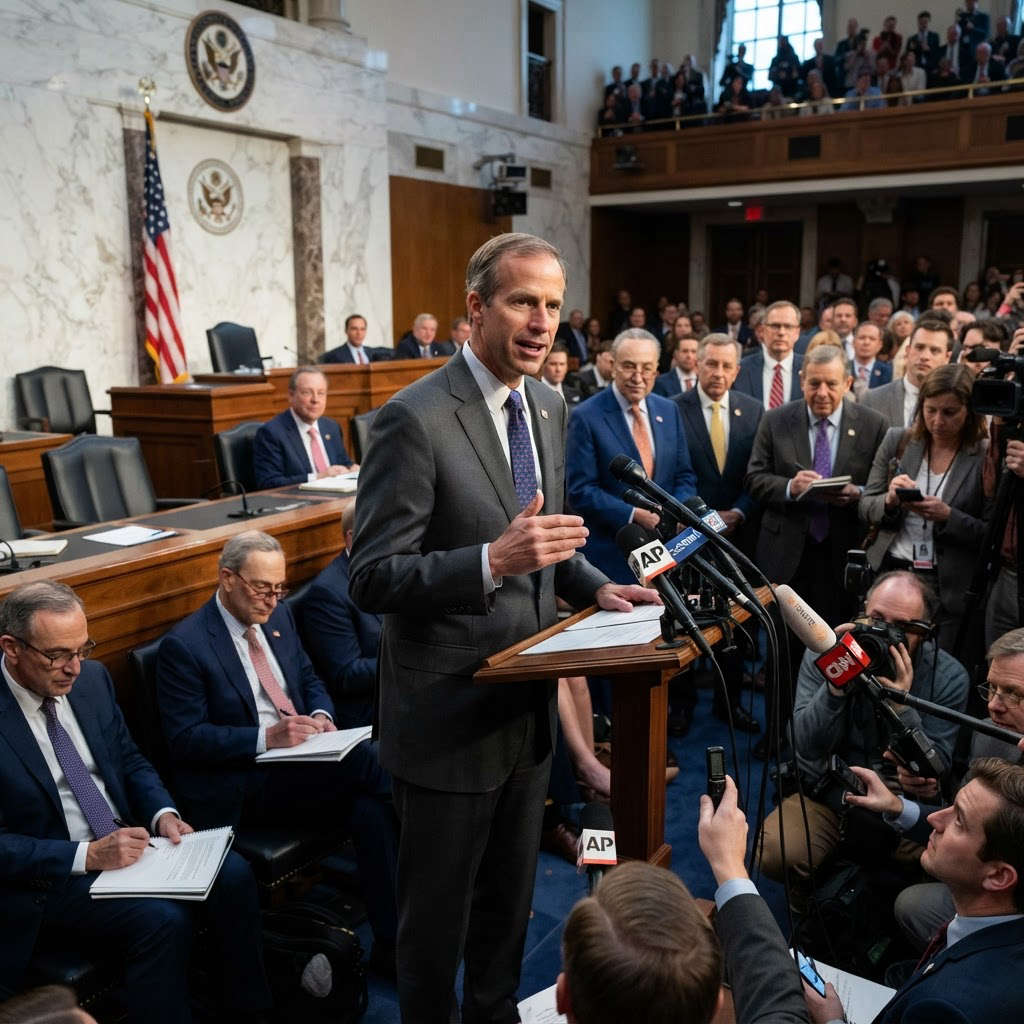
Following the 2026 midterm elections, the Democratic Party has secured a majority in the U.S. Senate by flipping seven Republican-held seats. Current Senate Majority Leader John Thune has announced his intention to run for minority leader in the upcoming 120th Congress. Republican leadership elections are scheduled for November 10, 2026, to determine the party's direction in the new legislative session. The transition marks a significant shift in power, with Democrats now holding the authority to manage the chamber's agenda and confirmation processes.
The shift in Senate control directly impacts the confirmation of presidential appointments, the passage of federal legislation, and the oversight of the executive branch, fundamentally altering the legislative landscape for the remainder of the current administration.
The key actors involved are the Senate Republican Conference, led by current Majority Leader John Thune (R-S.D.), and the Democratic Party, which has secured a majority in the U.S. Senate. Other notable figures include Senate Minority Leader Chuck Schumer (D-N.Y.), who has characterized the election results as a 'generational remake' of the chamber, and various Republican senators who are navigating the transition to the minority. The Senate Republican Conference members are the primary decision-makers regarding their future leadership.
The 2026 midterm elections resulted in a significant shift in the balance of power in the U.S. Senate, with Democrats flipping seven Republican-held seats. This outcome has ended the Republican majority and necessitated a transition to minority status for the GOP. In response, Senator John Thune has formally announced his candidacy for minority leader, aiming to maintain his leadership role despite the party's electoral losses. The Senate is now preparing for the 120th Congress, where the legislative agenda and confirmation processes will be managed by the Democratic majority.
The events are centered in Washington, D.C., specifically within the U.S. Capitol and the Senate chamber. The leadership elections are scheduled to take place in the Old Senate Chamber.
The midterm elections occurred on November 3, 2026. The leadership elections for the Senate Republican Conference are scheduled for Tuesday, November 10, 2026, at 9 a.m. The new Congress will officially convene on January 3, 2027.
The shift in power is attributed to the results of the 2026 midterm elections, which saw Democrats over-perform in key battleground states. Republicans are motivated by a desire to maintain institutional influence and provide a check against what they term 'Democrat extremism.' Democrats are motivated by the opportunity to advance their legislative agenda and exercise their confirmation authority over the final two years of the current presidential term.
The transition is governed by the internal rules of the Senate Republican Conference and the constitutional procedures of the U.S. Senate. Leadership is determined by a vote of the conference members. The majority party gains control over committee chairmanships, the legislative calendar, and the scheduling of floor votes, which are the primary mechanisms for exercising power in the chamber.
This shift in control fundamentally alters the legislative landscape, impacting the confirmation of judicial and executive branch nominees and the passage of federal legislation. It represents a significant change in the U.S. government's ability to enact policy and conduct oversight.
The immediate next step is the Republican leadership election on November 10. Following this, the Senate will prepare for the transition of power on January 3, 2027, when the new Congress convenes.
Key Unknowns
The final outcomes of the uncalled races in Alaska and Mississippi remain unknown, though they will not change the overall control of the Senate. The specific legislative priorities of the new Democratic majority and the extent of Republican obstructionism are also yet to be determined.
Watch for the results of the Republican leadership elections and any statements from the incoming Democratic leadership regarding their legislative agenda for the 120th Congress.
Sources
Topics
- Universe One
- Congressional Leadership
- senate
- republicans
- prepare
- minority
- status
- following
- 2026
- midterm
- election
- losses