Humanitarian & Disaster Science
Could the new UN insurance program make pre-disaster humanitarian funding a standard reality by 2028
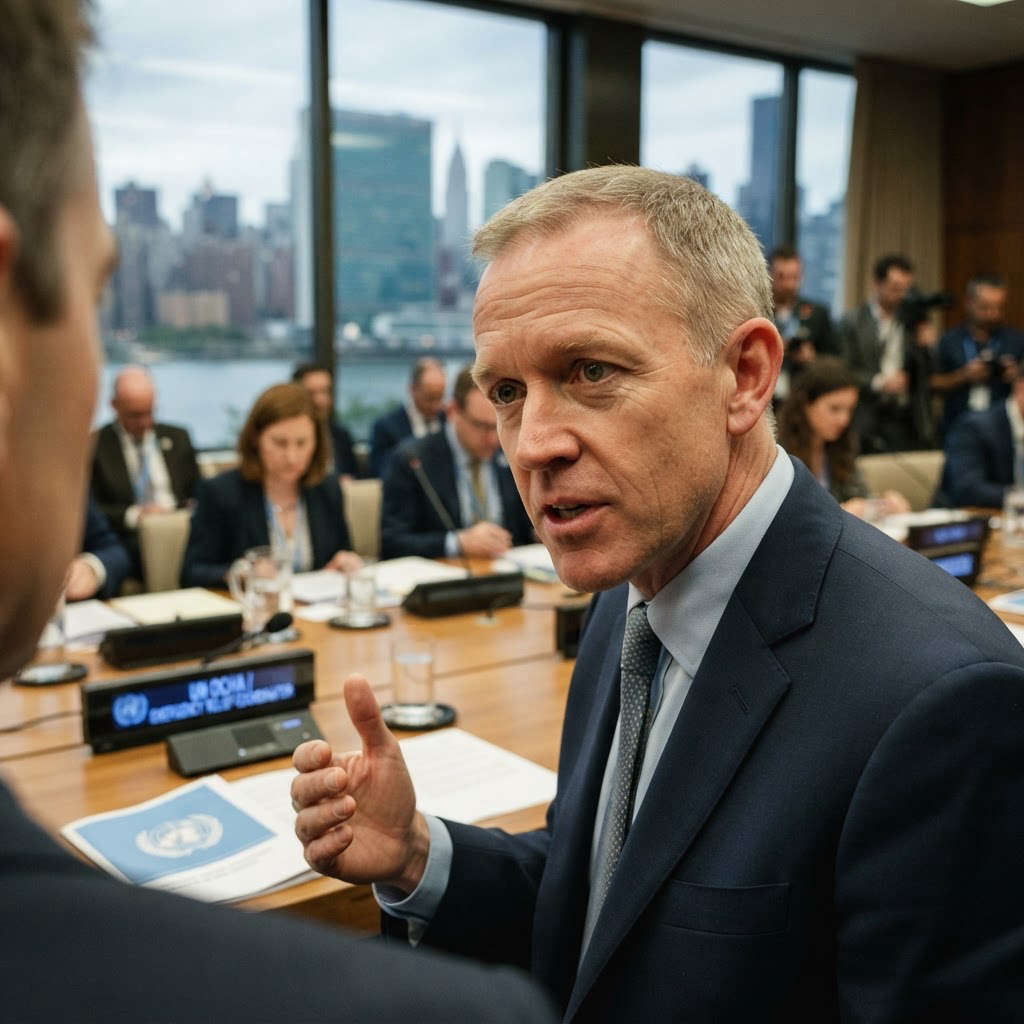
On November 2, 2026, the United Nations Office for the Coordination of Humanitarian Affairs (OCHA) launched a new insurance program designed to unlock up to $40 million in funding before disasters occur. Developed in partnership with UNICEF and the World Food Programme, the initiative provides rapid financial resources when multiple hazards threaten communities simultaneously. This mechanism aims to shift humanitarian action from reactive recovery to proactive preparedness by enabling agencies to deploy aid before the worst impacts materialize. The program serves as a new line of defense to protect vulnerable populations and increase the efficiency of humanitarian spending.
Financial Mechanisms for Proactive Resilience
The launch of the UN insurance program represents a significant shift in humanitarian financing, moving away from the traditional model of post-disaster appeals toward a proactive, risk-based approach (OCHA, 'Today's top news', 2026). By unlocking $40 million in liquidity, the initiative addresses the critical time gap between the onset of a hazard and the arrival of international aid (OCHA, 'Today's top news', 2026). This model is supported by economic research suggesting that every dollar invested in disaster preparedness can yield a seven-fold return in avoided recovery costs (Logistics Cluster, 'Investing for a better humanitarian response'). The program, led by OCHA in collaboration with UNICEF and the World Food Programme, utilizes dynamic modeling to simulate disaster timelines, ensuring that funds are available when they are most effective (Logistics Cluster, 'Investing for a better humanitarian response').
Operational Challenges and Future Integration
Despite the promise of this financial tool, the effectiveness of such programs depends heavily on the accuracy of hazard forecasting and the availability of reliable data (Logistics Cluster, 'Investing for a better humanitarian response'). Current research indicates that while methodological sophistication in disaster management is increasing, there remains a persistent gap between simulation-driven studies and operationally validated, real-world systems (JMIR AI, 'AI in Disaster Medicine', 2026). To maximize the impact of the $40 million insurance pool, humanitarian agencies must integrate these financial triggers with advanced AI-driven situational awareness tools, such as those currently being tested for damage assessment and hazard monitoring (Google, 'How Google supports the UN’s Early Warnings for All', 2026). Future research should focus on establishing standardized, cross-border data governance frameworks that allow for the seamless, secure sharing of information between governments and humanitarian partners (PMC, 'AI applications in disaster governance', 2026). The ultimate success of this insurance initiative will be measured by its ability to reduce the duration of displacement and the scale of infrastructure damage in the wake of climate-related disasters (OCHA, 'Today's top news', 2026).
What It Will Take to Advance This
Researchers must conduct longitudinal studies to quantify the impact of pre-disaster funding on long-term community resilience. This requires a dataset comparing outcomes in regions with insurance-backed support versus those relying on traditional post-disaster aid. The development of standardized, interoperable data protocols is necessary to ensure that insurance triggers are based on accurate, real-time hazard monitoring. This includes integrating satellite imagery and IoT sensor data into a unified decision-support platform. The program must scale its initial $40 million capacity to meet the growing global demand for disaster risk financing. This requires securing additional commitments from international donors and private sector partners to ensure long-term sustainability. International regulatory bodies must establish clear standards for disaster insurance triggers to ensure transparency and accountability. This includes defining the legal framework for how funds are released and audited across different jurisdictions. Agencies need to build local supply chain infrastructure to ensure that aid can be deployed rapidly once insurance funds are triggered. This involves establishing regional warehouses and pre-positioning essential goods in high-risk areas.
Future Possibilities
The insurance program could enable the rapid, pre-emptive deployment of medical supplies to regions facing imminent health crises, such as disease outbreaks following floods. By triggering funding based on predictive health models, agencies can reduce the time-to-treatment for affected populations. This requires the integration of real-time health surveillance data with the insurance payout mechanism. Researchers should investigate the correlation between early funding deployment and reduced mortality rates in disaster-prone areas.
- •Near term (0-2 years)
- •Moderate confidence
Reference: The program is designed to allow humanitarian partners to reach more people before disaster hits (OCHA, 'Today's top news', 2026).
Enhanced disaster resilience through pre-funded insurance can stabilize regions prone to conflict, reducing the likelihood of mass displacement and resource-driven instability. By providing a reliable safety net, the program helps maintain social order in vulnerable areas, which is a key component of regional security. This requires coordination between humanitarian agencies and local governments to ensure aid reaches the most at-risk populations. Future studies should evaluate the impact of pre-disaster aid on regional migration patterns.
- •Mid term (2-5 years)
- •Moderate confidence
Reference: UN agencies are already working to support displaced families and provide durable shelter in conflict-affected areas like Hebron (OCHA, 'Today's top news', 2026).
The insurance model creates a predictable financial environment that encourages local investment and market stability in disaster-prone regions. By guaranteeing that resources will be available, the program reduces the economic uncertainty that often follows natural hazards. This supports the local economy by maintaining supply chains and preventing the total collapse of essential services. Researchers should track the long-term economic recovery rates of communities supported by this insurance model compared to those relying on traditional aid.
- •Mid term (2-5 years)
- •High confidence
Reference: Strengthening local market capacity has long-term impacts on the local economy and increases resilience (Logistics Cluster, 'Investing for a better humanitarian response').
Pre-disaster funding can be directed toward nature-based solutions and ecosystem restoration that mitigate the impact of future hazards. By investing in environmental resilience before a disaster strikes, the program can reduce the severity of floods and landslides. This requires a shift in funding priorities toward long-term environmental health. Future research should focus on the cost-effectiveness of using insurance payouts for ecosystem-based disaster risk reduction.
- •Long term (5+ years)
- •Low confidence
Reference: Scoping reviews have explored the application of AI technology in urban ecosystem-based disaster risk management (PMC, 'AI applications in disaster governance', 2026).
Communities will experience faster recovery times and less disruption to daily life as aid arrives before or immediately after a disaster. This improves the quality of life for millions by ensuring that essential services like water, electricity, and shelter are restored more quickly. The program effectively acts as a global safety net for the most vulnerable. Future efforts should focus on community-level engagement to ensure that the insurance triggers reflect the actual needs of local populations.
- •Long term (5+ years)
- •Moderate confidence
Reference: The initiative aims to protect more people before the worst hits and make every dollar work harder (OCHA, 'Today's top news', 2026).
The UN should establish a dedicated research grant line to evaluate the actuarial accuracy of this insurance model across diverse climate zones. By analyzing the $40 million deployment triggers, researchers can refine the predictive thresholds for future cycles. This requires collaboration between OCHA and academic institutions to ensure data-driven adjustments to premium structures. The goal is to increase the total insured capacity to $200 million by 2030.
- •UNDP 2012 data indicates every dollar spent on disaster reduction saves seven dollars in recovery costs (Logistics Cluster, 'Investing for a better humanitarian response').
- •Dynamic modeling allows for simulation of investment timelines to optimize return on investment (Logistics Cluster, 'Investing for a better humanitarian response').
Reference: Logistics Cluster, 'Investing for a better humanitarian response'
Humanitarian health agencies must integrate this insurance funding with real-time AI-driven health surveillance to trigger medical supply prepositioning. By linking the $40 million insurance pool to automated health-risk alerts, agencies can move vaccines and trauma kits to high-risk areas before a disaster peaks. This requires the development of standardized health-disaster data protocols. The next milestone is a pilot deployment in a flood-prone region by late 2027.
- •AI-enabled platforms like AIDR are already being used to coordinate digital volunteers and disaster response (PMC, 'AI applications in disaster governance', 2026).
- •Scoping reviews identify health-oriented disaster governance as a critical area for AI integration (PMC, 'AI applications in disaster governance', 2026).
Reference: PMC, 'AI applications in disaster governance with health approach: A scoping review', 2026
The insurance program should incentivize local manufacturing of essential shelter and medical supplies to reduce lead times. By guaranteeing purchase orders through the insurance fund, the UN can support local businesses in building inventory before disasters strike. This infrastructure development ensures that aid is sourced closer to the point of need. The target is to source 50% of emergency supplies locally by 2029.
- •UN agencies have already provided over 100 relief housing units in transitional neighborhoods (OCHA, 'Today's top news', 2026).
- •Strengthening local market capacity increases long-term resilience (Logistics Cluster, 'Investing for a better humanitarian response').
Reference: OCHA, 'Today's top news: Yemen, Ukraine, Sudan, Occupied Palestinian Territory, Insurance', 2026
International bodies must develop a unified standard for 'disaster insurance triggers' to ensure interoperability between different humanitarian agencies. This regulatory framework would define the specific environmental and health metrics that release insurance funds. By standardizing these triggers, the UN can reduce administrative delays and ensure equitable aid distribution. The next step is a multi-agency summit in 2027 to finalize these protocols.
- •Standardization is essential for building AI systems that are usable and reliable across borders (CMCC, 'AI in disaster resilience', 2026).
- •Interoperability is a key challenge in scaling disaster response tools (CMCC, 'AI in disaster resilience', 2026).
Reference: CMCC, 'AI in disaster resilience: Bridging science, standards and innovation', 2026
Humanitarian organizations should implement specialized training programs for field staff on managing insurance-backed rapid response operations. This training will focus on the logistics of pre-disaster deployment and the use of AI-assisted decision support tools. By building this capacity, agencies can ensure that the $40 million fund is utilized effectively. The goal is to train 5,000 field responders by 2028.
- •AI can be useful for training in disaster medicine (Frontiers, 'Applications of AI-guided clinical decision support', 2025).
- •Training programs promote learning and operational efficiency in disaster medicine (Frontiers, 'Applications of AI-guided clinical decision support', 2025).
Reference: Frontiers, 'Applications of artificial intelligence-guided clinical decision support in disaster medicine', 2025
Sources
- Investing for a better humanitarian response — Logistics Cluster
- When Disaster Strikes, Could AI Help? Q&A with Jessica Jensen — RAND
Topics
- Universe One
- Humanitarian & Disaster Science
- could
- insurance
- program
- make
- pre-disaster
- humanitarian
- funding
- standard
- reality
- 2028