Coups & Political Upheaval
Moldova Convenes National Security Council Following Cyberattacks
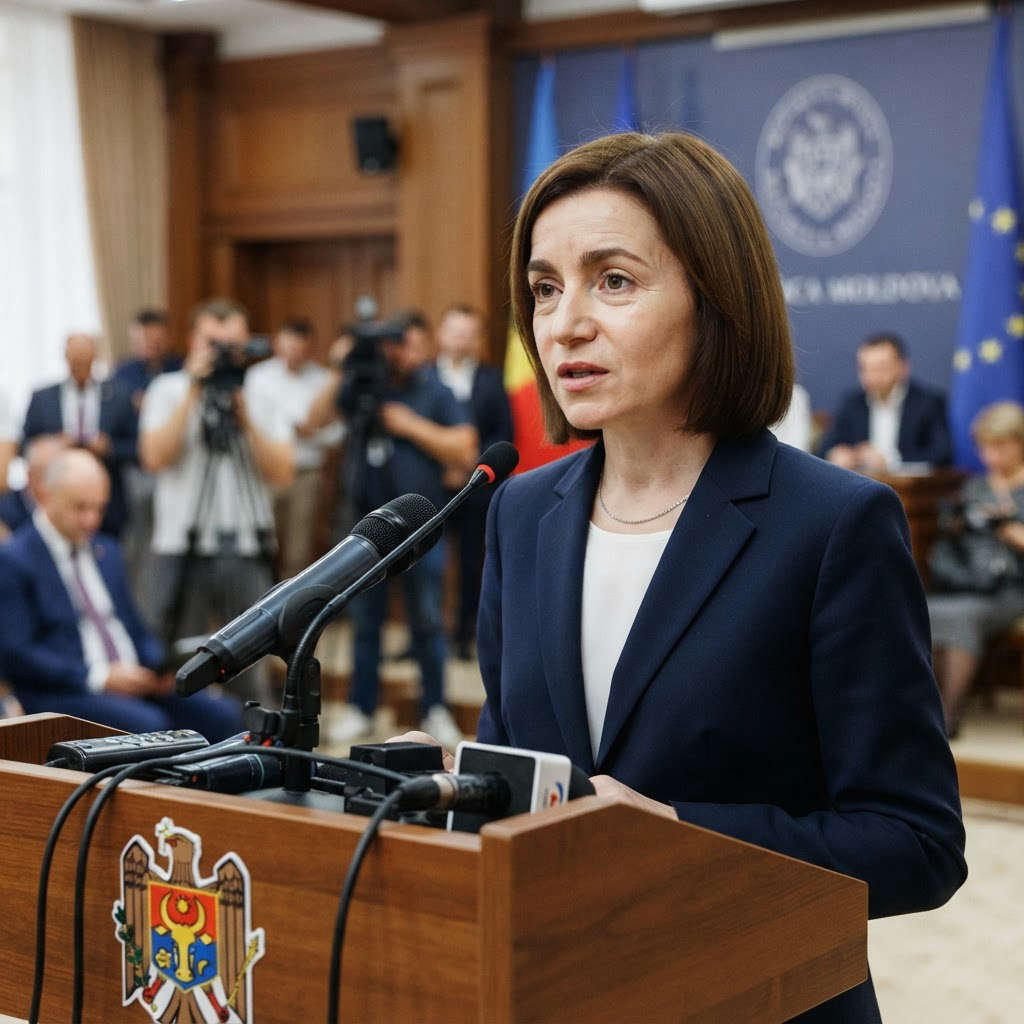
Moldovan President Maia Sandu convened the National Security Council on November 6 to address recent cyberattacks on government information systems. Authorities reported that approximately 450,000 citizens' data sets were accessed during the breach, which occurred between October 19 and 23. Prime Minister Vasile Tofan has stated that a foreign state actor is suspected to be behind the incident. The government is currently implementing measures to strengthen digital infrastructure and improve cybersecurity coordination.
The key actors involved include Moldovan President Maia Sandu, who convened the National Security Council (NSC), and Prime Minister Vasile Tofan, who has been vocal about the state-sponsored nature of the attacks. The Parliamentary Committee on National Security, Defense, and Public Order is also involved in oversight, having conducted closed-door sessions with cybersecurity officials. The attacks are attributed to an unnamed foreign state actor, with the regional context involving the breakaway region of Transnistria and its leader, Vadim Krasnoselski, who recently received an award from Russian President Vladimir Putin.
The Republic of Moldova is experiencing a wave of sophisticated cyberattacks targeting government databases and digital public services. Approximately 750,000 data sets containing personal identification information have been extracted. The government is responding by convening the NSC to assess the breach and formulate a strategy to strengthen national cybersecurity, including the planned establishment of a dedicated national cybersecurity center.
The events are centered in Chișinău, the capital of Moldova, where the Presidential Palace and government IT infrastructure are located. The broader security context includes the Dniester River region, which separates the government-controlled territory from the separatist Transnistrian region.
The most recent NSC meeting took place on November 6, 2026. The cyberattacks were reported as ongoing in early November, with parliamentary questioning of security officials occurring on November 4, 2026. The broader security dialogue between the EU and Moldova occurred on November 5, 2026.
The stated motivation for the government's response is to protect the integrity of state information systems and ensure the safety of citizen data. The broader context is a sustained campaign of hybrid pressure by Russia and its proxies aimed at destabilizing Moldova, particularly as the country pursues European integration. The attacks are viewed as part of a wider effort to obstruct Moldova's democratic path and alignment with EU security policies.
The attacks are being executed through unauthorized access to government databases, likely utilizing advanced persistent threat (APT) techniques. The government is responding through high-level security council meetings, parliamentary oversight, and increased cooperation with the European Union under the European Peace Facility and the EU-Moldova Security and Defence Partnership. The government is also accelerating the development of a national cybersecurity center to centralize and improve defensive capabilities.
Sources
Topics
- Universe One
- Coups & Political Upheaval
- moldova
- convenes
- national
- security
- council
- following
- cyberattacks