
European Union Establishes Dedicated Office and Crypto Task Force to Bolster Sanctions Enforcement

The European Union has launched a specialized office and a dedicated cryptocurrency task force to enhance the enforcement of restrictive measures against Russia. This initiative, formalized following a high-level meeting in Brussels on November 5, 2026, aims to prevent sanctions circumvention by targeting shadow financial networks and illicit digital asset transactions. The effort involves close coordination with international partners to ensure that existing sanctions packages are mutually reinforcing and effective. This development marks a strategic shift toward prioritizing the rigorous implementation of current measures over the mere adoption of new ones.
"European Union Establishes Dedicated Office and Crypto Task Force to Bolster Sanctions Enforcement" — do you expect real action to follow, not just talk?
Renewable Energy Technology
Could liquid-assisted eutectic crystal growth make high-efficiency perovskite solar cells a reality by 2028
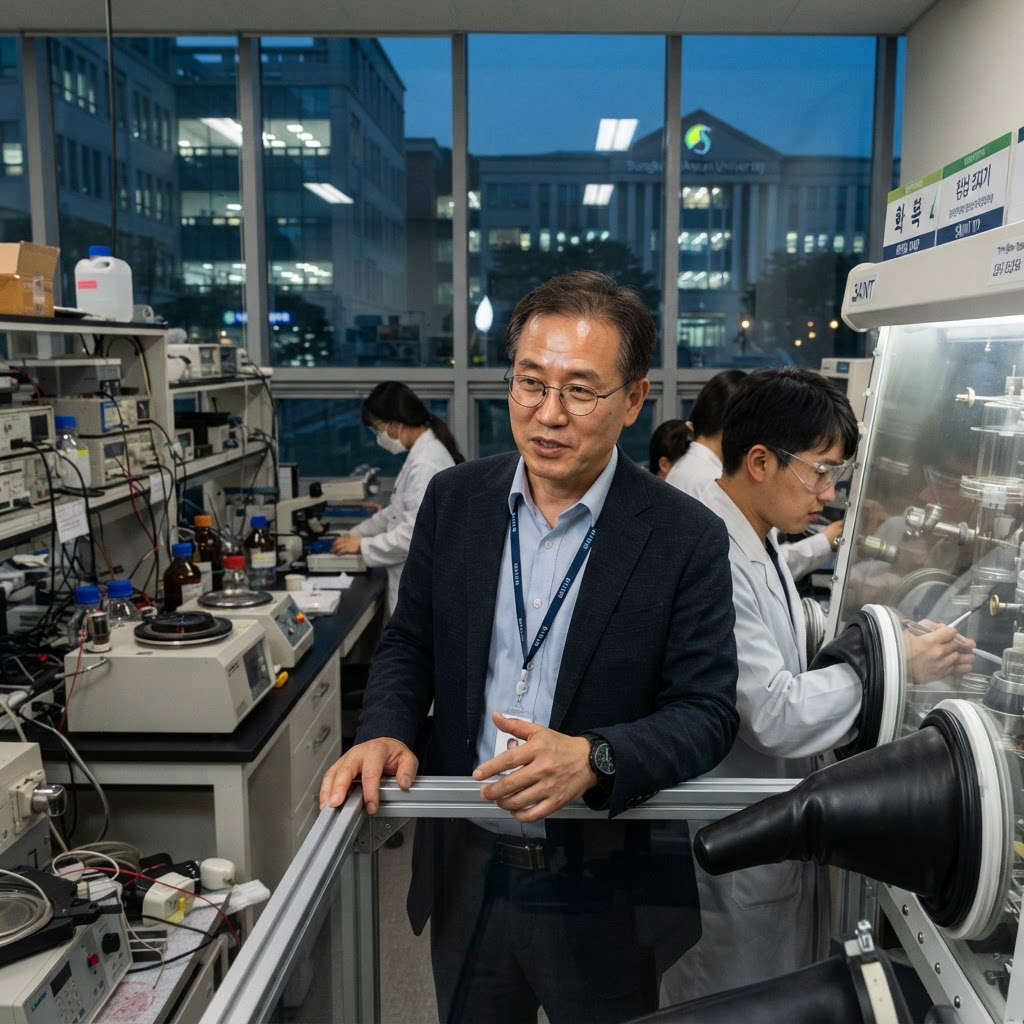
Researchers led by Sungkyunkwan University have developed a crystal-growth method using a volatile eutectic mixture to fundamentally reduce defects in perovskite semiconductor thin films. This technique enabled the fabrication of solar cells achieving a power conversion efficiency of 26.5%, with a certified record open-circuit voltage of 1.208 V for the n-i-p architecture. The study, published in Science, demonstrates that this material platform is also effective for high-performance LEDs. The findings suggest a scalable pathway for improving the performance and stability of next-generation optoelectronic devices.
Eutectic Engineering for Defect Mitigation
The research team, led by Seong Sik Shin at Sungkyunkwan University (SKKU), has introduced a novel crystal-growth method utilizing a volatile eutectic mixture to address the persistent issue of defects in perovskite thin films (Phys.org, 2026). By employing eutectic engineering, the researchers were able to fundamentally alter the crystallization process, resulting in a semiconductor layer with significantly reduced defect density (Science, 2026). This reduction in defects is critical, as it minimizes charge recombination, which is a primary cause of efficiency loss in perovskite solar cells (Troy Technical, 2026). The resulting cells achieved a power conversion efficiency of 26.5%, with a certified open-circuit voltage of 1.208 V, marking a significant milestone for the n-i-p architecture (Phys.org, 2026).
Scaling and Future Implementation
While the laboratory results are promising, the transition to real-world application requires addressing the stability and scalability of the eutectic mixture method (Troy Technical, 2026). The research team has already demonstrated that the technology maintains strong performance over large areas, which is a necessary precursor to commercialization (Phys.org, 2026). Future research must focus on the long-term durability of these films under real-world environmental conditions, including high humidity and temperature fluctuations, which remain the primary barriers to the widespread adoption of perovskite-based photovoltaics (Troy Technical, 2026). The collaboration between international institutions, including Argonne National Laboratory and Princeton University, provides a robust foundation for further testing and validation (Phys.org, 2026). The next logical step for researchers is to optimize the deposition process for high-throughput manufacturing, ensuring that the defect-reduction benefits observed in small-scale cells can be replicated in mass-produced modules (Troy Technical, 2026).
What It Will Take to Advance This
Long-term stability testing under real-world environmental conditions, such as humidity and UV exposure, is required to determine if the 26.5% efficiency can be maintained over a 20-year operational lifespan. The volatile eutectic mixture must be optimized to ensure consistent crystal growth across large-area modules, as current results are primarily based on small-scale laboratory cells. Increased investment in pilot-line manufacturing facilities is necessary to transition the eutectic engineering method from a benchtop process to industrial-scale production. Standardized durability and safety protocols must be established for perovskite-based modules to meet international certification requirements for commercial solar energy deployment. Development of high-throughput, roll-to-roll deposition equipment compatible with the specific requirements of the eutectic crystal-growth process is essential for commercial viability.
Future Possibilities
If this eutectic engineering matures, solar module manufacturers could achieve higher power densities using thinner, more efficient perovskite layers. This would reduce the amount of raw material required per watt of energy produced, lowering the overall cost of solar installations. The technology could replace or supplement traditional silicon-only cells in residential and commercial rooftop applications. Researchers should next investigate the long-term degradation rates of these films under standard outdoor conditions to confirm their viability for 20-year lifespans.
- •Mid term (2-5 years)
- •Moderate confidence
Reference: The study achieved a 26.5% efficiency, which is comparable to the best values reported for passivated silicon (Phys.org, 2026).
The ability to produce high-efficiency solar cells with reduced defect densities could significantly lower the levelized cost of electricity (LCOE) for solar energy. By increasing the efficiency of the top cell in tandem configurations, the total energy output of solar farms could rise without increasing the physical footprint. This would make solar energy more competitive against fossil fuels in regions with limited land availability. Future studies should focus on the cost-benefit analysis of the eutectic mixture materials compared to standard passivating agents.
- •Mid term (2-5 years)
- •High confidence
Reference: The research demonstrated a certified record open-circuit voltage of 1.208 V, indicating superior performance in the n-i-p architecture (Phys.org, 2026).
Widespread adoption of high-efficiency perovskite solar cells could accelerate the global transition to renewable energy by providing a cheaper and more versatile alternative to current technologies. The potential for these materials to be used in both solar cells and LEDs suggests a dual-use capability that could optimize energy consumption in smart buildings. However, the environmental impact of the volatile eutectic mixtures used in production must be carefully managed. Researchers should conduct life-cycle assessments to ensure the manufacturing process remains sustainable at scale.
- •Long term (5+ years)
- •Low confidence
Reference: The research team demonstrated that the same material platform is effective for both high-performance solar cells and LEDs (Science, 2026).
As this technology scales, consumers could see the integration of high-efficiency solar cells into everyday objects, such as portable electronics, windows, and building facades. The flexibility and thin-film nature of perovskites allow for applications where traditional, rigid silicon panels are impractical. This could lead to a more decentralized energy grid where individual devices contribute to their own power needs. The next step is to develop robust encapsulation techniques to protect these cells from moisture and oxygen in consumer environments.
- •Long term (5+ years)
- •Moderate confidence
Reference: The study highlights the potential for these films to be used in next-generation optoelectronic devices (Phys.org, 2026).
Developing domestic capabilities for high-efficiency perovskite manufacturing could reduce reliance on foreign supply chains for critical solar components. By mastering the eutectic crystal-growth method, nations can secure a technological advantage in the rapidly evolving renewable energy sector. This is particularly relevant for military and remote operations that require lightweight, high-power energy sources. Researchers should prioritize the development of non-toxic, abundant materials for these eutectic mixtures to ensure supply chain resilience.
- •Mid term (2-5 years)
- •Moderate confidence
Reference: The research involved international collaboration between institutions in South Korea and the United States (Phys.org, 2026).
National science agencies should prioritize funding for eutectic engineering research to transition from laboratory-scale thin films to pilot-line production. By allocating specific grants for volatile mixture stability studies, institutions can accelerate the path toward the 26.5% efficiency benchmark reported in Science. This funding would support the development of standardized deposition protocols necessary for industrial adoption.
- •The study demonstrates a 26.5% efficiency, which is competitive with passivated silicon (Phys.org, 2026).
- •International collaboration between SKKU, KRICT, and U.S. labs provides a robust framework for scaling (Science, 2026).
Reference: Science, 'Liquid-assisted crystal growth cuts perovskite defects for efficient solar cells and LEDs', Shin et al., 2026
Manufacturers should integrate liquid-assisted crystal growth into existing roll-to-roll processing lines to test the scalability of the eutectic mixture method. By utilizing the M10-sized cell standards currently used in the industry, companies can validate whether the 26.5% efficiency holds across larger surface areas. This step is essential to move beyond the small-scale demonstrations currently reported.
- •The research team confirmed strong performance over large areas (Phys.org, 2026).
- •The method is compatible with existing n-i-p architecture (Science, 2026).
Reference: Phys.org, 'Liquid-assisted crystal growth cuts perovskite defects for efficient solar cells and LEDs', 2026
Regulatory bodies and testing institutes should establish new durability standards specifically for eutectic-grown perovskites to ensure long-term reliability under high-temperature conditions. By defining clear benchmarks for thermal stability, these organizations can provide the confidence needed for utility-scale deployment. This process would mirror the certification pathways used by the Fraunhofer ISE for tandem cells.
- •The material showed improved durability under high-temperature conditions (Troy Technical, 2026).
- •Certified records are essential for market entry (Phys.org, 2026).
Reference: Troy Technical, 'Perovskite Solar Cells: 26.5% Efficiency via Defect Reduction', 2026
Global research consortia should create a shared database of eutectic mixture compositions to optimize defect reduction across different perovskite formulations. By pooling data from institutions like Argonne and SKKU, researchers can identify the most stable and efficient volatile mixtures. This collaborative approach would reduce redundant testing and accelerate the development of high-performance solar modules.
- •The research involved a joint team from the U.S. and South Korea (Troy Technical, 2026).
- •The study is the world's first to use this specific crystal-growth method (Phys.org, 2026).
Reference: Science, 'Liquid-assisted crystal growth cuts perovskite defects for efficient solar cells and LEDs', Shin et al., 2026
Universities should incorporate eutectic engineering and thin-film semiconductor processing into their renewable energy curricula to prepare the next generation of materials scientists. By training students on the specific handling of volatile mixtures and defect-reduction techniques, institutions can build the technical workforce required for the solar manufacturing sector. This training would bridge the gap between fundamental research and industrial application.
- •The research was led by the SKKU Advanced Institute of Nanotechnology (Phys.org, 2026).
- •The study provides foundational data for material design (Troy Technical, 2026).
Reference: Phys.org, 'Liquid-assisted crystal growth cuts perovskite defects for efficient solar cells and LEDs', 2026
·
© 2026 Universe One LLC. All rights reserved.


Cookie Notice
18+ BETACookies keep you signed in and run our ads. We do not sell your data. Analytics and ad-personalization stay off until you accept.
We use cookies to keep you signed in, remember your preferences, and run the in-app ad system that keeps Universe One free. We do not sell your data. Analytics and ad-personalization cookies stay off until you accept. Ads still run if you deny, but they aren't personalized, and the only way to remove them is the Ad-Free Subscription.
You must be 18 or older to create an account during Beta testing.