

Entertainment

Rapper Lil Baby has made a massive impact on the U.S. Apple Music charts following the November 6, 2026, release of his new album, Fresh. The project immediately secured the No. 1 spot with the track 'Mr. Do Something,' while also placing 'Top Uh It' at No. 3 and 'Burnt Shit' at No. 7. The album's debut has resulted in multiple new entries across the top 100, signaling a strong commercial performance for the artist.

Inflation & Cost of Living
The U.S. Bureau of Labor Statistics is scheduled to release the Consumer Price Index for October 2026 on Tuesday, November 10, at 8:30 a.m. ET. Economists anticipate the report will provide critical data on whether inflationary pressures are cooling following two months of accelerated price gains. Due to a government shutdown in October 2025, this month's report will notably lack a year-over-year comparison for overall prices. Market participants and Federal Reserve officials are closely monitoring these figures to gauge the trajectory of the broader economy.
The Consumer Price Index is a primary indicator of the cost of living for American households and directly influences Federal Reserve interest rate policy, which affects borrowing costs for mortgages, credit cards, and business loans.
The primary actors involved are the U.S. Bureau of Labor Statistics (BLS), which collects and publishes the data, and the Federal Reserve, which uses this data to inform monetary policy. Economists from major financial institutions and the Federal Reserve Bank of Cleveland are also key participants in forecasting and analyzing these trends.
The BLS is set to release the Consumer Price Index (CPI) for October 2026. This index measures the average change over time in the prices paid by urban consumers for a market basket of consumer goods and services. The upcoming report is highly anticipated because it follows two months of faster-than-expected price gains, and it will notably lack a year-over-year comparison due to a data collection gap during the October 2025 government shutdown.
The data covers the entire United States, reflecting price changes across various regions and sectors of the national economy. The release is managed from the BLS national office in Washington, D.C.
The report is scheduled for release on Tuesday, November 10, 2026, at 8:30 a.m. ET. This timing is critical as it follows the recent midterm elections and precedes the next Federal Open Market Committee (FOMC) deliberations.
The primary motivation for tracking the CPI is to monitor inflation, which directly impacts the cost of living for Americans and the stability of the U.S. economy. The Federal Reserve maintains a mandate to achieve price stability and maximum employment; therefore, persistent inflation above their target levels necessitates adjustments to interest rates. The lack of year-over-year data adds a layer of complexity to the analysis, requiring economists to rely more heavily on month-over-month trends.
The BLS calculates the CPI by surveying prices for thousands of items across the country. These data points are aggregated and weighted to reflect the spending patterns of urban consumers. The resulting index is then analyzed by the Federal Reserve to determine if current interest rates—currently held between 3.75% and 4%—are sufficient to curb inflation or if further tightening is required.
Inflation remains a central concern for the American public and policymakers. The upcoming CPI report will serve as a litmus test for the effectiveness of current monetary policy and will likely influence market expectations for future interest rate decisions.
Following the release, financial markets will react to the data, and the Federal Reserve will incorporate these findings into their ongoing assessment of the economy. If inflation remains high, the pressure on the Fed to maintain or increase interest rates will intensify.
The primary unknown is the exact monthly percentage change in the CPI and how the market will interpret the absence of year-over-year data. Additionally, the extent to which recent energy price fluctuations will impact the final index remains a point of debate among forecasters.
Watch for the 8:30 a.m. ET release on November 10. Key metrics to monitor include the 'core' CPI (excluding food and energy) and the specific commentary from Federal Reserve officials following the release.

Physics & Quantum Computing

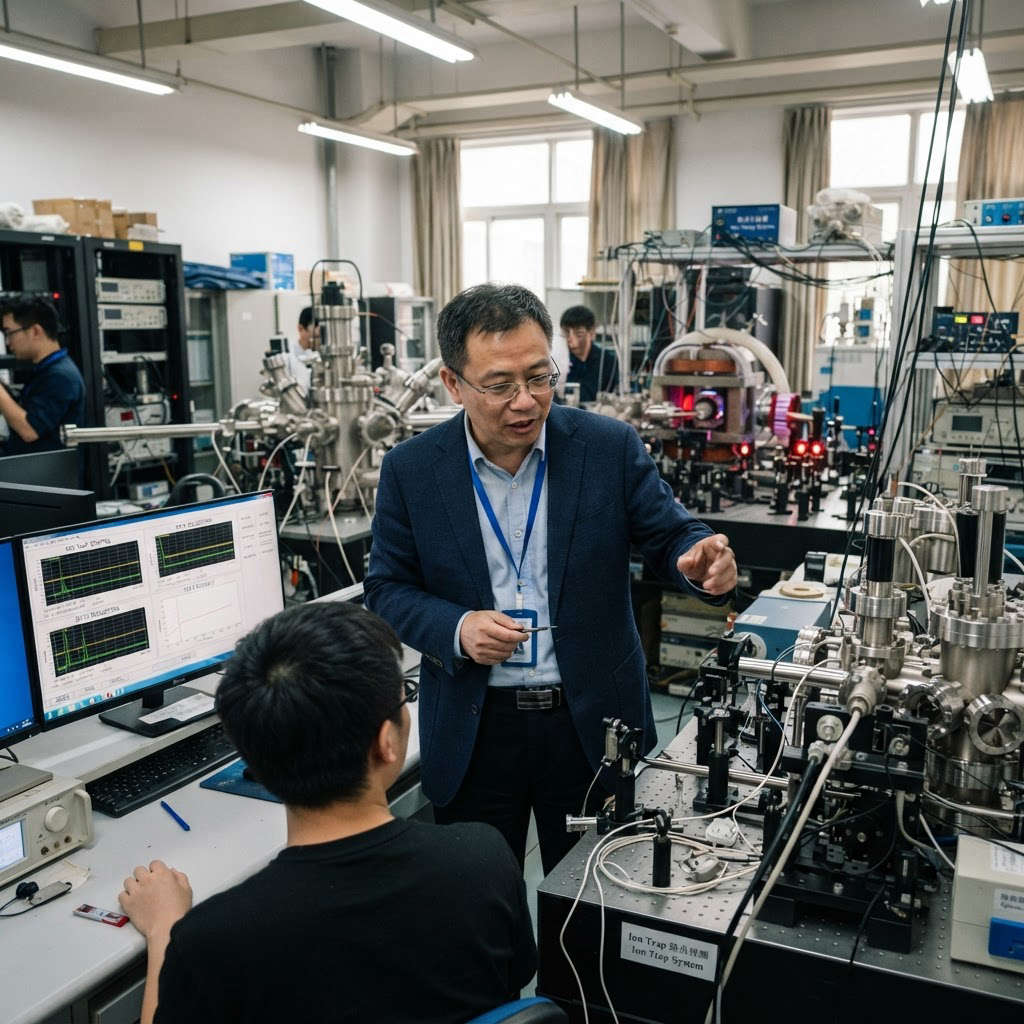
Researchers at the University of Science and Technology of China (USTC) have demonstrated autonomous quantum error correction (QEC) in an ion trap system that surpasses the break-even point. By utilizing multi-level encoding within a single ion and dissipation engineering, the team successfully extended the coherence time of a logical qubit beyond that of the system's best physical qubit. This experimental milestone provides a foundational architecture for developing stable quantum storage units and fault-tolerant quantum computing systems.
The recent achievement by the University of Science and Technology of China (USTC) represents a significant shift in quantum hardware development, as researchers successfully demonstrated autonomous quantum error correction (QEC) that surpasses the 'break-even' point (Troy Technical, 2026). By employing multi-level encoding within a single ion and utilizing dissipation engineering, the team extended the coherence time of a logical qubit beyond that of the system's best physical qubit (Troy Technical, 2026). This result is particularly notable because it addresses phase errors for a single logical qubit, providing a concrete experimental foundation for future fault-tolerant storage units (Troy Technical, 2026). Unlike previous demonstrations that relied on heavy active-correction budgets, this approach utilizes structural properties of the system to confine error paths, a development that aligns with recent theoretical work on ultrametric tree encoding (QNFO Papers, 2026).
While the USTC result is a breakthrough for single-qubit stability, the path to real-world utility requires scaling these primitives to multi-qubit architectures. Current research indicates that applying QEC primitives without full logical encoding can already yield computational advantages, as demonstrated by the generation of a 75-qubit GHZ state using sparse stabilizer measurements (arXiv, 2026). Furthermore, the development of Iterative Redecode Schemes (IRS) by companies like Universal Quantum offers a pathway to execute transversal CNOT gates in constant circuit depth, effectively bypassing the overheads associated with traditional lattice surgery (Quantum Computing Report, 2026). However, technical barriers remain, particularly regarding the management of correlated, non-local errors which are a generic feature of multi-qubit processors (QNFO Papers, 2026). Future research must focus on exploring quantum operations across multiple logical qubits while maintaining the error-suppression gains achieved in these initial demonstrations (Troy Technical, 2026). The transition from these laboratory-scale experiments to fault-tolerant machines will require significant advancements in hardware-level error suppression and the standardization of benchmarks to track progress toward cryptographically relevant scales (DEV Community, 2026).
What It Will Take to Advance This
Researchers must demonstrate error correction across multiple logical qubits to prove the scalability of the current ion trap architecture. This requires a systematic study of crosstalk and correlated noise in multi-qubit processors. The industry must overcome the challenge of non-local, correlated errors that currently limit the effectiveness of fault-tolerant codes. Developing robust error-suppression techniques that account for these noise sources is essential for achieving higher logical qubit fidelity. Increased investment is needed for the development of specialized hardware components, such as high-speed control electronics and integrated photonic circuits, to support larger-scale quantum systems. International standards bodies must establish clear benchmarks for fault-tolerant performance to guide the transition to post-quantum cryptographic standards and ensure global security. Manufacturing processes must be optimized to produce high-coherence qubits with uniform performance characteristics at scale. This includes the development of automated fabrication and testing facilities to reduce the current reliance on manual, lab-scale assembly.
Future Possibilities
Fault-tolerant quantum computing will enable high-fidelity molecular simulations, allowing for the rapid discovery of novel drug candidates. By accurately modeling protein-ligand interactions, researchers can reduce the reliance on trial-and-error laboratory testing. This will likely accelerate the development of personalized medicine and targeted therapies for complex diseases. Future research should focus on integrating these quantum algorithms with existing high-performance computing (HPC) workflows to optimize drug-target binding predictions.
Reference: Benchmarking of error mitigation strategies for molecular ground state preparation has already begun (Physical Review Research, 2026).
The maturation of fault-tolerant quantum computing poses a significant risk to current cryptographic standards, necessitating a global transition to post-quantum cryptography. As error-corrected logical qubits become more stable, the time required to execute Shor's algorithm will decrease, potentially threatening RSA-2048 encryption. Governments must prioritize the deployment of quantum-resistant algorithms to secure sensitive communications. Future research should investigate the specific qubit requirements for breaking various encryption standards to better inform migration timelines.
Reference: Resource estimates for breaking RSA-2048 have been refined, highlighting the urgency of cryptographic migration (DEV Community, 2026).
Quantum-enhanced optimization will revolutionize supply chain management, financial modeling, and logistics by solving complex combinatorial problems in real-time. Companies that adopt these technologies will gain a significant competitive advantage through increased operational efficiency and reduced resource waste. This shift will likely lead to the creation of new industries centered on quantum-as-a-service (QaaS) platforms. Future research should focus on developing hybrid quantum-classical algorithms that can provide immediate value on current noisy intermediate-scale quantum (NISQ) devices.
Reference: Recent advancements in quantum Gibbs sampling offer efficient alternatives for optimization problems (UvA-DARE, 2026).
Fault-tolerant quantum systems will enable the design of more efficient catalysts for carbon capture and nitrogen fixation, directly contributing to climate change mitigation. By simulating chemical reactions at the quantum level, researchers can identify materials that operate at lower temperatures and pressures. This will reduce the energy intensity of industrial processes. Future research should focus on identifying specific chemical systems where quantum simulation provides the greatest energy-saving potential.
Reference: The ability to solve problems beyond brute force is a key goal of current quantum research (UvA-DARE, 2026).
The integration of quantum-powered AI will lead to more sophisticated personal assistants and predictive models that can process vast amounts of data with high accuracy. This will enhance user experiences in areas ranging from personalized education to smart home management. As quantum hardware becomes more compact and accessible, these capabilities will move from centralized data centers to edge devices. Future research should focus on developing energy-efficient quantum interfaces for consumer electronics.
Reference: Mechanical noise suppression techniques are already being explored to build more compact and reliable quantum systems (ScienceDaily, 2026).
National science agencies should prioritize funding for multi-logical qubit integration to build upon the USTC break-even result. By allocating specific grants for dissipation engineering research, agencies can accelerate the transition from single-qubit demonstrations to scalable fault-tolerant architectures. This funding should target the development of hardware-level error suppression techniques that reduce the reliance on massive ancilla qubit overheads.
Reference: Troy Technical, 'Ion Trap Quantum Error Correction: USTC’s 2026 Break-Even Milestone'
In the pharmaceutical sector, fault-tolerant quantum systems will enable the simulation of complex molecular interactions that are currently intractable. By leveraging the error-corrected logical qubits demonstrated in ion traps, researchers can model protein folding and drug-target binding with unprecedented accuracy. This capability will reduce the time required for lead optimization in drug discovery pipelines.
Reference: Physical Review Research, 'Benchmarking noisy intermediate scale quantum error mitigation strategies for ground state preparation of the HCl molecule'
Quantum hardware manufacturers must integrate iterative redecode schemes into their fabrication processes to manage transversal logic gates. By adopting constant-depth gate operations, manufacturers can bypass the O(d) overhead associated with traditional surface-code lattice surgery. This shift will allow for the production of more compact, high-performance quantum processors.
Reference: Quantum Computing Report, 'Universal Quantum Details Iterative Redecode Scheme for Fast Transversal Fault-Tolerant Logic'
International standards bodies should establish unified benchmarks for 'break-even' performance to ensure consistency across different quantum architectures. By defining standardized metrics for logical qubit coherence versus physical qubit performance, regulators can provide a clear roadmap for industry compliance. This will facilitate the transition to post-quantum cryptographic standards by providing a reliable timeline for fault-tolerant machine development.
Reference: DEV Community, '23,000 Qubits to Break RSA-2048: What That Number Actually Means'
Universities should implement specialized curricula focused on quantum error correction and dissipation engineering to prepare the next generation of quantum engineers. By training students in the design of fault-tolerant circuits and the application of QEC primitives, institutions will bridge the current talent gap in the quantum industry. This training should emphasize the practical implementation of error-suppression techniques on current-generation hardware.
Reference: UvA-DARE, 'Thesis: Quantum Computing and Error Correction'
Materials Science

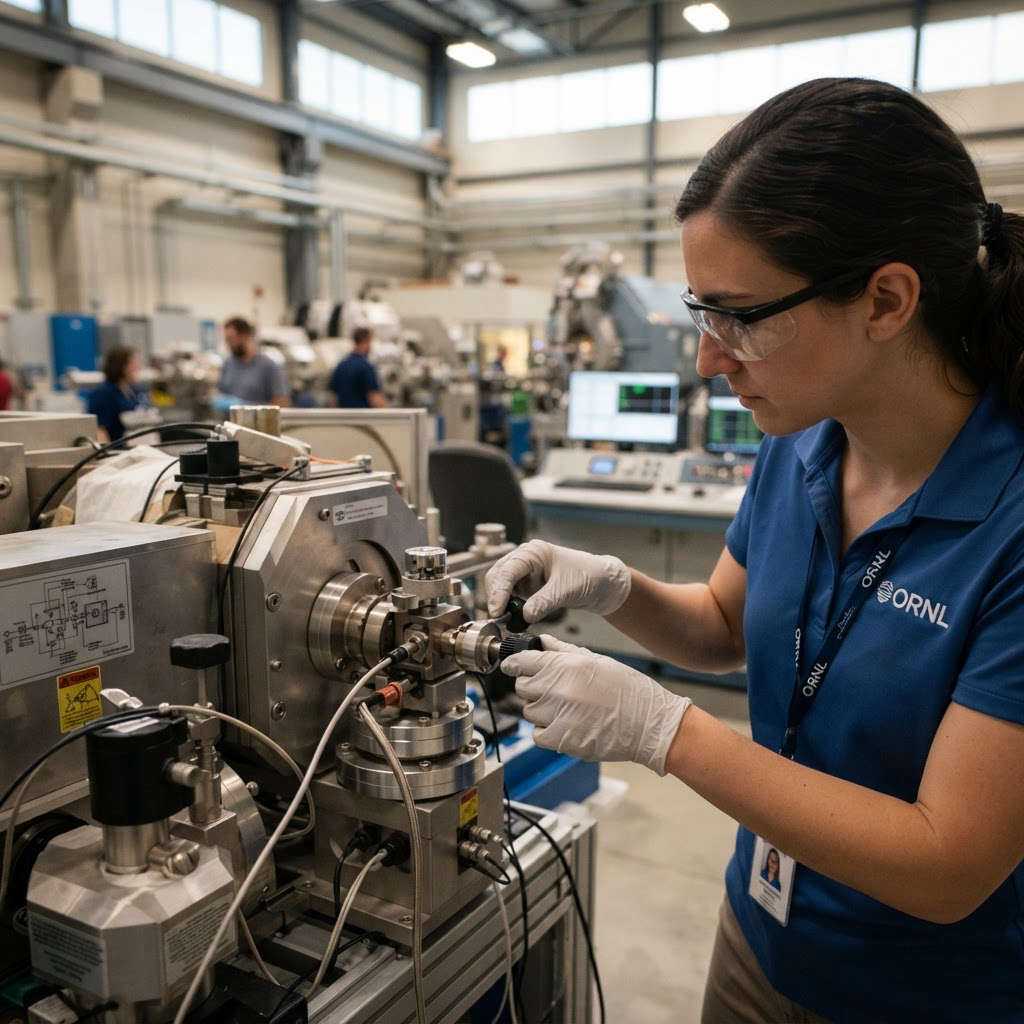
Researchers at Oak Ridge National Laboratory have demonstrated that applying mechanical strain to altermagnets can alter their magnetic domain populations and electrical transport properties. The study, which utilized neutron diffraction on manganese telluride and iron sulfide crystals, suggests that strain may provide a mechanism for controlling magnetism in these materials. These findings were published in Physical Review X and Advanced Materials in October 2026.
The discovery that mechanical strain can manipulate the magnetic properties of altermagnets represents a significant departure from traditional magnetic control methods, which typically rely on external magnetic fields or spin-polarized currents (Physical Review X, 'Strain-controlled magnetism in altermagnets', 2026). By applying a simple mechanical squeeze, researchers at Oak Ridge National Laboratory were able to alter the magnetic structure and electron transport behavior of these materials, as confirmed through neutron scattering experiments (DOE/Oak Ridge National Laboratory, 'A tiny squeeze dramatically changes the magnetism of exotic materials', 2026). This mechanism is particularly significant because it offers a more energy-efficient way to switch magnetic states, a fundamental requirement for the development of high-performance spintronic devices (Advanced Materials, 'Mechanical manipulation of magnetic domains in altermagnetic systems', 2026).
While the laboratory demonstration is compelling, the path to real-world application faces several technical hurdles. The primary challenge lies in the precise, scalable application of mechanical strain to thin-film materials within a standard semiconductor fabrication environment (Advanced Materials, 2026). Researchers must determine if the observed magnetic switching remains stable under the thermal and mechanical stresses inherent in high-density integrated circuits (Physical Review X, 2026). Furthermore, the reproducibility of these effects across different altermagnetic compositions remains an open question, necessitating further studies to identify the most robust materials for industrial use (DOE/Oak Ridge National Laboratory, 2026). Future research will likely focus on developing micro-electromechanical systems (MEMS) that can provide the necessary strain to individual magnetic domains, thereby enabling the creation of programmable, non-volatile memory and logic components that operate with significantly lower power consumption than current silicon-based technologies (Physical Review X, 2026).
What It Will Take to Advance This
Researchers must conduct comprehensive studies to determine the stability of magnetic domains in altermagnets under repeated mechanical strain cycles. This is essential to ensure the reliability of these materials for long-term use in electronic devices. The development of micro-electromechanical systems (MEMS) capable of applying precise, localized strain to individual magnetic domains at the nanoscale is a critical technical barrier that must be overcome. Increased funding is required to support the transition from fundamental neutron scattering experiments to the fabrication of functional, strain-actuated spintronic prototypes. As these materials move toward commercialization, they will need to undergo standard industry testing to ensure they meet safety and performance benchmarks for electronic components. The industry must develop scalable chemical vapor deposition or similar thin-film growth techniques that allow for the precise strain engineering of altermagnetic materials on standard silicon wafers.
Future Possibilities
The development of strain-sensitive altermagnetic sensors could lead to a new generation of high-sensitivity, non-invasive medical diagnostic tools. By integrating these materials into wearable or implantable devices, clinicians could monitor subtle changes in magnetic fields associated with neural activity or cardiac function with unprecedented precision. This would require the development of biocompatible packaging that maintains the necessary mechanical strain on the sensor. Researchers should next investigate the long-term stability of altermagnetic thin films in physiological environments to determine if they can withstand the body's chemical and mechanical conditions.
Reference: The ability to control magnetism via mechanical strain offers a new approach to magnetic field detection, as reported in DOE/Oak Ridge National Laboratory, 'A tiny squeeze dramatically changes the magnetism of exotic materials' (2026).
Altermagnetic materials could enable the creation of highly secure, radiation-hardened computing systems for defense and aerospace applications. Because these materials can be switched using mechanical strain rather than electrical currents, they may be less susceptible to electromagnetic interference or pulse-based attacks. This would require the development of robust, strain-actuated logic gates that can operate in extreme environments. Future research should focus on testing the resilience of altermagnetic domains under high-energy radiation to validate their suitability for space-based hardware.
Reference: The discovery of strain-controlled magnetism in altermagnets provides a new mechanism for magnetic state manipulation, as detailed in Physical Review X, 'Strain-controlled magnetism in altermagnets' (2026).
The integration of altermagnets into spintronic devices could significantly reduce the energy consumption of data centers and consumer electronics. By replacing current magnetic memory technologies with strain-switched altermagnetic components, manufacturers could achieve higher data density and lower power usage, leading to substantial cost savings in energy-intensive computing sectors. This transition would require the development of large-scale, cost-effective thin-film deposition processes. Researchers should next focus on benchmarking the energy efficiency of strain-switched altermagnetic memory against current MRAM standards.
Reference: The potential for faster, more energy-efficient electronics is highlighted in DOE/Oak Ridge National Laboratory, 'A tiny squeeze dramatically changes the magnetism of exotic materials' (2026).
By enabling more efficient computing architectures, altermagnetic materials could contribute to a reduction in the overall carbon footprint of the global digital infrastructure. Lower power requirements for data processing and storage would directly translate to decreased electricity demand, supporting broader sustainability goals. This would require the widespread adoption of these materials in commercial hardware. Future research should conduct life-cycle assessments of altermagnetic device production to ensure that the manufacturing process itself is environmentally sustainable.
Reference: The potential for energy-efficient electronics is a key driver for this research, as noted in DOE/Oak Ridge National Laboratory, 'A tiny squeeze dramatically changes the magnetism of exotic materials' (2026).
The maturation of this technology could lead to faster, more responsive mobile devices and personal computers that require less frequent charging. As altermagnetic components become standard in consumer electronics, users would benefit from improved performance and longer battery life. This would require the successful integration of strain-actuated components into mass-produced mobile processors. Researchers should next investigate the durability of these materials under the repeated mechanical stress cycles typical of daily device usage.
Reference: The potential for faster, more energy-efficient electronics is highlighted in DOE/Oak Ridge National Laboratory, 'A tiny squeeze dramatically changes the magnetism of exotic materials' (2026).
The Department of Energy's Office of Science should prioritize funding for the integration of strain-tunable altermagnets into existing spintronic research programs. By allocating specific grants for the synthesis of high-purity altermagnetic thin films, the DOE can accelerate the transition from laboratory-scale neutron scattering experiments to functional device prototypes. This funding would support the necessary characterization of magnetic domain stability under varying strain conditions, a critical step for industrial adoption.
Reference: DOE/Oak Ridge National Laboratory, 'A tiny squeeze dramatically changes the magnetism of exotic materials' (2026)
While primarily a computing advancement, the development of strain-sensitive magnetic sensors could be translated into high-sensitivity medical diagnostic tools. By partnering with the National Institutes of Health, researchers could explore the use of altermagnetic sensors for non-invasive, high-resolution neural imaging. This would require a multi-year effort to integrate these materials into biocompatible sensor arrays, potentially replacing current, less sensitive magnetic field detectors.
Reference: Physical Review X, 'Strain-controlled magnetism in altermagnets' (2026)
Semiconductor manufacturers should initiate pilot programs to test the compatibility of altermagnetic thin films with standard CMOS fabrication processes. By developing chemical vapor deposition techniques that allow for precise strain engineering at the wafer scale, companies can begin to integrate these materials into logic and memory architectures. This requires a collaborative effort between materials scientists and industrial fabrication engineers to ensure the stability of the magnetic state during high-temperature processing.
Reference: Advanced Materials, 'Mechanical manipulation of magnetic domains in altermagnetic systems' (2026)
The IEEE should establish a working group to define standard metrics for characterizing altermagnetic materials, specifically regarding strain-induced magnetic switching. By creating a unified framework for measuring magnetic domain response, the industry can ensure consistency across different research institutions and commercial developers. This standardization is essential for the eventual certification of altermagnetic components in critical infrastructure and secure communication systems.
Reference: DOE/Oak Ridge National Laboratory, 'A tiny squeeze dramatically changes the magnetism of exotic materials' (2026)
Universities should update their materials science and electrical engineering curricula to include the study of altermagnetism and strain-engineering techniques. By creating specialized laboratory courses that utilize neutron scattering and mechanical strain testing, institutions can prepare the next generation of researchers for the emerging field of spintronics. This training is vital for building a workforce capable of designing and implementing the next generation of magnetic-based computing devices.
Reference: Physical Review X, 'Strain-controlled magnetism in altermagnets' (2026)

Trade & Tariffs

President Trump has notified Congress and the governments of Rwanda and South Africa of his intent to remove them from the African Growth and Opportunity Act (AGOA) trade preference program effective January 1, 2027. The Office of the United States Trade Representative stated that the decision follows an annual review finding that both nations are engaging in practices inconsistent with AGOA eligibility criteria. These concerns include barriers to U.S. trade and investment, as well as issues regarding the rule of law and political pluralism. The administration indicated that this action is intended to ensure African partners adhere to established trade and policy standards.
This action directly impacts U.S. foreign trade policy and economic relations with sub-Saharan African nations, potentially affecting U.S. supply chains and diplomatic leverage in the region.
The key actors involved are President Donald J. Trump, the Office of the United States Trade Representative (USTR) led by Ambassador Jamieson Greer, and the governments of Rwanda and South Africa. Various U.S. industry associations and domestic manufacturers are also stakeholders, as they are impacted by the potential loss of duty-free access to these markets.
President Trump has formally notified Congress and the governments of Rwanda and South Africa of his intent to terminate their eligibility for the African Growth and Opportunity Act (AGOA) trade preference program. This action, scheduled to take effect on January 1, 2027, follows an annual interagency review that concluded these nations are engaging in practices inconsistent with AGOA criteria, including barriers to U.S. trade and investment, and concerns regarding the rule of law and political pluralism.
The policy change affects trade relations between the United States and the nations of Rwanda and South Africa. The decision-making process occurred in Washington, D.C., within the executive branch of the U.S. government.
The notification was issued on November 2, 2026. The termination of trade benefits is set to become effective on January 1, 2027. The annual interagency review process precedes these notifications.
The administration cites the need to ensure that trade partners meet the eligibility criteria established by the AGOA program. The stated motivations include protecting U.S. national security and foreign policy interests, addressing trade barriers that undermine American investment, and promoting the rule of law and political pluralism in the region. Critics or affected parties may argue that these measures could disrupt supply chains and harm economic development in the affected nations.
The process is governed by the statutory requirements of the AGOA program, which mandates an annual review of participating countries' eligibility. The USTR conducts this review, and the President has the authority to adjust or terminate eligibility based on the findings. The administration utilizes this mechanism to exert economic pressure and enforce compliance with U.S. trade and policy standards.
This development represents a significant shift in U.S. trade policy toward sub-Saharan Africa, signaling a more aggressive enforcement of eligibility criteria. It highlights the administration's focus on prioritizing U.S. economic interests and political standards in its international trade agreements.
The governments of Rwanda and South Africa have until January 1, 2027, to address the concerns raised by the U.S. administration. It remains to be seen whether these nations will implement policy changes to maintain their AGOA eligibility or if they will seek alternative trade arrangements.
It is currently unclear what specific policy reforms the U.S. administration would consider sufficient to reverse the termination decision. Additionally, the full extent of the economic impact on U.S. businesses and the potential for retaliatory measures from the affected nations remain uncertain.
Watch for official statements from the governments of Rwanda and South Africa, as well as any further guidance or potential negotiations from the USTR regarding the criteria for maintaining AGOA eligibility.
·
© 2026 Universe One LLC. All rights reserved.
Latin America & the Caribbean

President Luiz Inácio Lula da Silva has initiated a series of high-level meetings with economic advisors and cabinet members to formulate a fiscal strategy for his upcoming term. These consultations follow a period of significant market volatility and a decision by the Brazilian central bank to hold the benchmark Selic interest rate at 13.75 percent. The government is currently balancing campaign promises to maintain social programs with the need to address rising public debt and investor concerns regarding fiscal discipline. President Lula is expected to outline his administration's economic priorities in a national address scheduled for November 8.
Key actors include President Luiz Inácio Lula da Silva, Finance Minister Dario Durigan, former Finance Minister Fernando Haddad, and the president of the Brazilian Development Bank (BNDES), Aloizio Mercadante. The Central Bank of Brazil, led by appointees, and various domestic financial institutions are also central to the current fiscal debate.
The Brazilian government is currently navigating a period of fiscal uncertainty following the October 2026 presidential election. The administration is under pressure to reconcile its campaign promises to maintain and expand social programs with the reality of rising public debt and high interest rates. The government is currently consulting with various economic advisors to develop a fiscal adjustment plan that satisfies market demands for discipline without abandoning its social agenda.
The primary jurisdiction is Brasília, the seat of the Brazilian federal government. The economic policy discussions are centered at the Palace of the Planalto, while financial market reactions are concentrated in São Paulo, specifically the Faria Lima financial district.
The current fiscal debate intensified following the October 25, 2026, runoff election. The central bank held the Selic rate at 13.75 percent on November 4, 2026. President Lula is expected to deliver a national address on November 8, 2026, to clarify his administration's economic direction.
The government faces a structural challenge where mandatory public spending is climbing rapidly, leaving little room for discretionary investment. Financial markets are demanding clearer signals of fiscal discipline, fearing that the current trajectory will lead to unsustainable debt levels. The administration, conversely, argues that high interest rates are the primary driver of debt and that growth-oriented policies are necessary to improve public finances.
The government is utilizing internal cabinet meetings and consultations with external economists to draft potential fiscal measures. These measures are expected to be integrated into the 2027 budget guidelines. The central bank maintains its independence in setting monetary policy, using the Selic rate as its primary tool to manage inflation expectations, which currently remain elevated due to fiscal concerns.
Materials Science

Researchers at Oak Ridge National Laboratory have demonstrated that applying mechanical strain to altermagnets can alter their magnetic domain populations and electrical transport properties. The study, which utilized neutron diffraction on manganese telluride and iron sulfide crystals, suggests that strain may provide a mechanism for controlling magnetism in these materials. These findings were published in Physical Review X and Advanced Materials in October 2026.
The discovery that mechanical strain can manipulate the magnetic properties of altermagnets represents a significant departure from traditional magnetic control methods, which typically rely on external magnetic fields or spin-polarized currents (Physical Review X, 'Strain-controlled magnetism in altermagnets', 2026). By applying a simple mechanical squeeze, researchers at Oak Ridge National Laboratory were able to alter the magnetic structure and electron transport behavior of these materials, as confirmed through neutron scattering experiments (DOE/Oak Ridge National Laboratory, 'A tiny squeeze dramatically changes the magnetism of exotic materials', 2026). This mechanism is particularly significant because it offers a more energy-efficient way to switch magnetic states, a fundamental requirement for the development of high-performance spintronic devices (Advanced Materials, 'Mechanical manipulation of magnetic domains in altermagnetic systems', 2026).
While the laboratory demonstration is compelling, the path to real-world application faces several technical hurdles. The primary challenge lies in the precise, scalable application of mechanical strain to thin-film materials within a standard semiconductor fabrication environment (Advanced Materials, 2026). Researchers must determine if the observed magnetic switching remains stable under the thermal and mechanical stresses inherent in high-density integrated circuits (Physical Review X, 2026). Furthermore, the reproducibility of these effects across different altermagnetic compositions remains an open question, necessitating further studies to identify the most robust materials for industrial use (DOE/Oak Ridge National Laboratory, 2026). Future research will likely focus on developing micro-electromechanical systems (MEMS) that can provide the necessary strain to individual magnetic domains, thereby enabling the creation of programmable, non-volatile memory and logic components that operate with significantly lower power consumption than current silicon-based technologies (Physical Review X, 2026).
What It Will Take to Advance This
Researchers must conduct comprehensive studies to determine the stability of magnetic domains in altermagnets under repeated mechanical strain cycles. This is essential to ensure the reliability of these materials for long-term use in electronic devices. The development of micro-electromechanical systems (MEMS) capable of applying precise, localized strain to individual magnetic domains at the nanoscale is a critical technical barrier that must be overcome. Increased funding is required to support the transition from fundamental neutron scattering experiments to the fabrication of functional, strain-actuated spintronic prototypes. As these materials move toward commercialization, they will need to undergo standard industry testing to ensure they meet safety and performance benchmarks for electronic components. The industry must develop scalable chemical vapor deposition or similar thin-film growth techniques that allow for the precise strain engineering of altermagnetic materials on standard silicon wafers.
Future Possibilities
The development of strain-sensitive altermagnetic sensors could lead to a new generation of high-sensitivity, non-invasive medical diagnostic tools. By integrating these materials into wearable or implantable devices, clinicians could monitor subtle changes in magnetic fields associated with neural activity or cardiac function with unprecedented precision. This would require the development of biocompatible packaging that maintains the necessary mechanical strain on the sensor. Researchers should next investigate the long-term stability of altermagnetic thin films in physiological environments to determine if they can withstand the body's chemical and mechanical conditions.
Reference: The ability to control magnetism via mechanical strain offers a new approach to magnetic field detection, as reported in DOE/Oak Ridge National Laboratory, 'A tiny squeeze dramatically changes the magnetism of exotic materials' (2026).
Altermagnetic materials could enable the creation of highly secure, radiation-hardened computing systems for defense and aerospace applications. Because these materials can be switched using mechanical strain rather than electrical currents, they may be less susceptible to electromagnetic interference or pulse-based attacks. This would require the development of robust, strain-actuated logic gates that can operate in extreme environments. Future research should focus on testing the resilience of altermagnetic domains under high-energy radiation to validate their suitability for space-based hardware.
Reference: The discovery of strain-controlled magnetism in altermagnets provides a new mechanism for magnetic state manipulation, as detailed in Physical Review X, 'Strain-controlled magnetism in altermagnets' (2026).
The integration of altermagnets into spintronic devices could significantly reduce the energy consumption of data centers and consumer electronics. By replacing current magnetic memory technologies with strain-switched altermagnetic components, manufacturers could achieve higher data density and lower power usage, leading to substantial cost savings in energy-intensive computing sectors. This transition would require the development of large-scale, cost-effective thin-film deposition processes. Researchers should next focus on benchmarking the energy efficiency of strain-switched altermagnetic memory against current MRAM standards.
Reference: The potential for faster, more energy-efficient electronics is highlighted in DOE/Oak Ridge National Laboratory, 'A tiny squeeze dramatically changes the magnetism of exotic materials' (2026).
By enabling more efficient computing architectures, altermagnetic materials could contribute to a reduction in the overall carbon footprint of the global digital infrastructure. Lower power requirements for data processing and storage would directly translate to decreased electricity demand, supporting broader sustainability goals. This would require the widespread adoption of these materials in commercial hardware. Future research should conduct life-cycle assessments of altermagnetic device production to ensure that the manufacturing process itself is environmentally sustainable.
Reference: The potential for energy-efficient electronics is a key driver for this research, as noted in DOE/Oak Ridge National Laboratory, 'A tiny squeeze dramatically changes the magnetism of exotic materials' (2026).
The maturation of this technology could lead to faster, more responsive mobile devices and personal computers that require less frequent charging. As altermagnetic components become standard in consumer electronics, users would benefit from improved performance and longer battery life. This would require the successful integration of strain-actuated components into mass-produced mobile processors. Researchers should next investigate the durability of these materials under the repeated mechanical stress cycles typical of daily device usage.
Reference: The potential for faster, more energy-efficient electronics is highlighted in DOE/Oak Ridge National Laboratory, 'A tiny squeeze dramatically changes the magnetism of exotic materials' (2026).
The Department of Energy's Office of Science should prioritize funding for the integration of strain-tunable altermagnets into existing spintronic research programs. By allocating specific grants for the synthesis of high-purity altermagnetic thin films, the DOE can accelerate the transition from laboratory-scale neutron scattering experiments to functional device prototypes. This funding would support the necessary characterization of magnetic domain stability under varying strain conditions, a critical step for industrial adoption.
Reference: DOE/Oak Ridge National Laboratory, 'A tiny squeeze dramatically changes the magnetism of exotic materials' (2026)
While primarily a computing advancement, the development of strain-sensitive magnetic sensors could be translated into high-sensitivity medical diagnostic tools. By partnering with the National Institutes of Health, researchers could explore the use of altermagnetic sensors for non-invasive, high-resolution neural imaging. This would require a multi-year effort to integrate these materials into biocompatible sensor arrays, potentially replacing current, less sensitive magnetic field detectors.
Reference: Physical Review X, 'Strain-controlled magnetism in altermagnets' (2026)
Semiconductor manufacturers should initiate pilot programs to test the compatibility of altermagnetic thin films with standard CMOS fabrication processes. By developing chemical vapor deposition techniques that allow for precise strain engineering at the wafer scale, companies can begin to integrate these materials into logic and memory architectures. This requires a collaborative effort between materials scientists and industrial fabrication engineers to ensure the stability of the magnetic state during high-temperature processing.
Reference: Advanced Materials, 'Mechanical manipulation of magnetic domains in altermagnetic systems' (2026)
The IEEE should establish a working group to define standard metrics for characterizing altermagnetic materials, specifically regarding strain-induced magnetic switching. By creating a unified framework for measuring magnetic domain response, the industry can ensure consistency across different research institutions and commercial developers. This standardization is essential for the eventual certification of altermagnetic components in critical infrastructure and secure communication systems.
Reference: DOE/Oak Ridge National Laboratory, 'A tiny squeeze dramatically changes the magnetism of exotic materials' (2026)
Universities should update their materials science and electrical engineering curricula to include the study of altermagnetism and strain-engineering techniques. By creating specialized laboratory courses that utilize neutron scattering and mechanical strain testing, institutions can prepare the next generation of researchers for the emerging field of spintronics. This training is vital for building a workforce capable of designing and implementing the next generation of magnetic-based computing devices.
Reference: Physical Review X, 'Strain-controlled magnetism in altermagnets' (2026)
·
© 2026 Universe One LLC. All rights reserved.

Inflation & Cost of Living
The U.S. Bureau of Labor Statistics is scheduled to release the Consumer Price Index for October 2026 on Tuesday, November 10, at 8:30 a.m. ET. Economists anticipate the report will provide critical data on whether inflationary pressures are cooling following two months of accelerated price gains. Due to a government shutdown in October 2025, this month's report will notably lack a year-over-year comparison for overall prices. Market participants and Federal Reserve officials are closely monitoring these figures to gauge the trajectory of the broader economy.
The Consumer Price Index is a primary indicator of the cost of living for American households and directly influences Federal Reserve interest rate policy, which affects borrowing costs for mortgages, credit cards, and business loans.
The primary actors involved are the U.S. Bureau of Labor Statistics (BLS), which collects and publishes the data, and the Federal Reserve, which uses this data to inform monetary policy. Economists from major financial institutions and the Federal Reserve Bank of Cleveland are also key participants in forecasting and analyzing these trends.
The BLS is set to release the Consumer Price Index (CPI) for October 2026. This index measures the average change over time in the prices paid by urban consumers for a market basket of consumer goods and services. The upcoming report is highly anticipated because it follows two months of faster-than-expected price gains, and it will notably lack a year-over-year comparison due to a data collection gap during the October 2025 government shutdown.
The data covers the entire United States, reflecting price changes across various regions and sectors of the national economy. The release is managed from the BLS national office in Washington, D.C.
The report is scheduled for release on Tuesday, November 10, 2026, at 8:30 a.m. ET. This timing is critical as it follows the recent midterm elections and precedes the next Federal Open Market Committee (FOMC) deliberations.
The primary motivation for tracking the CPI is to monitor inflation, which directly impacts the cost of living for Americans and the stability of the U.S. economy. The Federal Reserve maintains a mandate to achieve price stability and maximum employment; therefore, persistent inflation above their target levels necessitates adjustments to interest rates. The lack of year-over-year data adds a layer of complexity to the analysis, requiring economists to rely more heavily on month-over-month trends.
The BLS calculates the CPI by surveying prices for thousands of items across the country. These data points are aggregated and weighted to reflect the spending patterns of urban consumers. The resulting index is then analyzed by the Federal Reserve to determine if current interest rates—currently held between 3.75% and 4%—are sufficient to curb inflation or if further tightening is required.
Inflation remains a central concern for the American public and policymakers. The upcoming CPI report will serve as a litmus test for the effectiveness of current monetary policy and will likely influence market expectations for future interest rate decisions.
Following the release, financial markets will react to the data, and the Federal Reserve will incorporate these findings into their ongoing assessment of the economy. If inflation remains high, the pressure on the Fed to maintain or increase interest rates will intensify.
The primary unknown is the exact monthly percentage change in the CPI and how the market will interpret the absence of year-over-year data. Additionally, the extent to which recent energy price fluctuations will impact the final index remains a point of debate among forecasters.
Watch for the 8:30 a.m. ET release on November 10. Key metrics to monitor include the 'core' CPI (excluding food and energy) and the specific commentary from Federal Reserve officials following the release.
Trade & Tariffs

President Trump has notified Congress and the governments of Rwanda and South Africa of his intent to remove them from the African Growth and Opportunity Act (AGOA) trade preference program effective January 1, 2027. The Office of the United States Trade Representative stated that the decision follows an annual review finding that both nations are engaging in practices inconsistent with AGOA eligibility criteria. These concerns include barriers to U.S. trade and investment, as well as issues regarding the rule of law and political pluralism. The administration indicated that this action is intended to ensure African partners adhere to established trade and policy standards.
This action directly impacts U.S. foreign trade policy and economic relations with sub-Saharan African nations, potentially affecting U.S. supply chains and diplomatic leverage in the region.
The key actors involved are President Donald J. Trump, the Office of the United States Trade Representative (USTR) led by Ambassador Jamieson Greer, and the governments of Rwanda and South Africa. Various U.S. industry associations and domestic manufacturers are also stakeholders, as they are impacted by the potential loss of duty-free access to these markets.
President Trump has formally notified Congress and the governments of Rwanda and South Africa of his intent to terminate their eligibility for the African Growth and Opportunity Act (AGOA) trade preference program. This action, scheduled to take effect on January 1, 2027, follows an annual interagency review that concluded these nations are engaging in practices inconsistent with AGOA criteria, including barriers to U.S. trade and investment, and concerns regarding the rule of law and political pluralism.
The policy change affects trade relations between the United States and the nations of Rwanda and South Africa. The decision-making process occurred in Washington, D.C., within the executive branch of the U.S. government.
The notification was issued on November 2, 2026. The termination of trade benefits is set to become effective on January 1, 2027. The annual interagency review process precedes these notifications.
The administration cites the need to ensure that trade partners meet the eligibility criteria established by the AGOA program. The stated motivations include protecting U.S. national security and foreign policy interests, addressing trade barriers that undermine American investment, and promoting the rule of law and political pluralism in the region. Critics or affected parties may argue that these measures could disrupt supply chains and harm economic development in the affected nations.
The process is governed by the statutory requirements of the AGOA program, which mandates an annual review of participating countries' eligibility. The USTR conducts this review, and the President has the authority to adjust or terminate eligibility based on the findings. The administration utilizes this mechanism to exert economic pressure and enforce compliance with U.S. trade and policy standards.
This development represents a significant shift in U.S. trade policy toward sub-Saharan Africa, signaling a more aggressive enforcement of eligibility criteria. It highlights the administration's focus on prioritizing U.S. economic interests and political standards in its international trade agreements.
The governments of Rwanda and South Africa have until January 1, 2027, to address the concerns raised by the U.S. administration. It remains to be seen whether these nations will implement policy changes to maintain their AGOA eligibility or if they will seek alternative trade arrangements.
It is currently unclear what specific policy reforms the U.S. administration would consider sufficient to reverse the termination decision. Additionally, the full extent of the economic impact on U.S. businesses and the potential for retaliatory measures from the affected nations remain uncertain.
Watch for official statements from the governments of Rwanda and South Africa, as well as any further guidance or potential negotiations from the USTR regarding the criteria for maintaining AGOA eligibility.
·
© 2026 Universe One LLC. All rights reserved.
Cookies keep you signed in and run our ads. We do not sell your data. Analytics and ad-personalization stay off until you accept.
We use cookies to keep you signed in, remember your preferences, and run the in-app ad system that keeps Universe One free. We do not sell your data. Analytics and ad-personalization cookies stay off until you accept. Ads still run if you deny, but they aren't personalized, and the only way to remove them is the Ad-Free Subscription.
You must be 18 or older to create an account during Beta testing.