
Could the expansion of DOE INFUSE awards and national lab partnerships accelerate commercial fusion energy
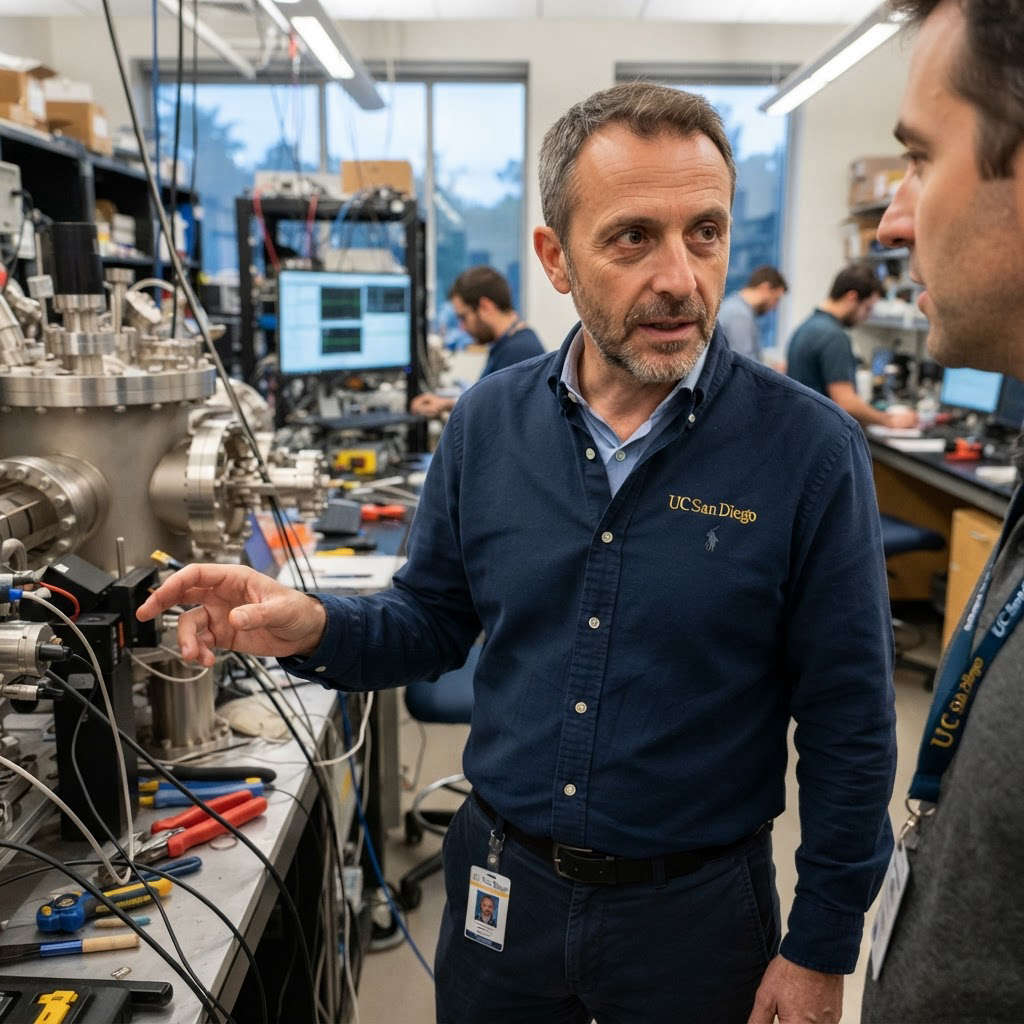
The U.S. Department of Energy recently awarded $8.5 million across 28 projects through the Innovation Network for Fusion Energy (INFUSE) program to bridge the gap between national laboratory expertise and private industry. These awards support critical research into fusion targets, superconducting magnets, and diagnostic tools necessary for scaling fusion power. Simultaneously, national laboratories like Fermilab and PPPL are deepening collaborations with private firms to address engineering hurdles in fuel production and magnetic confinement. These initiatives aim to transition fusion from experimental ignition to reliable, grid-scale electricity generation.
Bridging the Gap Between Lab and Market
The recent distribution of $8.5 million in INFUSE awards marks a strategic shift toward leveraging national laboratory infrastructure to solve the engineering bottlenecks of commercial fusion (Nuclear Newswire, 2026). By partnering with institutions like Cornell and UC Berkeley, private developers are gaining access to specialized diagnostic tools and high-energy testing environments that are otherwise inaccessible to startups (Pacific Fusion, 2026). This collaboration is essential for addressing the 'credibility gap' identified by industry analysts, where private companies must move beyond self-reported milestones to demonstrate technical viability to mainstream investors (Forbes, 2026). The focus on mass-manufacturable targets and superconducting magnet resilience represents a transition from theoretical physics to the practical realities of power plant availability (Pacific Fusion, 2026; Thea Energy, 2026).
Technical Barriers and Future Pathways
Despite these advancements, significant hurdles remain in sustaining fusion reactions and converting energy into usable electricity (Fermilab, 2026). The National Ignition Facility (NIF) remains the only facility to have achieved ignition, but scaling this to a continuous power source requires solving complex fuel cycle and material degradation issues (Fermilab, 2026; Nuclear Newswire, 2026). The ongoing assembly of the National Spherical Torus Experiment-Upgrade (NSTX-U) at PPPL is a critical step in determining the fuel conditions necessary for a pilot plant, utilizing laser-based measurement tools to ensure precise magnetic field alignment (PPPL, 2026). Future research must prioritize the development of predictive models for magnet efficiency and the establishment of a standardized regulatory framework to move these technologies from the laboratory to the grid (Thea Energy, 2026; Nuclear Newswire, 2026). The path forward relies on sustained federal funding and the successful integration of private-sector agility with the deep technical expertise of the national laboratory system (Fermilab, 2026).
What It Will Take to Advance This
Researchers must demonstrate sustained fusion reactions that yield more energy than is consumed over extended periods, moving beyond the single-shot ignition achieved at NIF. This requires a deeper understanding of plasma stability and fuel cycle management in a continuous operational environment. The industry must solve the material degradation challenges caused by high-energy neutron bombardment in fusion blankets. Developing materials that can withstand these conditions for years is essential for the commercial viability of any fusion reactor design. Fusion companies require an estimated $2.7 billion per commercial plant to reach viability, necessitating a significant increase in both public and private capital. Sustained, multi-year funding programs are needed to bridge the 'valley of death' between laboratory experiments and pilot plant construction. The NRC must finalize a performance-based regulatory framework that is distinct from fission-based rules. This framework must provide clear, predictable licensing pathways that allow for the rapid iteration of diverse fusion technologies while ensuring public safety. The U.S. must establish a domestic supply chain for critical fusion components, including high-temperature superconducting magnets and specialized fusion targets. Scaling production to meet the needs of a commercial fleet of reactors requires dedicated manufacturing facilities and standardized quality control processes.
Future Possibilities
If fusion energy matures, it could create a $2.1 trillion electricity market opportunity, fundamentally shifting global energy economics. This transition would require massive capital investment, estimated at $2.7 billion per commercial plant, to move from experimental prototypes to grid-scale deployment. The current focus on INFUSE awards and private-sector partnerships is the first step in de-risking these investments for mainstream financial institutions. Future research should focus on developing standardized cost-benefit models for fusion-generated electricity to attract long-term infrastructure capital.
- •Long term (5+ years)
- •Moderate confidence
Reference: Fusion Industry Association 2026 Industry Report, cited in Forbes, 'The Fusion Energy Industry Needs More Credibility To Commercialize', Wal van Lierop, 2026.
The development of mass-manufacturable fusion targets and high-temperature superconducting magnets will create a new high-tech manufacturing sector. This industry would replace traditional, expensive, and fragile components with scalable, resilient alternatives, enabling the rapid deployment of fusion reactors. Companies like Pacific Fusion are already working on these targets, which are essential for pulser fusion systems. The next research direction should be the establishment of a pilot-scale manufacturing facility to test the durability of these components under continuous operational conditions.
- •Mid term (2-5 years)
- •Moderate confidence
Reference: Pacific Fusion, 'Pacific Fusion wins two U.S. Department of Energy INFUSE awards', Keith LeChien, 2026.
Fusion energy provides a path to energy independence and grid resilience, reducing reliance on volatile global fuel markets. By integrating fusion into the national energy mix, countries can secure a reliable, clean, and deployable power source that is less susceptible to the geopolitical risks associated with fossil fuels. This strategic advantage is driving increased investment in fusion research facilities, particularly in the U.S. and China. Future research should focus on the integration of fusion power plants into existing national grid architectures to ensure stability and security.
- •Long term (5+ years)
- •Moderate confidence
Reference: RealClearEnergy, 'Is the U.S. Finally Fighting Back on Fusion?', Shaun Walsh, 2026.
Commercial fusion energy would provide a carbon-free, high-density power source that could replace aging nuclear fission and fossil fuel plants. This transition would significantly reduce greenhouse gas emissions and environmental impact, provided that the fusion fuel cycle is managed sustainably. The current research into tritium breeding and blanket technology is critical for ensuring the long-term environmental viability of fusion. Future studies should conduct comprehensive life-cycle assessments of fusion power plants to quantify their environmental footprint compared to existing energy sources.
- •Long term (5+ years)
- •Low confidence
Reference: Fermilab, 'National labs working to tackle fusion energy challenges', Michael Nartker, 2026.
The maturation of fusion energy could lead to significantly cheaper and more reliable electricity for consumers, particularly as AI data centers and other high-demand users drive the need for cleaner, more deployable power. This shift would reduce the cost of living and support the electrification of transportation and heating. The success of this transition depends on the ability of the industry to move from experimental ignition to consistent, grid-scale power delivery. Future research should focus on the development of user-friendly, modular fusion reactor designs that can be deployed in diverse geographic locations.
- •Long term (5+ years)
- •Moderate confidence
Reference: Forbes, 'The Fusion Energy Industry Needs More Credibility To Commercialize', Wal van Lierop, 2026.
The Department of Energy should expand the INFUSE program budget to $500 million annually to support the growing pipeline of private-sector fusion developers. By providing consistent, multi-year funding, the DOE can de-risk early-stage engineering challenges that private capital currently avoids. This funding would be directed toward high-risk, high-reward components like advanced blankets and tritium breeding cycles. The milestone-based disbursement model used in the existing $2 billion development program serves as a proven precedent for this expansion.
- •The DOE recently awarded $8.5 million across 28 projects to accelerate fusion engineering (Nuclear Newswire, 2026).
- •Private fusion companies raised a record $4.48 billion in the 12 months leading to July 2026 (Forbes, 2026).
Reference: RealClearEnergy, 'Is the U.S. Finally Fighting Back on Fusion?', Shaun Walsh, 2026
The U.S. government should establish a dedicated fusion supply chain initiative to standardize the production of fusion targets and superconducting magnets. By leveraging the manufacturing expertise at national labs like Fermilab, the government can create a pilot-scale facility that provides affordable, mass-manufacturable components to startups. This infrastructure would lower the barrier to entry for companies like Pacific Fusion, which currently face high costs for specialized components. This mirrors the successful public-private partnerships used in the semiconductor industry to secure domestic supply chains.
- •Pacific Fusion is currently researching affordable, mass-manufacturable targets through INFUSE awards (Pacific Fusion, 2026).
- •Fermilab is expanding its work on high-temperature superconductors to support fusion energy development (Fermilab, 2026).
Reference: Pacific Fusion, 'Pacific Fusion wins two U.S. Department of Energy INFUSE awards', Keith LeChien, 2026
The Department of Energy should designate 'Fusion Corridors' at existing national laboratory sites to integrate research, testing, and industrial clusters. By co-locating private startups with national lab facilities, the U.S. can accelerate the testing of experimental devices like the NSTX-U. This infrastructure would provide the necessary high-power testing environments that no single private company can afford to build alone. This approach is modeled after the successful integration of research campuses in other nations to foster rapid innovation.
- •PPPL is currently completing the central magnet assembly for the NSTX-U, the world's most powerful spherical tokamak (PPPL, 2026).
- •The University of Houston is proposing a fusion energy center to integrate research with industrial clusters (The Texas Dispatch, 2026).
Reference: Princeton Plasma Physics Laboratory, 'PPPL’s major fusion experiment nears completion', 2026
The Nuclear Regulatory Commission (NRC) should establish a performance-based regulatory framework specifically for fusion energy to provide developers with clear, predictable pathways to commercial deployment. By moving away from fission-based regulations, the NRC can reduce the time and cost associated with siting and licensing the first generation of fusion pilot plants. This framework would prioritize safety outcomes over prescriptive design requirements, allowing for the rapid iteration of diverse fusion technologies. The American Nuclear Society’s ongoing work on risk-informed principles provides a foundation for this regulatory shift.
- •The American Nuclear Society is actively developing risk-informed, performance-based principles for nuclear regulation (Nuclear Newswire, 2026).
- •Regulatory constraints are currently cited as a major barrier to the deployment of advanced energy technologies (Forbes, 2026).
Reference: Nuclear Newswire, 'CoP webinar explores reactor developer’s perspective on RIPB regulation', 2026
The National Science Foundation and DOE should launch a national fusion workforce initiative to train the next generation of fusion engineers and technicians. This program would fund industry-taught coursework, apprenticeships, and faculty hiring at universities across the country to meet the projected demand for thousands of specialized workers by the 2030s. By aligning academic curricula with the specific needs of fusion developers, the U.S. can ensure a steady pipeline of talent for the emerging fusion industry. This initiative would be modeled after existing STEM workforce development programs in the aerospace and defense sectors.
- •Proposed federal legislation includes $100 million for fusion supply chain and workforce development (RealClearEnergy, 2026).
- •71 percent of fusion companies expect to produce commercial electricity in the 2030s, necessitating a massive workforce expansion (Forbes, 2026).
Reference: RealClearEnergy, 'Is the U.S. Finally Fighting Back on Fusion?', Shaun Walsh, 2026
Physics & Quantum Computing
Could AI-designed quantum circuits accelerate the arrival of fault-tolerant computing by 2028
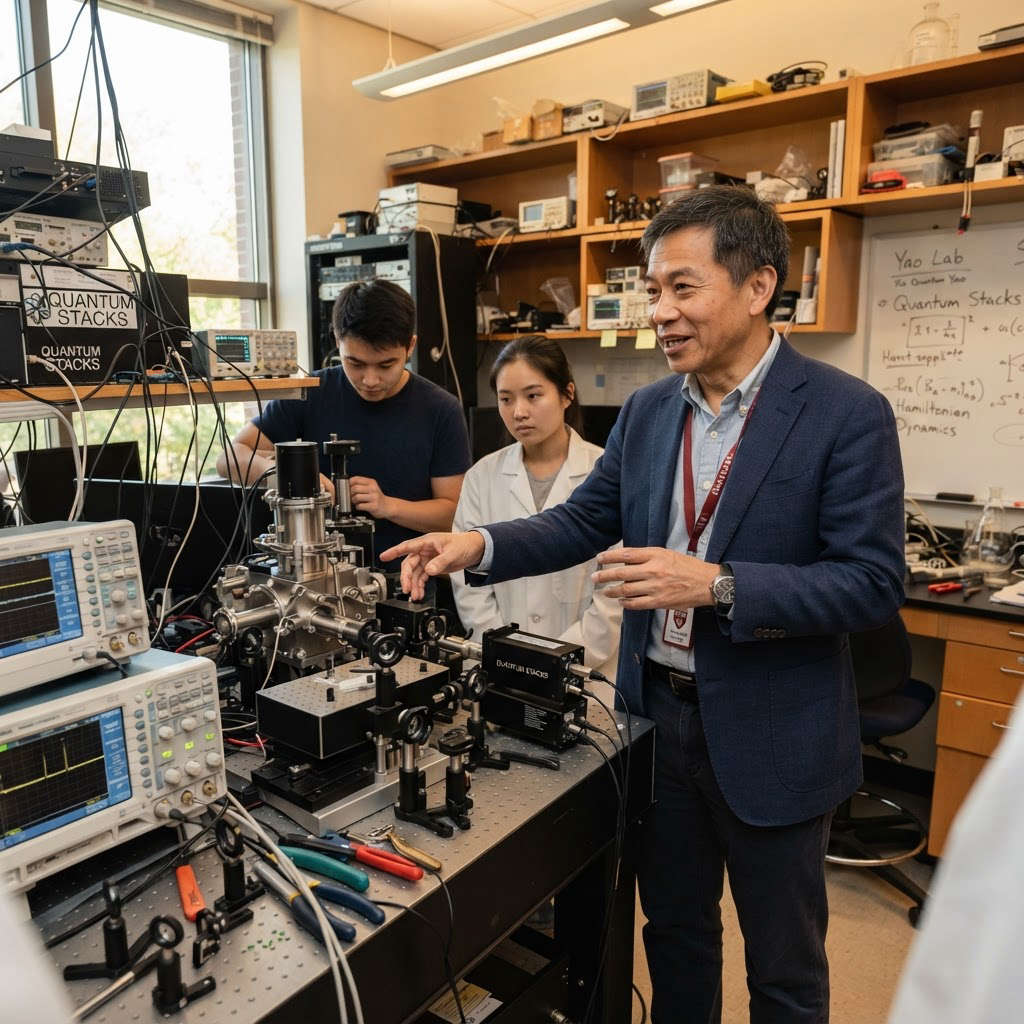
Researchers from Harvard University, Anthropic, and QuEra Computing have demonstrated that artificial intelligence can design quantum circuits requiring significantly fewer computational resources. The AI-optimized circuits achieved up to a 39-fold reduction in the combined gate-and-qubit resource metric compared to traditional designs. This advancement aims to lower the barrier for executing complex algorithms on near-term fault-tolerant quantum systems. The findings were formally highlighted on November 10, 2026, as a key step toward practical quantum utility.
AI-Driven Resource Optimization
The recent collaboration between Harvard, Anthropic, and QuEra Computing marks a significant shift in how quantum circuits are designed for fault-tolerant systems (PR Newswire, 2026). By leveraging AI to optimize circuit architecture, the team achieved a 39-fold reduction in the combined gate-and-qubit resource metric (PR Newswire, 2026). This reduction is critical because the physical-to-logical qubit overhead remains the primary bottleneck for achieving practical quantum advantage (Quantum X Labs, 2026). Unlike traditional manual circuit design, which relies on human intuition and heuristic-based compilers, the AI approach explores a vast design space to identify non-intuitive circuit configurations that minimize noise sensitivity and resource consumption (PR Newswire, 2026).
Hardware Integration and Future Scaling
This advancement complements the broader industry trend toward quantum-classical co-design, where AI, GPUs, and quantum processors are integrated into unified workflows (IBM Newsroom, 2026). For instance, the new co-design platform launched by ORNL, IBM, and AMD allows researchers to test error-correction methods in real-time, using GPUs for low-latency decoding (IBM Newsroom, 2026). The ability to measure qubits mid-calculation and act on the results is essential for the fault-tolerant architectures planned for 2028 and 2029 (IBM Newsroom, 2026). While the AI-designed circuits show promise, their performance must still be validated across diverse hardware architectures, such as superconducting qubits and neutral-atom arrays, to ensure reproducibility (Quantum X Labs, 2026). The next phase of research will likely focus on scaling these AI-optimized designs to handle larger logical qubit counts, moving from the current experimental demonstrations to the 100-logical-qubit target set by the Department of Energy's Quantum Genesis Mission (IBM Newsroom, 2026).
What It Will Take to Advance This
Researchers must conduct large-scale benchmarking of AI-designed circuits across different hardware platforms to prove that the 39-fold resource reduction is consistent and not specific to a single architecture. The industry must solve the latency bottleneck in real-time error correction, specifically by integrating high-speed GPU decoders that can keep pace with the quantum processor's cycle time. Continued appropriation of funds for the Quantum Genesis Mission is essential to maintain the 2028 timeline for achieving 100 logical qubits. Standardization bodies must establish clear metrics for 'logical resource efficiency' to prevent misleading claims and ensure that quantum-advantage benchmarks are scientifically rigorous. Manufacturers must scale the production of high-fidelity physical qubits to support the massive overhead required for fault-tolerant error correction, aiming for at least 10,000 physical qubits per system.
Future Possibilities
AI-optimized quantum circuits will enable the simulation of complex protein-ligand interactions that are currently beyond the reach of classical supercomputers. By reducing the qubit overhead, researchers can model drug candidates with higher precision, potentially shortening the drug discovery timeline by years. This requires the integration of quantum-classical hybrid workflows into existing pharmaceutical R&D pipelines. Future research should focus on developing standardized quantum-ready datasets for molecular docking to validate these simulations.
- •Mid term (2-5 years)
- •Moderate confidence
Reference: IQM and Volkswagen have already demonstrated quantum-classical AFQMC for battery chemistry, providing a precedent for molecular simulation (Quantum Computing Report, 2026).
The ability to design more efficient quantum circuits directly impacts the development of post-quantum cryptography and secure communications. As fault-tolerant systems become more resource-efficient, the timeline for breaking current encryption standards may accelerate, necessitating a faster transition to quantum-resistant algorithms. Governments will need to deploy these AI-optimized tools to stress-test national security infrastructure against potential quantum threats. Research should prioritize the development of 'quantum-hardened' AI models that can design circuits resistant to adversarial noise.
- •Long term (5+ years)
- •Moderate confidence
Reference: Quantum X Labs has already demonstrated cyber quantum encryption breakthroughs on real quantum processors (Quantum X Labs, 2026).
Efficient quantum computing will transform financial modeling by enabling real-time risk assessment and portfolio optimization at a scale impossible for classical systems. By lowering the cost per logical operation, businesses can justify the investment in quantum-as-a-service models. This shift will require the development of specialized quantum-classical middleware to handle high-frequency data inputs. Future studies should investigate the economic impact of quantum-enabled optimization on global supply chain efficiency.
- •Mid term (2-5 years)
- •High confidence
Reference: NVIDIA's CUDA-Q Logical feature is specifically targeting financial modeling as a primary application for fault-tolerant systems (Analytics India Mag, 2026).
Quantum-enabled materials discovery will accelerate the development of high-efficiency catalysts for carbon capture and next-generation battery chemistries. By reducing the computational resources needed for these simulations, researchers can explore a wider range of chemical spaces to find sustainable alternatives to current industrial processes. This requires the creation of open-access quantum simulation platforms for climate researchers. Future work should focus on benchmarking the energy efficiency of these quantum simulations compared to classical alternatives.
- •Long term (5+ years)
- •Low confidence
Reference: IQM and Volkswagen are already using quantum-classical workflows to simulate battery chemistry (Quantum Computing Report, 2026).
As quantum computing becomes more accessible through cloud platforms, it will eventually power personalized AI assistants capable of solving complex optimization problems in real-time, such as traffic management or energy grid balancing. This will require the development of user-friendly interfaces that abstract away the complexities of quantum error correction. The transition will be gradual, starting with enterprise-level applications before reaching consumer-facing services. Research should focus on the ethical implications of quantum-powered predictive modeling in public infrastructure.
- •Long term (5+ years)
- •Moderate confidence
Reference: QuEra's Libra system is designed to be available on Amazon Braket by 2028, marking a move toward broader accessibility (QuEra, 2026).
The Department of Energy should prioritize funding for AI-quantum co-design projects under the Quantum Genesis Mission to meet the 2028 target of 100 logical qubits. By allocating specific grants for AI-driven circuit optimization, the DOE can accelerate the development of efficient error-correction protocols. This funding would support the integration of Anthropic's AI models with QuEra's neutral-atom hardware. The goal is to reduce the physical-to-logical qubit overhead by an order of magnitude within 24 months.
- •The DOE's Quantum Genesis Mission targets 100 logical qubits by 2028 (IBM Newsroom, 2026).
- •AI-designed circuits have already demonstrated a 39-fold reduction in resource requirements (PR Newswire, 2026).
Reference: Department of Energy Quantum Genesis Mission
Pharmaceutical companies should adopt AI-optimized quantum circuits to simulate complex molecular interactions for drug discovery. By reducing the qubit count required for these simulations, companies can utilize current-generation quantum hardware to model protein folding and ligand binding. This transition would allow for faster iteration cycles in early-stage drug development. The process would involve licensing AI-designed circuit libraries from research partners to run on cloud-accessible quantum platforms.
- •Quantum-classical hybrid workflows are already being used for battery chemistry simulations (Quantum Computing Report, 2026).
- •Resource reduction makes previously intractable simulations feasible on near-term hardware (PR Newswire, 2026).
Reference: IQM and Volkswagen Quantum-Classical AFQMC Research
Quantum hardware manufacturers should integrate AI-driven circuit design into their standard software development kits (SDKs) to lower the barrier for end-users. By providing pre-optimized circuit templates, companies like QuEra and IBM can enable developers to run more complex applications without needing deep expertise in quantum error correction. This would facilitate the transition from experimental research to production-ready quantum deployments. The rollout would occur through cloud-based platforms like Amazon Braket.
- •QuEra's Libra system will be available on Amazon Braket by 2028 (QuEra, 2026).
- •AI-designed circuits significantly reduce the gate-and-qubit resource metric (PR Newswire, 2026).
Reference: QuEra Libra System Roadmap
International standards bodies should establish benchmarks for 'logical resource efficiency' to ensure consistent performance reporting across different quantum architectures. These standards would define how AI-optimized circuits are validated against physical noise, preventing inflated claims of quantum advantage. By creating a unified framework, regulators can help investors and government agencies assess the maturity of various quantum platforms. This process would involve collaboration between NIST and international quantum research consortia.
- •The industry is moving toward standardized co-design platforms for error correction (IBM Newsroom, 2026).
- •Logical decoding performance is becoming a critical metric for fault-tolerant progress (Quantum X Labs, 2026).
Reference: NIST Quantum Standards Initiative
Universities should update quantum computing curricula to include AI-assisted circuit design and quantum-classical co-design methodologies. By training the next generation of quantum engineers in these hybrid techniques, institutions can bridge the gap between theoretical physics and practical hardware implementation. This training would focus on using tools like CUDA-Q and AI-driven compilers to manage logical qubits. The initiative would be supported by partnerships with industry leaders like IBM and NVIDIA.
- •NVIDIA is expanding CUDA-Q to support logical qubit coordination (Analytics India Mag, 2026).
- •The field requires a new discipline of engineering to manage fault-tolerant machines (Caltech, 2026).
Reference: Caltech Quantum Ecosystem Development
·
© 2026 Universe One LLC. All rights reserved.
Cookie Notice
18+ BETACookies keep you signed in and run our ads. We do not sell your data. Analytics and ad-personalization stay off until you accept.
We use cookies to keep you signed in, remember your preferences, and run the in-app ad system that keeps Universe One free. We do not sell your data. Analytics and ad-personalization cookies stay off until you accept. Ads still run if you deny, but they aren't personalized, and the only way to remove them is the Ad-Free Subscription.
You must be 18 or older to create an account during Beta testing.