
South & Central Asia
Pakistan Warns Afghanistan of Consequences Over Cross-Border Terrorism
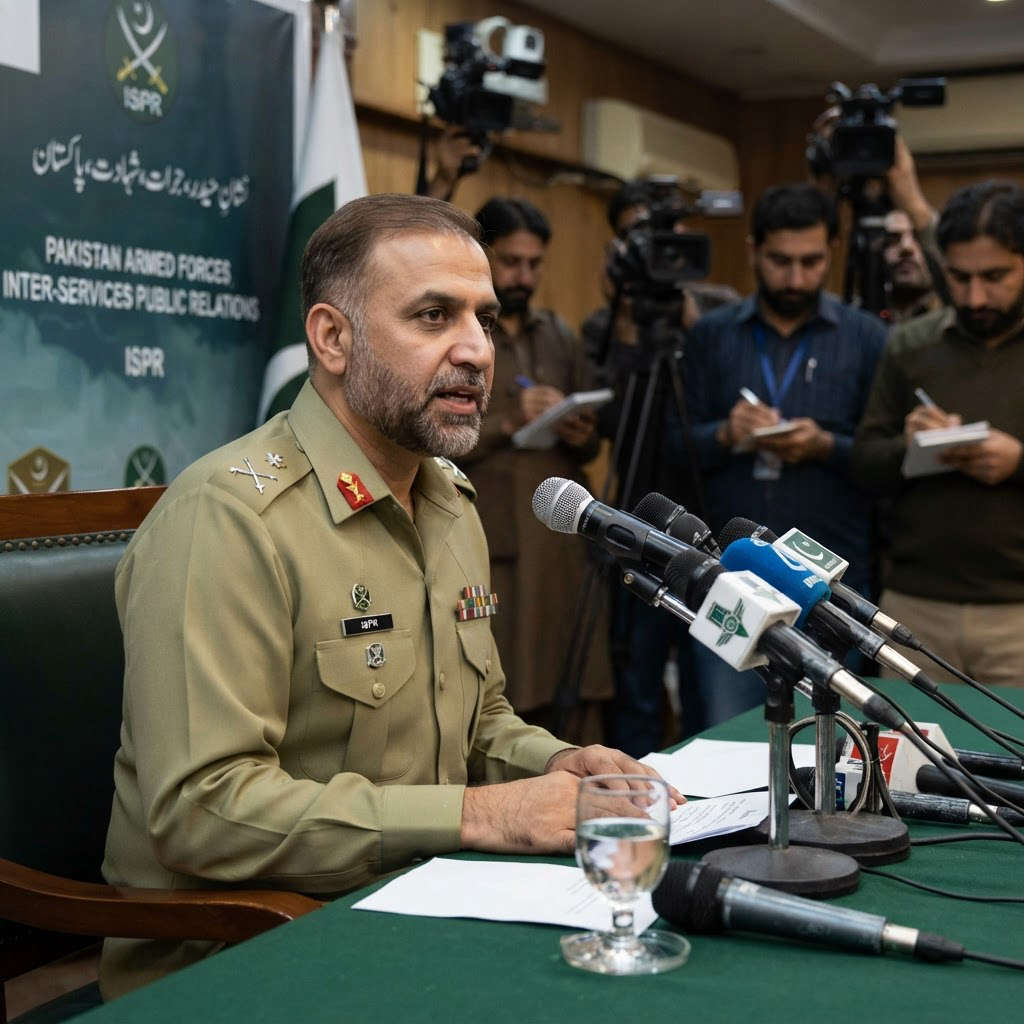
The Pakistan military has warned the Afghan Taliban administration that it reserves the right to take necessary measures to address cross-border terrorism, which it describes as a "red line." Lieutenant General Ahmed Sharif Chaudhry, spokesperson for the Inter-Services Public Relations, has accused India of sponsoring terrorist activities in Pakistan through groups such as the TTP and BLA. This follows ongoing border tensions and a lack of progress in diplomatic efforts to secure the frontier. The United States has acknowledged Pakistan's security concerns and expressed a willingness to play a constructive role in addressing the regional situation.
The primary actors involved are the Pakistan military, represented by the Inter-Services Public Relations (ISPR) and its spokesperson, Lieutenant General Ahmed Sharif Chaudhry, and the Afghan Taliban administration. The United States, through Secretary of State Marco Rubio, has also emerged as a key diplomatic observer. Additionally, Pakistan has explicitly named India as the 'prime contractor' behind the militant groups Tehreek-e-Taliban Pakistan (TTP) and the Balochistan Liberation Army (BLA).
Pakistan has issued a formal warning to the Afghan Taliban, declaring that terrorism is a 'red line' and threatening 'unbearable punishment' for the continued harboring of militant leaders. This follows a series of persistent border clashes and a failure of diplomatic efforts to secure the frontier. Pakistan alleges that the Taliban is acting as a proxy for external powers, specifically India, to destabilize the country.
The conflict is centered along the Pak-Afghan border, specifically in regions such as Kurram and Angoor Adda in Lower South Waziristan. The geopolitical implications extend to the broader South Asian region, involving the interests of India, China, and the United States.
The warning was issued on November 1, 2026, following a period of escalating border skirmishes throughout October 2026. The situation remains active and ongoing as of November 8, 2026.
Pakistan's stated motivation is the protection of its citizens and the elimination of cross-border terrorism, which it views as an existential threat. The Afghan Taliban, conversely, has not publicly accepted responsibility for the actions of the TTP, leading to a breakdown in relations. Pakistan's accusation against India is rooted in a long-standing regional rivalry, with Islamabad claiming that New Delhi uses these groups to undermine Pakistani security.
The Pakistan military is utilizing a combination of traditional border security, such as fencing, and modern warfare capabilities, including cyber operations, drones, and long-range munitions. The diplomatic strategy involves leveraging international concern, particularly from the U.S., to pressure the Taliban into compliance. The conflict is managed through a mix of military posturing and diplomatic messaging, with both sides currently locked in a cycle of accusation and retaliation.
Latin America & the Caribbean
Brazil President Lula Consults Economic Advisors on Fiscal Policy Amid Market Volatility
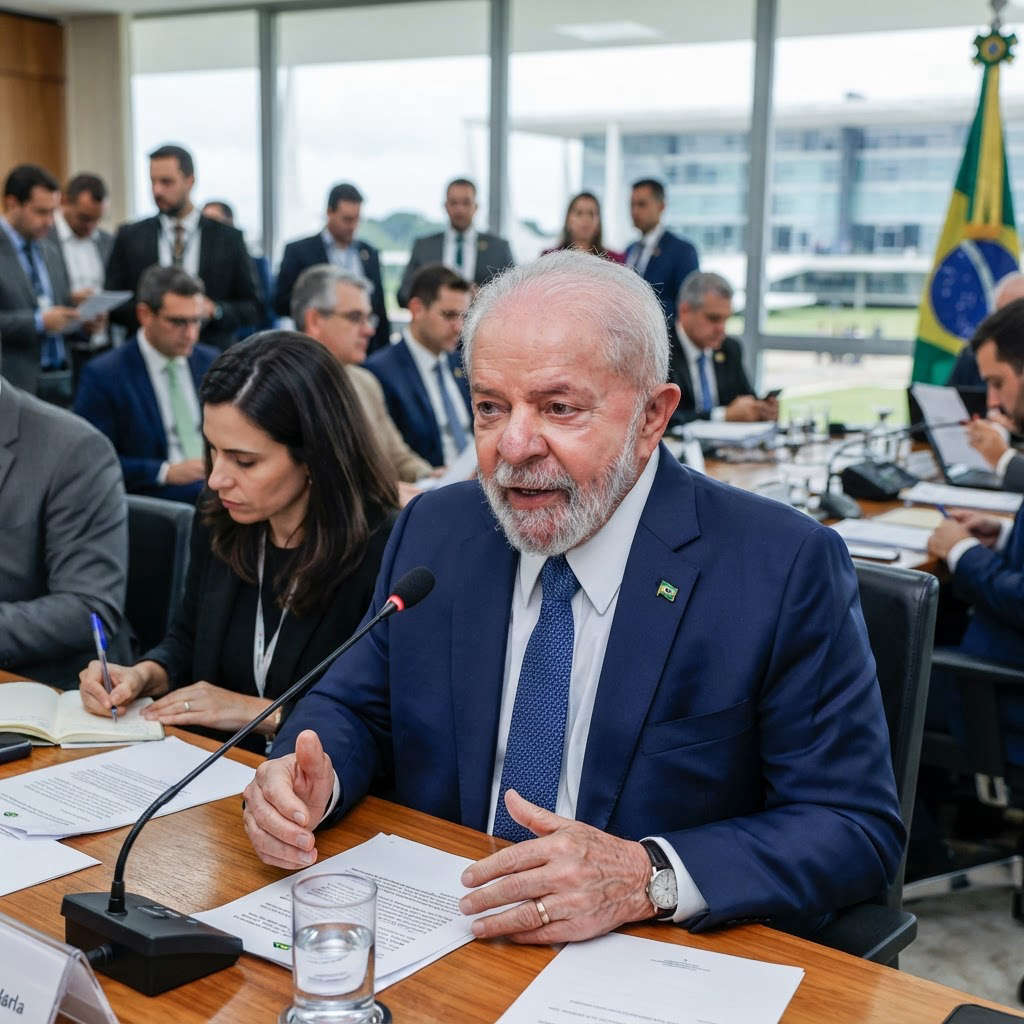
President Luiz Inácio Lula da Silva has initiated a series of high-level meetings with economic advisors and cabinet members to formulate a fiscal strategy for his upcoming term. These consultations follow a period of significant market volatility and a decision by the Brazilian central bank to hold the benchmark Selic interest rate at 13.75 percent. The government is currently balancing campaign promises to maintain social programs with the need to address rising public debt and investor concerns regarding fiscal discipline. President Lula is expected to outline his administration's economic priorities in a national address scheduled for November 8.
Key actors include President Luiz Inácio Lula da Silva, Finance Minister Dario Durigan, former Finance Minister Fernando Haddad, and the president of the Brazilian Development Bank (BNDES), Aloizio Mercadante. The Central Bank of Brazil, led by appointees, and various domestic financial institutions are also central to the current fiscal debate.
The Brazilian government is currently navigating a period of fiscal uncertainty following the October 2026 presidential election. The administration is under pressure to reconcile its campaign promises to maintain and expand social programs with the reality of rising public debt and high interest rates. The government is currently consulting with various economic advisors to develop a fiscal adjustment plan that satisfies market demands for discipline without abandoning its social agenda.
The primary jurisdiction is Brasília, the seat of the Brazilian federal government. The economic policy discussions are centered at the Palace of the Planalto, while financial market reactions are concentrated in São Paulo, specifically the Faria Lima financial district.
The current fiscal debate intensified following the October 25, 2026, runoff election. The central bank held the Selic rate at 13.75 percent on November 4, 2026. President Lula is expected to deliver a national address on November 8, 2026, to clarify his administration's economic direction.
The government faces a structural challenge where mandatory public spending is climbing rapidly, leaving little room for discretionary investment. Financial markets are demanding clearer signals of fiscal discipline, fearing that the current trajectory will lead to unsustainable debt levels. The administration, conversely, argues that high interest rates are the primary driver of debt and that growth-oriented policies are necessary to improve public finances.
The government is utilizing internal cabinet meetings and consultations with external economists to draft potential fiscal measures. These measures are expected to be integrated into the 2027 budget guidelines. The central bank maintains its independence in setting monetary policy, using the Selic rate as its primary tool to manage inflation expectations, which currently remain elevated due to fiscal concerns.
·
© 2026 Universe One LLC. All rights reserved.
Cookie Notice
18+ BETACookies keep you signed in and run our ads. We do not sell your data. Analytics and ad-personalization stay off until you accept.
We use cookies to keep you signed in, remember your preferences, and run the in-app ad system that keeps Universe One free. We do not sell your data. Analytics and ad-personalization cookies stay off until you accept. Ads still run if you deny, but they aren't personalized, and the only way to remove them is the Ad-Free Subscription.
You must be 18 or older to create an account during Beta testing.