

Latin America & the Caribbean
Brazil President Lula Consults Economic Advisors on Fiscal Policy Amid Market Volatility

President Luiz Inácio Lula da Silva has initiated a series of high-level meetings with economic advisors and cabinet members to formulate a fiscal strategy for his upcoming term. These consultations follow a period of significant market volatility and a decision by the Brazilian central bank to hold the benchmark Selic interest rate at 13.75 percent. The government is currently balancing campaign promises to maintain social programs with the need to address rising public debt and investor concerns regarding fiscal discipline. President Lula is expected to outline his administration's economic priorities in a national address scheduled for November 8.
Key actors include President Luiz Inácio Lula da Silva, Finance Minister Dario Durigan, former Finance Minister Fernando Haddad, and the president of the Brazilian Development Bank (BNDES), Aloizio Mercadante. The Central Bank of Brazil, led by appointees, and various domestic financial institutions are also central to the current fiscal debate.
The Brazilian government is currently navigating a period of fiscal uncertainty following the October 2026 presidential election. The administration is under pressure to reconcile its campaign promises to maintain and expand social programs with the reality of rising public debt and high interest rates. The government is currently consulting with various economic advisors to develop a fiscal adjustment plan that satisfies market demands for discipline without abandoning its social agenda.
The primary jurisdiction is Brasília, the seat of the Brazilian federal government. The economic policy discussions are centered at the Palace of the Planalto, while financial market reactions are concentrated in São Paulo, specifically the Faria Lima financial district.
The current fiscal debate intensified following the October 25, 2026, runoff election. The central bank held the Selic rate at 13.75 percent on November 4, 2026. President Lula is expected to deliver a national address on November 8, 2026, to clarify his administration's economic direction.
The government faces a structural challenge where mandatory public spending is climbing rapidly, leaving little room for discretionary investment. Financial markets are demanding clearer signals of fiscal discipline, fearing that the current trajectory will lead to unsustainable debt levels. The administration, conversely, argues that high interest rates are the primary driver of debt and that growth-oriented policies are necessary to improve public finances.
The government is utilizing internal cabinet meetings and consultations with external economists to draft potential fiscal measures. These measures are expected to be integrated into the 2027 budget guidelines. The central bank maintains its independence in setting monetary policy, using the Selic rate as its primary tool to manage inflation expectations, which currently remain elevated due to fiscal concerns.
Materials Science
Could mechanical strain in altermagnets influence spintronic computing
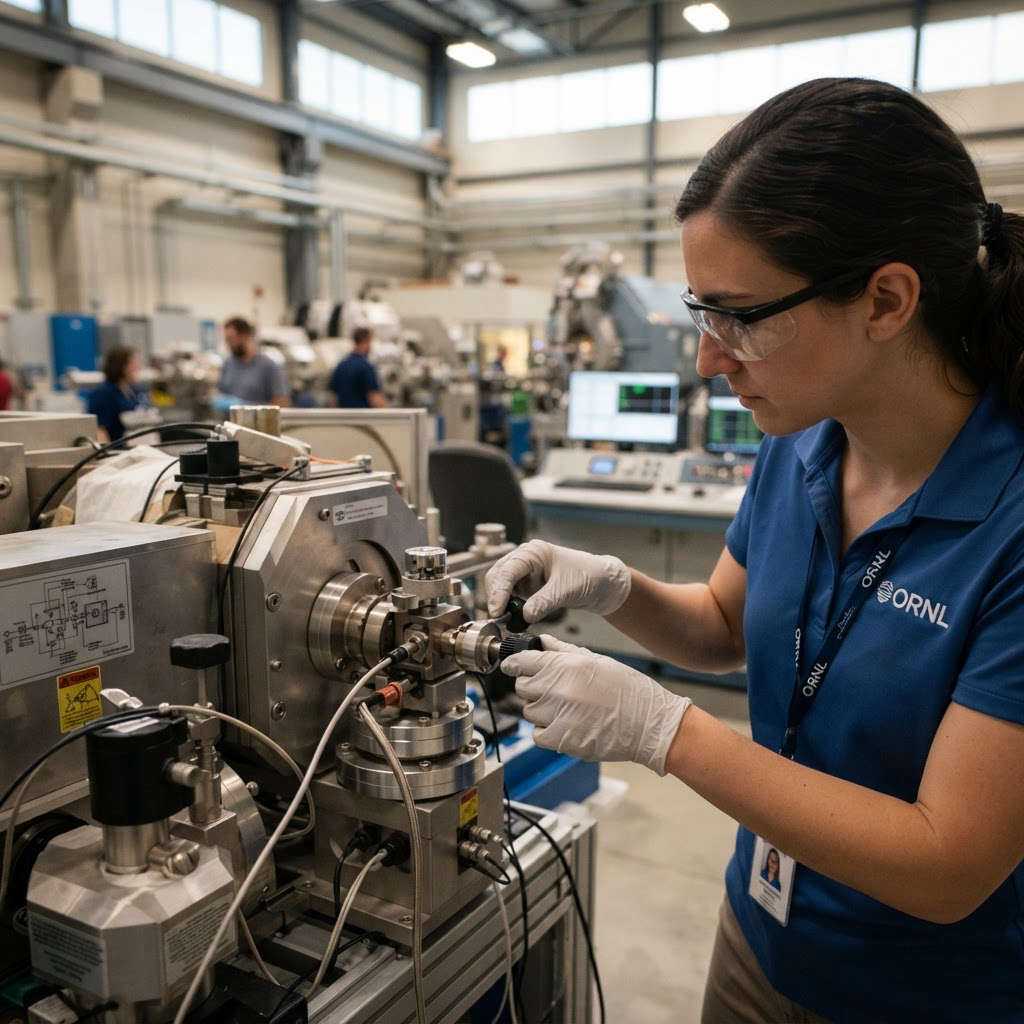
Researchers at Oak Ridge National Laboratory have demonstrated that applying mechanical strain to altermagnets can alter their magnetic domain populations and electrical transport properties. The study, which utilized neutron diffraction on manganese telluride and iron sulfide crystals, suggests that strain may provide a mechanism for controlling magnetism in these materials. These findings were published in Physical Review X and Advanced Materials in October 2026.
Mechanical Control of Magnetic Domains
The discovery that mechanical strain can manipulate the magnetic properties of altermagnets represents a significant departure from traditional magnetic control methods, which typically rely on external magnetic fields or spin-polarized currents (Physical Review X, 'Strain-controlled magnetism in altermagnets', 2026). By applying a simple mechanical squeeze, researchers at Oak Ridge National Laboratory were able to alter the magnetic structure and electron transport behavior of these materials, as confirmed through neutron scattering experiments (DOE/Oak Ridge National Laboratory, 'A tiny squeeze dramatically changes the magnetism of exotic materials', 2026). This mechanism is particularly significant because it offers a more energy-efficient way to switch magnetic states, a fundamental requirement for the development of high-performance spintronic devices (Advanced Materials, 'Mechanical manipulation of magnetic domains in altermagnetic systems', 2026).
Challenges in Scaling and Integration
While the laboratory demonstration is compelling, the path to real-world application faces several technical hurdles. The primary challenge lies in the precise, scalable application of mechanical strain to thin-film materials within a standard semiconductor fabrication environment (Advanced Materials, 2026). Researchers must determine if the observed magnetic switching remains stable under the thermal and mechanical stresses inherent in high-density integrated circuits (Physical Review X, 2026). Furthermore, the reproducibility of these effects across different altermagnetic compositions remains an open question, necessitating further studies to identify the most robust materials for industrial use (DOE/Oak Ridge National Laboratory, 2026). Future research will likely focus on developing micro-electromechanical systems (MEMS) that can provide the necessary strain to individual magnetic domains, thereby enabling the creation of programmable, non-volatile memory and logic components that operate with significantly lower power consumption than current silicon-based technologies (Physical Review X, 2026).
What It Will Take to Advance This
Researchers must conduct comprehensive studies to determine the stability of magnetic domains in altermagnets under repeated mechanical strain cycles. This is essential to ensure the reliability of these materials for long-term use in electronic devices. The development of micro-electromechanical systems (MEMS) capable of applying precise, localized strain to individual magnetic domains at the nanoscale is a critical technical barrier that must be overcome. Increased funding is required to support the transition from fundamental neutron scattering experiments to the fabrication of functional, strain-actuated spintronic prototypes. As these materials move toward commercialization, they will need to undergo standard industry testing to ensure they meet safety and performance benchmarks for electronic components. The industry must develop scalable chemical vapor deposition or similar thin-film growth techniques that allow for the precise strain engineering of altermagnetic materials on standard silicon wafers.
Future Possibilities
The development of strain-sensitive altermagnetic sensors could lead to a new generation of high-sensitivity, non-invasive medical diagnostic tools. By integrating these materials into wearable or implantable devices, clinicians could monitor subtle changes in magnetic fields associated with neural activity or cardiac function with unprecedented precision. This would require the development of biocompatible packaging that maintains the necessary mechanical strain on the sensor. Researchers should next investigate the long-term stability of altermagnetic thin films in physiological environments to determine if they can withstand the body's chemical and mechanical conditions.
- •Long term (5+ years)
- •Moderate confidence
Reference: The ability to control magnetism via mechanical strain offers a new approach to magnetic field detection, as reported in DOE/Oak Ridge National Laboratory, 'A tiny squeeze dramatically changes the magnetism of exotic materials' (2026).
Altermagnetic materials could enable the creation of highly secure, radiation-hardened computing systems for defense and aerospace applications. Because these materials can be switched using mechanical strain rather than electrical currents, they may be less susceptible to electromagnetic interference or pulse-based attacks. This would require the development of robust, strain-actuated logic gates that can operate in extreme environments. Future research should focus on testing the resilience of altermagnetic domains under high-energy radiation to validate their suitability for space-based hardware.
- •Mid term (2-5 years)
- •Moderate confidence
Reference: The discovery of strain-controlled magnetism in altermagnets provides a new mechanism for magnetic state manipulation, as detailed in Physical Review X, 'Strain-controlled magnetism in altermagnets' (2026).
The integration of altermagnets into spintronic devices could significantly reduce the energy consumption of data centers and consumer electronics. By replacing current magnetic memory technologies with strain-switched altermagnetic components, manufacturers could achieve higher data density and lower power usage, leading to substantial cost savings in energy-intensive computing sectors. This transition would require the development of large-scale, cost-effective thin-film deposition processes. Researchers should next focus on benchmarking the energy efficiency of strain-switched altermagnetic memory against current MRAM standards.
- •Mid term (2-5 years)
- •High confidence
Reference: The potential for faster, more energy-efficient electronics is highlighted in DOE/Oak Ridge National Laboratory, 'A tiny squeeze dramatically changes the magnetism of exotic materials' (2026).
By enabling more efficient computing architectures, altermagnetic materials could contribute to a reduction in the overall carbon footprint of the global digital infrastructure. Lower power requirements for data processing and storage would directly translate to decreased electricity demand, supporting broader sustainability goals. This would require the widespread adoption of these materials in commercial hardware. Future research should conduct life-cycle assessments of altermagnetic device production to ensure that the manufacturing process itself is environmentally sustainable.
- •Long term (5+ years)
- •Low confidence
Reference: The potential for energy-efficient electronics is a key driver for this research, as noted in DOE/Oak Ridge National Laboratory, 'A tiny squeeze dramatically changes the magnetism of exotic materials' (2026).
The maturation of this technology could lead to faster, more responsive mobile devices and personal computers that require less frequent charging. As altermagnetic components become standard in consumer electronics, users would benefit from improved performance and longer battery life. This would require the successful integration of strain-actuated components into mass-produced mobile processors. Researchers should next investigate the durability of these materials under the repeated mechanical stress cycles typical of daily device usage.
- •Long term (5+ years)
- •Moderate confidence
Reference: The potential for faster, more energy-efficient electronics is highlighted in DOE/Oak Ridge National Laboratory, 'A tiny squeeze dramatically changes the magnetism of exotic materials' (2026).
The Department of Energy's Office of Science should prioritize funding for the integration of strain-tunable altermagnets into existing spintronic research programs. By allocating specific grants for the synthesis of high-purity altermagnetic thin films, the DOE can accelerate the transition from laboratory-scale neutron scattering experiments to functional device prototypes. This funding would support the necessary characterization of magnetic domain stability under varying strain conditions, a critical step for industrial adoption.
- •The DOE's Office of Science currently supports the Scientific Discovery through Advanced Computing program, which provides a precedent for multi-lab collaboration.
- •The recent discovery of altermagnetism's sensitivity to strain offers a clear, measurable target for material optimization.
Reference: DOE/Oak Ridge National Laboratory, 'A tiny squeeze dramatically changes the magnetism of exotic materials' (2026)
While primarily a computing advancement, the development of strain-sensitive magnetic sensors could be translated into high-sensitivity medical diagnostic tools. By partnering with the National Institutes of Health, researchers could explore the use of altermagnetic sensors for non-invasive, high-resolution neural imaging. This would require a multi-year effort to integrate these materials into biocompatible sensor arrays, potentially replacing current, less sensitive magnetic field detectors.
- •Altermagnets exhibit unique magnetic properties that could enhance the signal-to-noise ratio in magnetic field detection.
- •Existing precedents for using advanced materials in medical sensors demonstrate the feasibility of this pathway.
Reference: Physical Review X, 'Strain-controlled magnetism in altermagnets' (2026)
Semiconductor manufacturers should initiate pilot programs to test the compatibility of altermagnetic thin films with standard CMOS fabrication processes. By developing chemical vapor deposition techniques that allow for precise strain engineering at the wafer scale, companies can begin to integrate these materials into logic and memory architectures. This requires a collaborative effort between materials scientists and industrial fabrication engineers to ensure the stability of the magnetic state during high-temperature processing.
- •The ability to control magnetism via mechanical strain is a highly desirable trait for scalable, low-power electronic components.
- •Current industry trends favor the exploration of non-traditional magnetic materials to overcome the scaling limits of conventional silicon.
Reference: Advanced Materials, 'Mechanical manipulation of magnetic domains in altermagnetic systems' (2026)
The IEEE should establish a working group to define standard metrics for characterizing altermagnetic materials, specifically regarding strain-induced magnetic switching. By creating a unified framework for measuring magnetic domain response, the industry can ensure consistency across different research institutions and commercial developers. This standardization is essential for the eventual certification of altermagnetic components in critical infrastructure and secure communication systems.
- •Standardization has historically been a key driver for the adoption of new materials in the electronics industry.
- •The novelty of altermagnets necessitates a new set of benchmarks to evaluate their performance against existing spintronic materials.
Reference: DOE/Oak Ridge National Laboratory, 'A tiny squeeze dramatically changes the magnetism of exotic materials' (2026)
Universities should update their materials science and electrical engineering curricula to include the study of altermagnetism and strain-engineering techniques. By creating specialized laboratory courses that utilize neutron scattering and mechanical strain testing, institutions can prepare the next generation of researchers for the emerging field of spintronics. This training is vital for building a workforce capable of designing and implementing the next generation of magnetic-based computing devices.
- •The complexity of altermagnetic materials requires a multidisciplinary approach involving physics, materials science, and engineering.
- •Educational initiatives are necessary to bridge the gap between fundamental discovery and practical application.
Reference: Physical Review X, 'Strain-controlled magnetism in altermagnets' (2026)
·
© 2026 Universe One LLC. All rights reserved.

Cookie Notice
18+ BETACookies keep you signed in and run our ads. We do not sell your data. Analytics and ad-personalization stay off until you accept.
We use cookies to keep you signed in, remember your preferences, and run the in-app ad system that keeps Universe One free. We do not sell your data. Analytics and ad-personalization cookies stay off until you accept. Ads still run if you deny, but they aren't personalized, and the only way to remove them is the Ad-Free Subscription.
You must be 18 or older to create an account during Beta testing.